82 resources found

Report

Sustainable Building Finance: Supporting green mortgage development in Sri Lanka

by |
December 2021
copied to clipboard
A GEF-funded (Global Environment Facility) project on “Global best practices on emerging chemical policy issues of concern under SAICM” was launched in 2019, targeting Sri Lanka amongst other countries. The activities under the project include a focus on tracking and controlling chemicals along the value chains of the building and construction sector. To that end, a team from the UN Environment Programme (UNEP) have been working with stakeholders in Sri Lanka on identifying chemicals of concern in the construction material
Factsheets and brochures

Using a value chain approach to reduce chemicals of concern

by |
October 2021
copied to clipboard
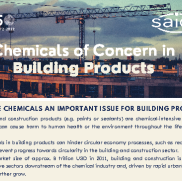
Chemicals of concern (CoCs) contained in everyday products can have harmful impacts on human health and the environment. While chemical-related impacts can often occur during a product’s use or end-of-life, decisions influencing product ingredients are taken further upstream of the value chain. Action to address CoCs in products thus need to consider the entire value chain and impactful interventions need to be made at upstream stages to protect human health and the environment from chemical pollution. UNEP is working on
Manuals and toolkits

Chemicals of Concern in the Building and Construction Sector - Summary

by |
September 2021
copied to clipboard

This is the summary of the UNEP report on Chemicals of Concern in the Building and Construction Sector.The report aims at providing an overview of the challenge that chemicals of concern pose in the context of products relevant for the building and construction sector. It outlines the relevance and linkages of chemicals of concern with regards to a building life cycle and highlights existing gaps, challenges and opportunities regarding the imperative of increasing circularity in the building and construction sector.The

Emerging Policy Issues: Chemicals in products
Report

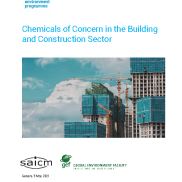
Chemicals of Concern in the Building and Construction Sector

This UNEP report aims at providing an overview of the challenge that chemicals of concern pose in the context of products relevant for the building and construction sector. It outlines the relevance and linkages of chemicals of concern with regards to a building life cycle and highlights existing gaps, challenges and opportunities regarding the imperative of increasing circularity in the building and construction sector.

Emerging Policy Issues: Chemicals in products
Manuals and toolkits

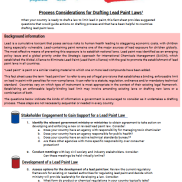
Process Considerations for Drafting Lead Paint Laws

In response to questions received by the Global Alliance to Eliminate Lead Paint on roadmaps for developing regulations on lead content in paint, the Alliance offers the following process considerations. Questions are illustrative, indicating the kinds of information a government might consider as it undertakes each component of a drafting process.
Emerging Policy Issues: Lead in paint
Topics: Policymaking
Factsheets and brochures

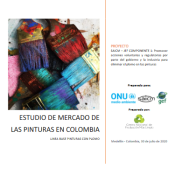
Market Analysis of the paint industry in Colombia (Draft / Spanish only)

Las pinturas se han convertido en parte esencial del estilo de vida de la sociedad moderna, el color de ellas es apetecido por sus funciones estéticas, decorativas, de protección para productos y hasta en usos como códigos de seguridad, sin embargo, su producción y uso plantea aun muchos retos en los cuales se viene trabajando tanto a nivel mundial como local.Los países más industrializados prohibieron desde hace más de 40 años el uso de pinturas con plomo. Colombia aún carece
Emerging Policy Issues: Lead in paint
Topics: Policymaking
Academic article

Life cycle based alternatives assessment (LCAA) for chemical substitution

by
Green Chemistry
|
July 2020
copied to clipboard
AbstractThe world faces an increasing need to phase out harmful chemicals and design sustainable alternatives across various consumer products and industrial applications. Alternatives assessment is an emerging field focusing on identifying viable solutions to substitute harmful chemicals. However, current methods fail to consider trade-offs from human and ecosystem exposures, and from impacts associated with chemical supply chains and product life cycles. To close this gap, we propose a life cycle based alternatives assessment (LCAA) framework for consistently integrating quantitative exposure
Avatar