SAICM Knowledge Management activities are supported by the GEF 9771 project on Global Practices on Emerging Chemical Policy Issues of Concern under the Strategic Approach to International Chemicals Management (SAICM).
Within this framework, the SAICM Secretariat explores ways to create, manage and disseminate knowledge on chemicals of concern. The implementation follows a Knowledge Management Strategy that is being constantly revised and updated. It explores different tools and processes to better manage knowledge cycles, aiming at interlinking knowledge from multiple stakeholders. Communities of practice have been established to support collaborative and innovative exchanges.
I am currently serving as the Knowledge Management Officer for the GEF-funded the Implementing Sustainable Low and Non-Chemical Development in Small Island Developing States (ISLANDS) Programme which supports Small Islands Developing States (SIDS)
My work on training farmers on proper agrochemical use keeps the levels of chemicals in the food chain at minimum residual levels because the farmers are in position to access knowledge on the good agricultural practices that relate to chemical us
Estrategias dinámicas y pluriculturales sobre el recurso humano que este interactuando en el ambiente, para brindar acciones más amenas a la manipulación de los insumos provenientes de la naturaleza o fabricados por el ser humano, a fin de salvagu
I am currently supporting the establishment of an online knowledge management system (KMS) for a GEF-funded "Financing Agrochemical Reduction and Management (FARM)" project which aims to tackle the reduction of using highly hazardous pesticides an
Rebecca is an Environmental and Occupational Health Specialist focusing on children’s environmental health, public health, management of hazardous chemicals in products, exposure assessment, chemical risk assessment and management, risk communicat
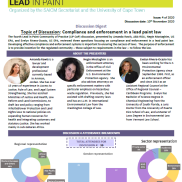
The Secretariat of the Strategic Approach to Chemicals Management (SAICM) and the University of Cape Town (UCT) are launching a new Community of Practice (CoP) on Lead in Paint to bring representatives from different sectors together and to create a learning network around issues related to the elimination of Lead Paint. This is a summary of the discussion on Compliance and enforcement mechanisms in a lead paint law, which took place on 10 November 2020.Presenters: Amanda Rawls (ABA-ROLI), Negin Mostaghim
UN Environment Programme and Open Universiteit have created a Massive Open Online Course (MOOC) on Marine Litter as a key activity of the Global Partnership on Marine Litter (you can join the GPML). It is also part of the Clean Seas Campaign. The course starts on October 26, 2020. It is free for all students and available in 10 different languages. You can still enroll until November 15. Register here!Marine litter is a global problem that affects every ocean of
The SAICM Secretariat, in partnership with the University of Cape Town, established a community of practice on Highly Hazardous Pesticides (HHPs) to foster discussions, exchange of best practices, and recommendations to address HHPs amongst relevant stakeholders. This is a summary of the discussion on Overview of the HHP Global Action Plan and way forward, which took place on 21 October 2020.Presenter: Dr Baogen Bu (FAO)Despite the success of many actions to eliminate Highly Hazardous Pesticides (HHPs), they continue to pose
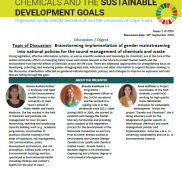
The Secretariat of the Strategic Approach to Chemicals Management (SAICM) and the University of Cape Town (UCT) have launched a Community of Practice (CoP) on Chemicals and SDGs to bring representatives from different sectors together and to create a learning network around issues related to addressing Chemicals and the Sustainable Development Goals (SDGs). This is a summary of the discussion on Brainstorming implementation of gender mainstreaming into national policies for the sound management of chemicals and waste, which took place