Anteneh Abebe
I obtained MSc in Environmental Science and Management from Haramaya University.
Circularity challenges the current economic model towards a sustainable future
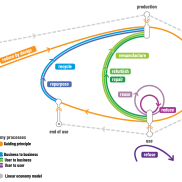
Circular processes contributing to circularity can be grouped into 4 categories, from the most impactful to the least:
1. Reduce by design: reducing the amount of material used, particularly raw material, should be applied as an overall guiding principle from the earliest stages of design of products and services
2. From a user-to-user perspective: Refuse, Reduce and Re-use
3. From a user-to-business intermediary perspective: Repair, Refurbish and Remanufacture
4. From business-to-business: Repurpose and Recycle.
Read more about circularity at UNEP's Building Circularity platform.
I obtained MSc in Environmental Science and Management from Haramaya University.
Angela Pinilla works in the interface of science, business strategy, and safer chemicals.
Waste electrical and electronic equipment (WEEE) has great potential for use and generation, taking into account the technological progress of recent decades, but also the implementation of concepts such as obsolescence.
This case study highlights three main achievements resulting from the EPR pilot that tested potential collection channels, determined local e-waste treatment costs, and promoted environmentally sound e-waste management and gender equality in Nigeria's electronics sector.
The study concludes with a summary of the next steps and key learnings that emphasize the importance of environ-mentally and socially responsible e-waste management with a focus on gender equality in the sector.
Strengthening legal efforts in Nigeria is crucial for successful implementation of Extended Producer Responsibility (EPR) systems. By having the National Environmental Standards and Regulations Enforcement Agency of Nigeria (NESREA) having the enforcing EPR laws create a more sustainable and accountable e-waste sector.
Developing and updating EPR legistlations helps clarify the different responsibilities and enforce producers to comply with their obligations and responsibility. However, effective EPR implementation will require further law enforcement measures.
The case study outlines two achievements of the "Circular Economy Approaches for The Electronics Sector In Nigeria" project towards establishing a stronger legal system in Nigeria:
The study concludes with a summary of key lessons and next steps, emphasizing the importance of enforcing EPR laws, engaging stakeholders, raising public awareness, and collaborating with regional and international partners.
The establishment of an EPR database is critical in operationalising and formalising the management of EPR-related data. The EPR database allows e-waste flow tracking and EPR fee and recovery rate calculation while ensuring producers' information confidentiality and helping prevent counterfeiting activities.
The case study outlines the project’s efforts towards establishing this automation system in Nigeria in the following areas:
The study concludes with a summary of next steps and key learnings, emphasizing the importance of law enforcement, database registration, secure systems for producers, and encouraging the participation of producers in the database registration.