639 resources found

Factsheets and brochures

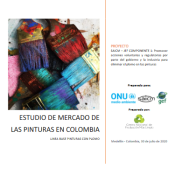
Market Analysis of the paint industry in Colombia (Draft / Spanish only)

Las pinturas se han convertido en parte esencial del estilo de vida de la sociedad moderna, el color de ellas es apetecido por sus funciones estéticas, decorativas, de protección para productos y hasta en usos como códigos de seguridad, sin embargo, su producción y uso plantea aun muchos retos en los cuales se viene trabajando tanto a nivel mundial como local.Los países más industrializados prohibieron desde hace más de 40 años el uso de pinturas con plomo. Colombia aún carece
Emerging Policy Issues: Lead in paint
Topics: Policymaking
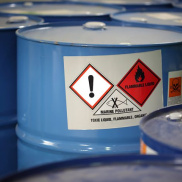
Policy document

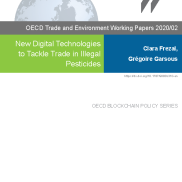
New digital technologies to tackle trade in illegal pesticides

Global trade in illegal pesticides has been steadily growing in recent years, posing serious threats to agriculture, the environment, human health, and the economy. Evidence of this trend can be found in the increasing number of seizures of counterfeit, fake, and unauthorised pesticides, as well as their growing share in the global pesticide market. This paper identifies the main drivers and enablers of this illicit trade, and explores the potential of digital technologies, such as blockchain, to support policies to
Academic article

Endocrine-disrupting chemicals: economic, regulatory, and policy implications

by
ScienceDirect
|
July 2020
copied to clipboard
Endocrine-disrupting chemicals (EDCs) substantially cost society as a result of increases in disease and disability but—unlike other toxicant classes such as carcinogens—have yet to be codified into regulations as a hazard category.This Series paper examines economic, regulatory, and policy approaches to limit human EDC exposures and describes potential improvements. In the EU, general principles for EDCs call for minimisation of human exposure, identification as substances of very high concern, and ban on use in pesticides. In the USA, screening and
Emerging Policy Issues: Endocrine-Disrupting Chemicals
Manuals and toolkits

Brief guide to analytical methods for measuring lead in paint (Second edition)

Lead is a toxic metal whose widespread use has caused extensive environmental contamination and health problems in many parts of the world. Human exposure to lead in 2017 was estimated to account for 1.06 million deaths and the loss of 24.4 million disability-adjusted-life-years (DALYs) from long-term health effects, with the highest burden falling on low- and middle-income countries.This document provides a brief overview of analytical methods available for measuring lead in paint. It is primarily aimed at informing public health
Emerging Policy Issues: Lead in paint
Academic article

Life cycle based alternatives assessment (LCAA) for chemical substitution

by
Green Chemistry
|
July 2020
copied to clipboard
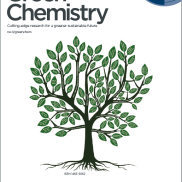
AbstractThe world faces an increasing need to phase out harmful chemicals and design sustainable alternatives across various consumer products and industrial applications. Alternatives assessment is an emerging field focusing on identifying viable solutions to substitute harmful chemicals. However, current methods fail to consider trade-offs from human and ecosystem exposures, and from impacts associated with chemical supply chains and product life cycles. To close this gap, we propose a life cycle based alternatives assessment (LCAA) framework for consistently integrating quantitative exposure
Avatar