- Knowledge Management
- Policymaking
- Sustainable Development Goals
- Chemicals in building products
- Circularity
- Chemicals in electronics
- E-waste
- Gender mainstreaming
- Chemicals in toys
- Life Cycle
- Awareness-raising
- Persistent organic pollutants (POPs)
- Sustainable Public Procurement
- Eco-innovation
- Chemicals in textiles
- Artificial Intelligence
639 resources found
Building Green Product Guidance
More than 100 product guides to support practitioners in selecting products that avoid negative health impacts.

Gaining legal ground in the Extended Producer Responsibility scheme for electronics in Nigeria
Strengthening legal efforts in Nigeria is crucial for successful implementation of Extended Producer Responsibility (EPR) systems. By having the National Environmental Standards and Regulations Enforcement Agency of Nigeria (NESREA) having the enforcing EPR laws create a more sustainable and accountable e-waste sector.
Developing and updating EPR legistlations helps clarify the different responsibilities and enforce producers to comply with their obligations and responsibility. However, effective EPR implementation will require further law enforcement measures.
The case study outlines two achievements of the "Circular Economy Approaches for The Electronics Sector In Nigeria" project towards establishing a stronger legal system in Nigeria:
- The development and gazette of the EPR Guidance document in 2020: the guidance defines the roles and responsibilities of the key public and private stakeholders, the product categories to be covered by the EPR scheme, and the collection and recycling targets.
- The amendment of the National Environmental (Electrical and Electronic Sector) Regulations in 2022: which legally requires EPR subscriptions and prohibits suboptimal treatment of e-waste.
The study concludes with a summary of key lessons and next steps, emphasizing the importance of enforcing EPR laws, engaging stakeholders, raising public awareness, and collaborating with regional and international partners.

Data management automation for the Extended Producer Responsibility scheme for electronics in Nigeria
The establishment of an EPR database is critical in operationalising and formalising the management of EPR-related data. The EPR database allows e-waste flow tracking and EPR fee and recovery rate calculation while ensuring producers' information confidentiality and helping prevent counterfeiting activities.
The case study outlines the project’s efforts towards establishing this automation system in Nigeria in the following areas:
- Developing the EPR database: to manage producers’ market share data, calculate and collect the EPR fees.
- Registering Producers and products in the database: To ensure electronic and electrical producers are registered and to oversee the EPR operation.
- Securing the database: Enhancing producers' trust in the database and ensuring its confidentiality.
The study concludes with a summary of next steps and key learnings, emphasizing the importance of law enforcement, database registration, secure systems for producers, and encouraging the participation of producers in the database registration.

Financing the Sound Management of Chemicals and Wastes

The sound management of chemicals and wastes requires addressing legacy problems while looking ahead to emerging areas of concern. As management needs evolve, predictable and progressive financial support becomes fundamental. Support can help developing countries meet their treaty and non-treaty obligations, but there are numerous other benefits at local, national, and global levels.
As new challenges arise, financial support can help enable timely action. Countries can improve their regulatory capacity and comprehensive risk management. They can implement pollutant release and transfer registers. Financial support can also catalyze effective communication and national coordination, which is required across government departments and agencies in charge of health, environment, agriculture, and customs. Communication is also key for identifying and discussing risks, especially with exposed communities. Financial support can enhance action across the science-policy interface, building information and monitoring mechanisms that bolster the capacity of scientific, technical, and policy communities individually and their ability to interact for science-based policymaking. Such interactions, within government or among stakeholders more broadly, can be key to identifying emerging issues of concern and avoiding regrettable substitutions. Given the global dispersion of some chemicals, local management has global benefits.
Despite these many benefits for the environment and human health, finance remains insufficient. This brief considers realized and potential sources of funding under the three components of the integrated approach: dedicated external financing; private sector involvement; and mainstreaming chemicals and wastes management into development planning. There are applicable lessons from other multilateral funding bodies that may help realize predictable funding streams for chemicals and wastes management.
Costs of Action and Inaction
There are currently no detailed financial assessments of the costs of implementing SDG target 12.4 (achieve the environmentally sound management of chemicals and all wastes throughout their life cycle). Yet, there are indications that the needs could be significant.
The Stockholm Convention on Persistent Organic Pollutants (POPs) conducts needs assessments for each Global Environment Facility (GEF) replenishment period. For the seventh GEF replenishment period (2018-2022), parties estimated the Convention’s funding requirements at USD 4.3 billion, which rose to USD 4.9 billion for GEF-8 (2022-2026).
The Stockholm Convention’s exercise highlights challenges with assessing developing countries’ needs. The estimates only address the POPs already listed in the Convention, not new POPs added at the COPs during GEF replenishment cycles. The assessment reports also highlight the limited information available on the extent of countries’ POPs stockpiles, particularly for polychlorinated biphenyls (PCBs) and new POPs. Support for completing national implementation plans could help with accurate assessments of the scale of support required. It seems a vicious circle: finance is required to get an accurate picture of how much finance is needed.
A similarly complicated picture emerges for estimating the financial needs for the sound management of waste. The Global Wastes management Outlook (GWMO) stresses the need to consider many factors when estimating “net” costs because the capital required for disposal facilities and technologies varies, as do the revenues earned from recovery operations. For example, the GWMO estimates the costs for collection and disposal using waste to energy incineration are 60-100 USD/tonne for upper-middle income countries and 40-100 USD/tonne for lower-middle income countries (Table 5.1).
These costs are substantial, but the costs of inaction are higher. There are direct costs, such as cleaning up contaminated sites resulting from poor chemicals and wastes management. For example, the US spends USD 1 billion annually to clean up hazardous waste Superfund sites. The African Stockpiles Programme estimates USD 150-176 million is required to clean up the 50,000 tonnes of obsolete pesticides in Africa.
There are also indirect effects, which can be difficult to monitor and measure. Health effects are perhaps the most significant. As the Lancet found in 2022, pollution is responsible for one in six deaths worldwide, and toxic chemical pollution represents a growing source of pollution-related deaths. Sub-Saharan Africa shoulders health-related costs due to chemical exposure, which the UN Environment Programme’s (UNEP) Costs of Inaction report estimated in 2013 would increase significantly, by approximately USD 97 billion by 2020. In the US, the annual cost of pollution-related disease in children totals USD 76.6 billion, and of occupational diseases and injuries – USD 250 billion. The EU’s median annual cost for diseases related to endocrine-disrupting chemicals is EUR 157 billion.
There are economic losses from poor management. The Lancet argues that the economic costs of disease and deaths from pollution are substantial. Around 1% of GDP is lost from premature death and disease from “modern pollution” in China, India, and Nigeria, defined as including ambient ozone pollution, ambient particulate matter pollution, lead exposure, occupational carcinogens, occupational particulate matter, gases, and fumes. Ineffective pest management practices can increase pesticide resistance and agricultural costs. For example, in Mali, such challenges were estimated to cost over USD 8.5 million per year, for cotton alone. Supporting sound chemical and wastes management now is a strong investment that can save money in the future. The Global Chemicals Outlook II (GCO-II) estimates the benefits of action to be in the high tens of USD billions annually.
Three Components of the Integrated Approach
The UNEP Governing Council agreed to the integrated approach to long-term funding of the chemicals and wastes agenda in 2013, after a consultative process. The approach aims to increase sustainable, predictable, adequate, and accessible financing for the chemicals and wastes agenda. It was partly a response to the Quick Start Programme, which, despite its successes, raised only USD 41 million over ten years. The Programme’s experience highlighted the need for adequate and sustained finance, a broader support base that includes industry, and heightened political support for chemicals and wastes management. The integrated approach introduces a commitment to pursuing three simultaneous methods of funding chemicals management:
- Mainstream chemicals and wastes management into existing national budgets and development plans.
- Dedicated external financing, where donor countries can prioritize chemicals and wastes management in existing funding mechanisms and increase their contributions to those mechanisms. This can help provide predictable support and bridge gaps in national plans and industry finance.
- Private sector involvement, where governments are encouraged to define how industry and government will share responsibility for the costs of chemical and wastes management. Innovative finance options could further help increase industry involvement in finance.
These three components are complementary and interlinked. Some external sources co-leverage private finance. Mainstreaming chemicals into policies can set a regulatory framework for economic instruments that can leverage private finance. Industry involvement, aligned with the polluter-pays principle, can provide finance that can strengthen mainstreaming efforts. While the integrated approach to financing has mobilized significant resources, the GCO-II stressed that it has not met the needs of developing countries and economies in transition.
Dedicated External Financing
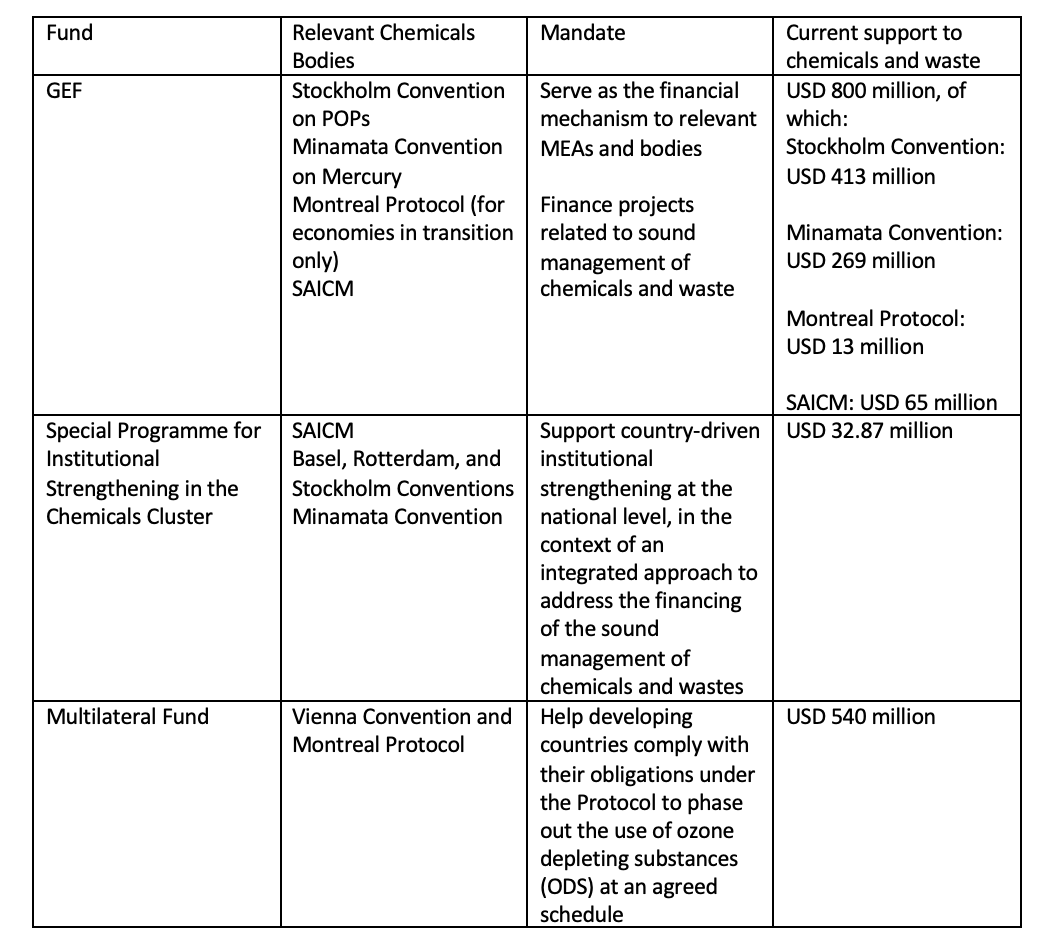
There are three multilateral funds relevant to MEAs for chemicals and wastes and/or to SAICM: the GEF; the Special Programme for Institutional Strengthening in the Chemicals Cluster; and the Multilateral Fund. For each, the scale of support falls short of the parties’ estimated needs. The table below outlines the Funds’ mandates and support they currently provide to chemicals and wastes.
Source: Author’s calculations
GEF
GEF support for chemicals and wastes has progressively increased with each replenishment period. During the GEF-7 period, USD 599 million was allocated to the chemicals and wastes focal area. GEF-8 represents a USD 200 million increase, now sitting at USD 800 million. Overall, the chemicals and wastes focal area will receive 15% of the GEF-8 allocation, nearly matching the 16% allocated for climate change mitigation.
Over time, the GEF has moved to a more integrated approach that brings together its work to support the relevant Conventions and SAICM. During GEF-4, POPs and ODS were addressed in separate focal areas. Projects were also chemical-specific. Since GEF-5, the GEF has supported approaches that focus on sectors or supply chains. The three Conventions’ work is integrated into agricultural, industrial, and pollution control mechanisms at the national level. Projects focused on the artisanal and small-scale gold mining (ASGM) sector and the textiles supply chain include multiple chemicals and mercury. Similarly, the Implementing Sustainable Low and Non-Chemical Development in Small Island Developing States (ISLANDS) programme integrates work across the Conventions.
Special Programme
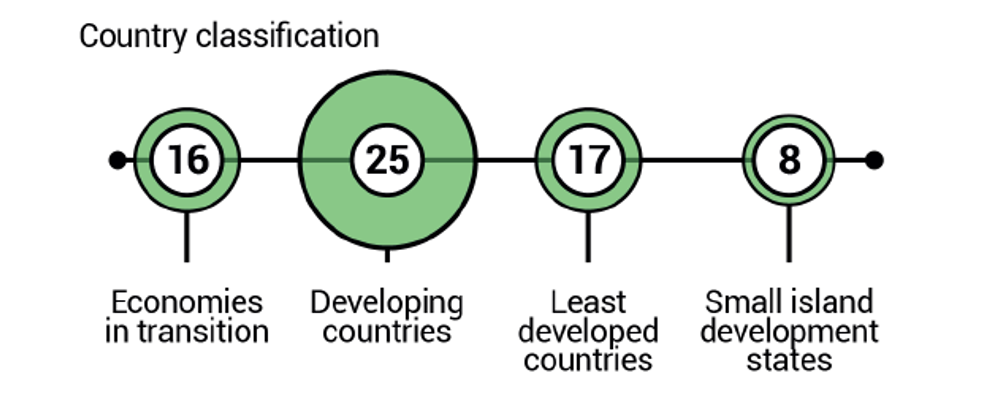
The Special Programme is different. It is a voluntary fund with a broader donor base. Governments, the private sector, and others in a position to do so are encouraged to contribute. To date, the majority of finance contributed is from governments. Eligibility criteria prioritize countries with special needs and least capacity. In 66 projects totalling over USD 17.8 million, 17 were in least developed countries and eight were in small island States.
Source: SAICM Presentation: Overview of the Special Programme
A Midterm Evaluation found that the Special Programme is punching above its weight, meeting or exceeding its goals. However, there are concerns about sustainability of the projects, including the need for cost-recovery mechanisms or other financial assistance to continue to realize the project’s benefits.
Multilateral Fund
The Multilateral Fund supports developing countries working to meet their obligations to phase out ODS by the agreed schedules. Its replenishment cycle is two years. From 2006 to 2014, the Fund was set at USD 400 million. With the adoption of the Kigali Amendment to reduce the consumption and production of hydrofluorocarbons (HFCs), the Fund’s replenishment increased. The Amendment was adopted in 2016 and entered into force in 2019. In 2017, the Fund’s replenishment was USD 500 million and in 2022, it was increased to USD 540 million.
Mainstreaming
Mainstreaming the sound management of chemicals and wastes is the responsibility of all countries. Developing countries integrate chemicals and wastes management into their development planning. Developed countries likewise integrate these issues into international development assistance, including country assistance plans, and multilateral and bilateral agencies. Under the integrated approach, mainstreaming also involves actions that are relevant to finance such as:
- undertaking analytical and diagnostic work to increase awareness of the benefits of the sound management of chemicals and wastes at all levels;
- promote overall engagement, coordination, and partnerships in respect of international financial institutions (such as Bretton Woods), regional development banks, and other financial institutions; and
- promote efforts to ensure buy-in to mainstreaming chemicals and wastes into budgeting and planning processes.
National-level Mainstreaming
Communication is important to mainstreaming, according to a report synthesizing the lessons learned from mainstreaming efforts, including:
- Staff involved in managing chemicals and wastes called for training on the language and processes of developing planning and finance.
- The benefits for the sound management of chemicals and wastes could be communicated in economic terms.
- Consultations with finance and planning agencies helped improve their understanding of chemicals and wastes issues.
The report identifies benefits of interagency coordination, including through formalized mechanisms.
In terms of leveraging finance for chemicals and wastes management, there are a wide range of policy options available. The Organisation for Economic Co-operation and Development (OECD) suggests grants, loans, and tax exemptions are a key part of the overall policy mix for wastes management. Some examples involve direct funding, such as funding pilot projects. Others focus on the institutional conditions to finance chemicals and wastes projects, such as establishing clear liability rules under the polluter-pays principle, or a database of potentially contaminated sites. The level of investment varies across OECD states, as does the share of public finance.
International Development Finance
International development finance through the multilateral development banks (MDBs) and other channels has neglected chemicals and wastes issues. Pollution and biodiversity support in MDBs remained consistent from 1995 to 2020, while support for climate change increased. Between 2015 and 2020, household air pollution and water pollution received more attention from MDBs than ambient air pollution or chemical pollution.
While the level of attention may be consistent, there seems to be little mainstreaming in MDB decisions. The 2015 GWMO report notes that the sound wastes management represented just 0.3% of total international development finance. Of that available funding, between 2003-2012, two-thirds were allocated to ten middle-income countries. The report also notes that 70% of MDB support for sound wastes management takes the form of loans, amounting to USD 2.8 billion over the same 10 years.

Box 1: Lessons from other MEAs: Mainstreaming and Finance
Private Sector Involvement
Given the need to scale up financial resources, many have looked to industry as a source. The vision is that the private sector internalizes the costs of complying with regulations, which could include economic incentives such as taxes or subsidies. So far, as the GCO-II report stresses, “the vast majority of human health costs linked to chemicals production, consumption, and disposal are not borne by chemicals producers, nor shared down the value-chain.” It seems the aspirations of this component of the integrated approach have yet to be translated into concrete implementation.
Private Sector involvement faces several challenges:
- identifying the relevant actors and their roles at different stages of the lifecycle of chemicals and wastes;
- achieving clarity on what constitutes private sector involvement;
- monitoring progress;
- promoting accountability; and
- conducting further analysis of the effectiveness of various instruments for chemicals and wastes management, and of the costs of perverse incentives such as subsidies.
Due to these challenges, it has proved difficult to leverage the potential of the private sector. Reviews of SAICM and the Quick Start Programme showed that private sector involvement was common, although often limited to information provision. There has been a 10% increase in private sector finance evident in SAICM progress reports between 2009-2010 and 2011-2013.
Market-based Instruments
Market-based instruments provide a price incentive for companies to act. They can complement regulatory approaches such as bans or restrictions, by creating cost-effective reasons for companies to innovate. Market-based instruments can increase the price of using a chemical. Some market-based instruments directly affect the price, such as taxes and levies. Subsidies and tradable permits are indirect methods.
The use of such mechanisms is increasing at the national level. A thematic report for GCOS II found increased use of taxes on pesticides and inorganic fertilizers, chlorinated solvents, and phthalates and brominated flame retardants. It also found increased use of refund schemes for batteries, electronic equipment, and vehicles. These measures are primarily found in high-income countries, including the use of risk-based taxation of pesticides in Denmark, Norway, France, and Mexico. Middle- and low-income countries use these tools less often.
Trading schemes allow companies to buy and sell emissions allowances on a market. For example, the costs of substituting a chemical may vary among companies, creating the opportunity to buy and sell credits. Tradeable permit systems were used in the US to phase out lead in petrol and in New Zealand to reduce nitrogen pollution from agriculture.
Overall, the use of market-based mechanisms for chemicals remains low, particularly compared to energy-related policies. There is uncertainty and a lack of data on context-specific factors, such as price elasticities, market structure, and costs of substitutes that may help set up market-based mechanisms. There is a need to study which policy instruments – regulation or markets – could be more effective for addressing different chemicals and wastes, considering different exposure effects, and substitution costs.
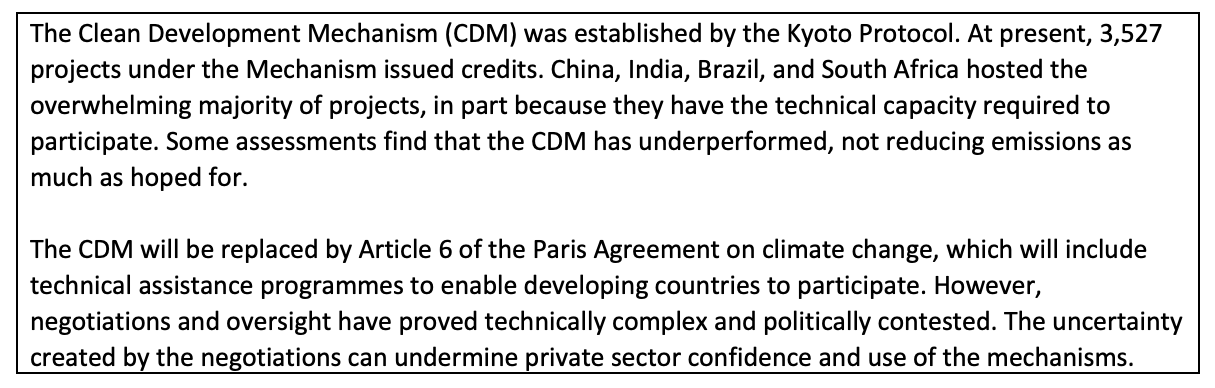
Box 2: Emissions Trading: Experiences from other MEAs
Source: Emission reduction targets and outcomes of the Clean Development Mechanism (2005-2020)
Extended Producer Responsibility
Extended Producer Responsibility (EPR) refers to policies that hold producers responsible for a product’s entire lifecycle. In theory, such policies can generate finance for wastes management. EPR creates incentives for producers to reduce waste generated by a product and to improve product design to ease recovery and reuse efforts. In general, EPR policies are more developed in Europe and Canada than in the US, although it varies by state. In Canada, producers pay a fee to stewardship organizations for the sound management of hazardous waste. Roughly half of US states have EPR policies.
Developing countries have significant interest in implementing EPR policies. China and India have EPR policies in place for e-waste. Following the ban on plastic bags in 2017, Kenya introduced two voluntary EPR schemes, focusing on PET plastics and bread bags (LDPE). Based on this experience, Kenya is setting up regulation for more companies to increase their responsibilities of their products, including new EPR regulations currently in development. The products subject to EPR are: packaging for hazardous and non-hazardous products, e-waste, end-of-life motor vehicles, and non-packaging items.
These efforts face additional complications. There is often a large informal sector that dismantles and recycles waste. Developing countries also receive hazardous waste from developing countries, including through illegal trade. There may be a need for a global notion of EPR, given the global trade of hazardous wastes.
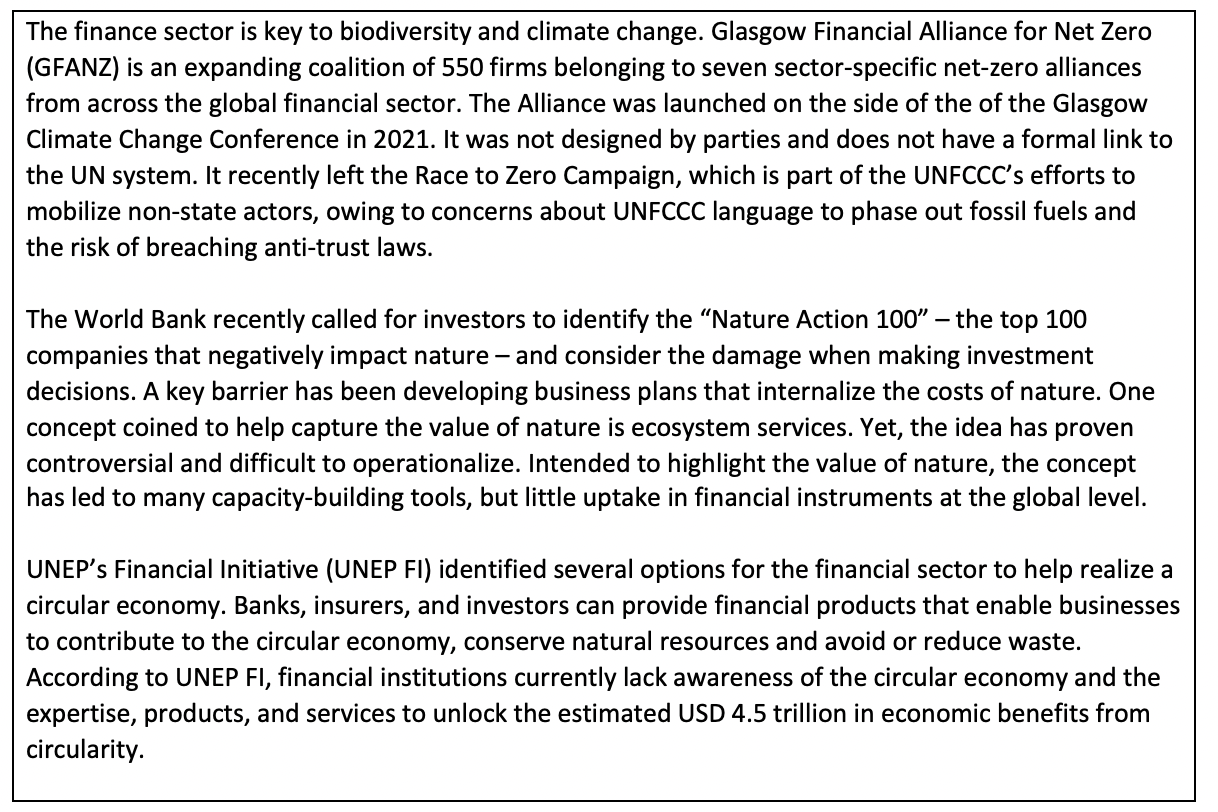
Box 3: The Financial Sector: Experiences from other MEAs
Sources: GFANZ About Us, Glasgow Financial Alliance for Net Zero, GFANZ ‘quiet quits’ the UN’s Race to Zero Campaign – Reclaim Finance
World Bank Unlocking Private Finance for Nature
UNEP FI Report Financing Circularity: Demystifying Finance for the Circular Economy
The Way Forward Under the Integrated Approach
There is more work to be done under each component of the integrated approach. Financial support has so far been insufficient, prompting new ideas as countries look ahead to the new SAICM beyond 2020 framework. The African Group has proposed a globally-coordinated fee on the sale of basic chemicals and chemical feedstocks, as well as an international fund dedicated to chemicals and wastes. Iran and the International Conference of Chemical Associations (ICCA) suggested a global matchmaking platform to help build capacity in developing countries. Both of these ideas are in the current consolidated text under negotiation. Among the many outstanding issues in these negotiations, there are calls for scaling up support under each component of the integrated approach and finding innovative ways to increase finance for chemicals and wastes.
Dedicated external finance has increased, which provides some hope for the future. Unlocking private finance has proved difficult in biodiversity and climate governance too, and it remains so for chemicals and wastes management. But there are policy lessons on some price mechanisms that can be effective. Adequate attention for chemicals and wastes management is another reason to heed calls for MDB reform as part of a broader environmental mainstreaming effort. Learning lessons from the glimpses of success could help spur momentum for future financial support commensurate with the significant need to protect human health and the environment.
* * *
This document has been developed within the framework of the Global Environment Facility (GEF) project ID: 9771 on Global Best Practices on Emerging Chemical Policy Issues of Concern under the Strategic Approach to International Chemicals Management (SAICM). This project is funded by the GEF, implemented by UNEP, and executed by the SAICM Secretariat. The International Institute for Sustainable Development acknowledges the financial contribution of the GEF to the development of this policy brief.
This Policy Brief is the fourth in a series featuring cross-cutting topics relating to the sound management of chemicals and wastes. It was written by Jen Allan, Earth Negotiations Bulletin (ENB) Strategic Advisor. The series editor is Elena Kosolapova, Senior Policy Advisor, Tracking Progress Program, IISD.


Creating a Strong Policy Framework for Sound Chemicals Management
Chemicals are essential to many household and industrial activities, but they also pose threats to humans, wildlife, and ecosystem health. The World Summit for Social Development (WSSD) in 1995 called for developing “a strategic approach to international chemicals management” by 2005, and set a 2020 target to minimize the significant adverse effects of chemicals on human health and the environment.
Since then, the international community has taken some important steps, adopting multilateral agreements on prior informed consent (PIC), persistent organic pollutants (POPs), and mercury, as well as continuing prior work on the transboundary movement of hazardous waste. An overarching policy process, the Strategic Approach to International Chemicals Management (SAICM), was established in Dubai in 2006. While some progress has been made, the ambition for an overall strong post-2020 regime on chemicals and waste has not yet been achieved.
To support negotiations toward a post-2020 regime, in 2019, the fourth session of the UN Environment Assembly (UNEA-4) called for review of evidence published within the previous decade (Resolution 4/8) to support further discussion at UNEA-5 and other international forums working toward sound management of chemicals and waste. Following on from this, in 2020, the UN Environment Programme (UNEP) published a major report titled, ‘An Assessment on Issues of Concern: Chemicals and Waste Issues Posing Risks to Human Health and the Environment.’ The report highlights challenges and opportunities for sound chemicals management, and proposes policy and management options.
This policy brief provides a summary and perspective on that report, in light of the most recent developments on chemicals and waste.
The eight issues identified under SAICM
The 2006 Dubai Declaration and Overarching Policy Strategy called for the SAICM process to identify “emerging policy issues” (EPIs), based on specified criteria that include the magnitude and impacts of the problems, their cross-cutting nature, and the status of knowledge and action around those issues, with the aim to avoid duplication of efforts. To date, the SAICM process has identified six EPIs, namely:
- chemicals in products;
- endocrine disrupting chemicals;
- environmentally persistent pharmaceutical pollutants;
- hazardous substances within the life cycle of electrical and electronic products;
- lead in paint; and
- nanotechnology and manufactured nanomaterials.
Two other “issues of concern” have also been highlighted for action:
- highly hazardous pesticides; and
- per- and polyfluoroalkyl substances.
This section provides a summary of these issues, as reflected in the UNEP report.
Chemicals in products (CIP), including those used in many consumer items, are not always listed on labels. The CIP programme, launched by UNEP, SAICM, and the Inter-Organization Programme for the Sound Management of Chemicals (IOMC) in 2015, promotes information exchange about chemicals of concern so that all users can make informed choices. That includes not only the companies within the product supply chain, but also others, such as designers, consumers, waste managers, and users. This is truly a global challenge because product life cycles often span different countries – they are made in one country, used in another, and finally recycled or disposed in yet another.
Endocrine disrupting chemicals (EDCs) affect the characteristics of sexual organs and reproduction in humans and animals. More than 1,400 chemicals in pesticides, biocides, industrial chemicals, cosmetics and drinking water are thought to be EDCs, but only a small number have been screened by regulators. The report suggests that including EDCs in the Globally Harmonized System of Classification and Labelling of Chemicals – a system for the classification of chemicals with the use of internationally consistent labels, safety data sheets, and easily understandable symbols – would help countries regulate EDCs in a coordinated manner.
Environmentally persistent pharmaceutical pollutants (EPPPs) include drugs used to treat people and livestock, which cause ill effects when released into the environment. The impacts include antimicrobial resistance, which is linked to the rise of ‘superbugs.’ Action on this issue would mean that countries strengthen their own regulatory and voluntary frameworks to avoid improper prescription and overuse of antibiotics, and organize take-back and sound disposal of unused or expired drugs. The report calls for conducting risk assessment of drugs – especially those that were licensed before environmental risk assessment systems were put in place – based on criteria such as sales data, ecotoxicity, and efficiency of wastewater treatment to counter their impacts.
Hazardous substances in the life cycle of electrical and electronic products (HSLEEP) contain heavy metals and persistent organic pollutants. Actions to reduce the impacts of HSLEEP would include changes to the design and composition of products to minimize the use of hazardous substances, and management of recycling methods to avoid releases of chemicals into the environment. As noted in the report, this is a major issue for many developing countries and economies in transition (EITs), where informal recycling methods expose women and children who work in those industries.
Highly hazardous pesticides (HHPs) are those that cause severe and irreversible harm to human health, the environment, and sustainability of agriculture. While the Food and Agriculture Organization of the UN (FAO) and the World Health Organization (WHO) have developed codes of conduct and management guidelines, implementation is often patchy. Capacity building, information sharing about pesticide use, toxicity, and exposure, and steps toward non-chemical alternatives are all needed. For example, agroecology techniques and integrated pest management would help reduce risk. FAO is currently in the process of drafting a Global Action Plan on Highly Hazardous Pesticides to reduce and manage HHP use.
Lead in paint is a neurotoxin, especially dangerous to children. The Global Alliance to Eliminate Lead Paint (GAELP), initiated as an international partnership in 2009, aims to have all countries adopt legally binding measures to control the production, import, sale, and use of lead paints. As of December 2021, just 43% of countries had done so. The Global Environment Facility (GEF) is helping 40 countries to introduce legislation, and also works with some paint manufacturers to phase out the use of lead paint. In a number of countries that already have laws restricting lead paint, measures for effective monitoring and enforcement are still needed, according to the report.
Nanotechnology and manufactured nanomaterials (nanomaterials), while composed of known chemicals, may pose new threats. For example, the effects of inadvertently inhaling or ingesting nanomaterials are often unknown. Vehicle tires are one example of a common product containing nanomaterials that may be released into the environment during use, recycling, and disposal. In the EU and Organisation for Economic Co-operation and Development (OECD) countries, some information-sharing mechanisms and voluntary partnerships have begun, including the Malta Initiative that supports OECD guidance and testing development for nanomaterials. The report recommends that a common definition of nanomaterials be adopted.
Per- and polyfluoroalkyl substances (PFASs) are manufactured chemicals containing linked carbon and fluorine atoms. Products containing PFASs include many that resist oil and water, such as rainwear, non-stick cookware, and carpets. Being present in many household products, they pose a high exposure risk. PFASs may have negative impacts on immune system function and cognitive function in children, and are linked to type 2 diabetes in women. Long-chain PFASs are listed under the Stockholm Convention on POPs. A phased approach to ending the use of PFASs except for “essential use” purposes is needed, according to the report.
The eleven other issues of concern identified in GCO-II
In 2016, UNEA requested UNEP to provide an update on EPIs and other issues “where emerging evidence indicates a risk to human health and the environment” (Resolution 2/7). UNEP published a report titled, ‘Global Chemicals Outlook II: From Legacies to Innovative Solutions’ (GCO-II), in April 2019. GCO-II identified 11 “other issues” of concern that pose risks to people and the environment, drawing on assessments done by governments or intergovernmental organizations. They are:
- arsenic, a heavy metal;
- bisphenol A (BPA), used, for example, in durable plastics for water bottles and protective coatings on vehicles and machinery;
- cadmium, used in batteries and solar cells;
- glyphosate, a weedkiller;
- lead, a heavy metal which, besides its usage in paint (addressed above), is also in batteries, ceramics, and other items;
- intentionally added microplastics in products, such as the ‘microbeads’ in some detergents and facial cleansers;
- neonicotinoids, pesticides that affect the nervous system of insects;
- organotins, used as biocides in products such as anti-fouling paint for marine vessels;
- phthalates, used in solvents and plasticizers to improve the flexibility of plastic items;
- polycyclic aromatic hydrocarbons (PAHs), found in smoked meats, mothballs, and other consumer goods; and
- triclosan, an antiseptic used in personal care products.
Many of these chemicals are classified as potential carcinogens and have other adverse health impacts in humans and animals. Some pose the risk of bio-accumulation as concentrations in the body tend to increase over time. Many are transported across the globe through water, soil, and atmospheric systems, thus posing transboundary issues that no single country can manage on its own. Clean-up from the environment is difficult or unfeasible; therefore, the UNEP report calls for addressing risks at every stage of the product life cycle, from design through to usage, recycling, and disposal.
As noted in the report, regulating, and reducing the use of chemicals with the most troubling impacts will also have many benefits. For example, more than half the world’s usage of glyphosate is for crops that have been genetically engineered to tolerate this weedkiller. Reducing and eliminating the use of glyphosate would encourage better agricultural practices, such as crop rotation and integrated pest management. Managing the risks would help avoid intergenerational impacts, for example, for low-income populations that are thought to be more exposed to phthalates in cheap building and household materials such as vinyl, food wrappers, and takeaway containers.
Mutually supportive processes and frameworks
Section 5 of the UNEP report presents a “thought starter” on avenues and means of future work, highlighting, among many different possibilities, the following:
- Multilateral environmental agreements (MEAs) allow for addition of new issues of concern to come under their purview. For example, the Basel Convention on the Transboundary Movements of Hazardous Wastes amended its annexes in 2019, to bring plastic waste within its scope. Similarly, the Rotterdam Convention, which covers prior informed consent and information exchange regarding the movement of hazardous chemicals, the Stockholm Convention on POPs, the Minamata Convention on mercury, and the Montreal Protocol on ozone-depleting substances all may include listings of new chemical hazards as they become known.
- International reviews and risk assessments are conducted by multilateral organizations, including WHO, FAO, UNEP, and others. Additionally, the IOMC was established in 1995 to strengthen cooperation and increase coordination in the field of chemical safety. Besides the flagship GCO, UNEP also publishes the Global Waste Management Outlook. OECD’s work in establishing standard testing guidelines and protocols for good laboratory practice provides a foundation for implementation of sound chemicals management.
- The International Conference on Chemicals Management (ICCM), the governing body for SAICM, will consider options for a post-2020 framework for sound management of chemicals and waste when it convenes for its fifth meeting (ICCM-5) in September 2023. Concurrently, negotiations are ongoing toward establishing a science-policy panel to contribute further to the sound management of chemicals and waste and to prevent pollution. Such a panel would be a counterpart to existing science-policy panels, such as the Intergovernmental Panel on Climate Change (IPCC) and the Intergovernmental Science-Policy Platform on Biodiversity and Ecosystem Services (IPBES). These processes are also relevant to achieving SDG 12 on ensuring sustainable consumption and production patterns.
According to an IOMC proposal to be considered within the SAICM process, a post-2020 framework for integrated chemicals and waste management should include:
- developing basic national chemical management systems and capacities in all countries;
- integrating chemicals management in key industry sectors and product value chains; and
- integrating chemicals management with sustainable development issues and initiatives.
At an intersessional meeting of SAICM, which took place from 29 August to 2 September 2022 in Bucharest, Romania, delegates developed a draft of a single consolidated document for the future post-2020 framework, to be fleshed out in subsequent intersessional meetings leading up to ICCM-5.
Looking ahead: Creating a strong framework for chemicals management
GCO-II found that global chemical production capacity of 2.3 billion tonnes in 2017 is set to double by 2030. According to UNEP’s assessment of issues of concern, the existing multilateral regime, which addresses specific chemicals and chemical groups, leaves many gaps. Some substitutions for hazardous chemicals also turn out to be “regrettable substitutions” that have equally negative impacts. Rapid changes sparked by adoption of new technologies and the changing global environment are meanwhile posing new challenges.
A strong policy and programme framework on chemicals would include the ability to effectively track national and regional regulatory actions that signal emerging priorities, the UNEP report suggests. It would engage a wide range of stakeholders in the governance of chemical and waste management, beyond chemicals experts, such as law scholars, social scientists, and civil society organizations (CSOs) who would bring a sharper focus on social and environmental concerns relevant to chemicals management.
Ultimately, the sound management of chemicals will not take place in isolation from efforts to address the triple planetary crises of climate change, biodiversity loss, and pollution. A strong policy and management regime to address pollution and waste must be part of the global quest for a sustainable planet.
* * *
This document has been developed within the framework of the Global Environment Facility (GEF) project ID: 9771 on Global Best Practices on Emerging Chemical Policy Issues of Concern under the Strategic Approach to International Chemicals Management (SAICM). This project is funded by the GEF, implemented by UNEP, and executed by the SAICM Secretariat. The International Institute for Sustainable Development acknowledges the financial contribution of the GEF to the development of this policy brief.
This Policy Brief is the third in a series featuring cross-cutting topics relating to the sound management of chemicals and waste. It was written by Delia Paul, Earth Negotiations Bulletin (ENB) team leader and writer. The series editor is Elena Kosolapova, Senior Policy Advisor, Tracking Progress Program, IISD.

Initiating Circularity for electronic waste in Nigeria: A promising paradigm for treating e-waste globally
Over half a million tonnes of discarded electronic appliances are improperly processed in Nigeria every year, threatening the country's environment and the health of approximately 100,000 informal workers in the recycling industry.
With support from the Global Environment Facility (GEF), the Government of Nigeria has joined forces with the United Nations Environment Programme (UNEP) and partners to turn the tide on e-waste under the “Circular Economy Approaches for the Electronics Sector in Nigeria” project. Led by UNEP and supported by the National Environmental Standards and Regulations Enforcement Agency of Nigeria (NESREA), the $15-million initiative brought together players from the Government, the private sector, and civil society to design and operationalise a financially self-sustaining circular economy (CE) for electronics in Nigeria.
The project aims to stimulate a CE pilot through an Extended Producer Responsibility (EPR) scheme that serves as a model for countries facing similar challenges. EPR is an integrated waste management approach that extends the responsibility of manufacturers to the entire lifecycle of their product, particularly to the end-of-life treatment. By applying this approach, the producers will be obliged to commission for collecting, pre-treating and recycling their originated e-waste.
The project creates synergies among pre-existing elements of an EPR system in Nigeria to establish a sustainable management system and financing mechanism for EPR implementation. Establishing and enforcing a sustainable approach in Nigeria with supporting regulations and legally binding requirements is expected to recover and re-introduce usable materials into the value chain, dispose of hazardous e-waste streams in an environmentally sound manner, and create safe employment for Nigerian e-waste workers.

Community of Practice on Chemicals and SDGs - 2022 Digest Compilation
The Secretariat of the Strategic Approach to Chemicals Management (SAICM) and the University of Cape Town (UCT) have launched a Community of Practice (CoP) on Chemicals and SDGs to bring representatives from different sectors together and to create a learning network around issues related to addressing Chemicals and the Sustainable Development Goals (SDGs). This is a compilation of summaries of the discussions, which took place in 2022.

Community of Practice on Lead in Paint - 2022 Digest Compilation
The Secretariat of the Strategic Approach to Chemicals Management (SAICM) and the University of Cape Town (UCT) have established a Community of Practice (CoP) on Lead in Paint to bring representatives from different sectors together and to create a learning network around issues related to the elimination of Lead Paint. This is a compilation of summaries of the discussions, which took place in 2022.
