SAICM Knowledge Management activities are supported by the GEF 9771 project on Global Practices on Emerging Chemical Policy Issues of Concern under the Strategic Approach to International Chemicals Management (SAICM).
Within this framework, the SAICM Secretariat explores ways to create, manage and disseminate knowledge on chemicals of concern. The implementation follows a Knowledge Management Strategy that is being constantly revised and updated. It explores different tools and processes to better manage knowledge cycles, aiming at interlinking knowledge from multiple stakeholders. Communities of practice have been established to support collaborative and innovative exchanges.
My work on training farmers on proper agrochemical use keeps the levels of chemicals in the food chain at minimum residual levels because the farmers are in position to access knowledge on the good agricultural practices that relate to chemical us
My activities envisaged the involvement in a sound management of chemicals at the national level. My professional interests are dedicated to health and environment.
I am currently supporting the establishment of an online knowledge management system (KMS) for a GEF-funded "Financing Agrochemical Reduction and Management (FARM)" project which aims to tackle the reduction of using highly hazardous pesticides an
Estrategias dinámicas y pluriculturales sobre el recurso humano que este interactuando en el ambiente, para brindar acciones más amenas a la manipulación de los insumos provenientes de la naturaleza o fabricados por el ser humano, a fin de salvagu
Rebecca is an Environmental and Occupational Health Specialist focusing on children’s environmental health, public health, management of hazardous chemicals in products, exposure assessment, chemical risk assessment and management, risk communicat
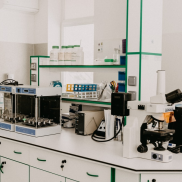
The Lead in Paint Laboratory Database lists laboratories from all UN regions capable of identifying and quantifying lead in paint samples.It is established by UNEP in close cooperation with the United States Environmental Protection Agency and the World Health Organization as part of an activity of the Global Alliance to Eliminate Lead Paint. For each listed laboratory, the databank offers publicly available information of interest, such as contact details, number of staff, instrumentation, analytical techniques, accreditation, etc. This database of