43 resources found

Food Systems and Chemicals: Addressing Highly Hazardous Pesticides

Safe or scary? The use of pesticides in modern agriculture has brought gains but also risks for human health and the environment. Addressing the use of chemicals, including highly hazardous pesticides (HHPs), in our modern world is especially important in the context of the triple planetary crisis of climate change, biodiversity loss, and pollution, which jeopardizes decades of progress in human development. Current trends showing that the SDGs are off track illustrate the gravity of the situation. While blurred by complexity and distrust, the sound management of chemicals and waste is central for more resilient and healthier food systems.
The Food and Agriculture Organization of the UN (FAO) and the World Health Organization (WHO) 2013 International Code of Conduct on Pesticide Management and the 2016 Guidelines on Highly Hazardous Pesticides adopt the following definition of highly hazardous pesticides (HHPs): “pesticides that are acknowledged to present particularly high levels of acute or chronic hazards to health or environment according to internationally accepted classification systems such as WHO or Global Harmonized System (GHS) or their listing in relevant binding international agreements or conventions.”
Chemicals, such as pesticides, fertilizers, and food additives, are widely used in food production to increase crop yields, prevent pest damage, and enhance food’s appearance, taste, and shelf life. However, exposure to certain chemicals can harm human health, including by causing cancer, reproductive and developmental problems, and neurological issues. In particular, the UN Environment Programme’s (UNEP) latest Global Chemicals Outlook warns about the growing risks associated with the use of hazardous chemicals and other pollutants.
This Policy Brief aims to provide a comprehensive overview of current challenges related to food systems, focusing on the impact of HHPs on the health of people and the planet. It concludes with policy recommendations that can support decision makers in implementing integrated approaches to pesticide management, notably in the context of the new Global Framework on Chemicals, adopted in September 2023.
Food systems transformation: The need for bold and urgent action
Our current food systems are not fit-for-purpose. This is because despite the successful growth of global production and a growing population, several new challenges emerged due to how we produce and consume food in our modern era.
First, paradoxically, all forms of malnutrition are on the rise. The 2023 edition of the State of Food Security and Nutrition in the World (SOFI) shows that about 29.6% of the global population – 2.4 billion people – were moderately or severely food insecure in 2022. Among them, about 900 million (11.3% of people in the world) were severely food insecure. Second, food production and unsustainable consumption patterns challenge the wellbeing of future generations. Around 828 million, or 1 in 9, people go to bed hungry every night. This happens at the same time that 931 million tons of food, or 17% of the total food available to consumers, goes to waste. Food loss and waste are estimated to account for 8-10% of greenhouse gas (GHG) emissions, exacerbating climate change, pollution, and biodiversity loss. Third, rising inequalities contribute to negative trends in food security. For example, the gender gap in food insecurity continued to rise in 2021, with 31.9% of women in the world being moderately or severely food insecure, compared to 27.6% of men – a gap of more than four percentage points, compared with three percentage points in 2020. Finally, unsustainable food systems, coupled with the cost-of-living crisis, primarily due to the COVID-19 pandemic and ongoing conflicts worldwide, risk exposing populations to increasingly insecure food and energy supplies.
With the burden of malnutrition disproportionately affecting the most vulnerable with low incomes, deep health disparities will continue delaying progress in poverty reduction under a business-as-usual (BAU) scenario. The SOFI 2023 report also projects that almost 600 million people will still be facing hunger in 2030 – even if global economic recovery is achieved. This is the same as in 2015, when the goal of ending hunger, food insecurity, and malnutrition by the end of this decade was launched under the 2030 Agenda for Sustainable Development and its 17 SDGs.
In sum, more is needed to achieve a genuinely equitable food system that delivers nutritious and healthy diets for all. Recognizing these challenges, the UN Food Systems Summit 2021 and its follow-up actions set the stage for a transformation that can support the achievement of the SDGs by 2030.
Food systems and chemicals management: Challenges for people and the planet
A more resilient, healthier, and more equitable and sustainable environment is a core piece of the food systems transformation puzzle. And yet, the excessive use of pesticides contaminates soil, water, wildlife, and habitats. This is especially critical in the context of HHPs. As noted, HHPs are pesticides that must be handled differently, given their high toxicity. They are considered too dangerous for standard risk reduction measures, such as labeling and personal protective equipment (PPE).
HHP residues are also found in food. This is not only dangerous for farmers and other workers directly handling those chemicals but raises risks for consumers as well. Developing countries shoulder these risks disproportionately, as only 35% of them have pesticide regulations. Moreover, even with regulations, a lack of capacity to enforce the rules creates implementation gaps. With the global population growing, food safety remains a rising challenge worldwide, given that pesticide residues are found in high concentrations in fresh agriculture. Recent statistical results show that the most problematic hazard classifications for food safety are antibacterial substances and pesticides.
Figure 1. Percentage of pesticides considered as highly hazardous, by country
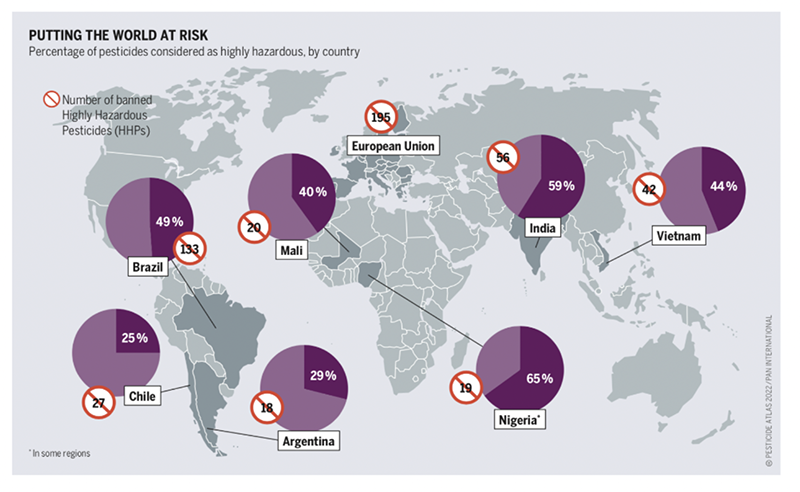
Source: Pesticide Atlas 2022, Heinrich-Böll-Stiftung & others Eimermacher/stockmarpluswalter, CC BY 4.0
Moreover, according to WHO, three million cases of pesticide poisoning occur annually, resulting in an estimated 220,000 deaths, with HHPs being responsible for many poisoning incidents. In addition, about 20% of the approximately 800,000 people who die by suicide yearly do so by ingesting pesticides (WHO, 2019). HHPs harmful effects are particularly notable in low- and middle- income countries (LMICs), where the lack of regulations or disposal centers cause great damage. In total, 95% of 385 million people who suffer from unintended pesticide poisoning every year are in the Global South.
Global chemical pollution levels have crossed planetary boundaries
Already in 1962, the famous ‘Silent Spring’ by Rachel Carson alerted the world to the harmful effects of pesticides. This milestone work influenced the ban of highly toxic chemicals such as DDT in many countries. Despite this success, nowadays, the use of chemicals is at its record high. To safeguard our planet’s habitability, countries must work with and not against nature. And yet, harmful impacts of HHPs on ecosystems have historically been neglected.
The use of agrochemicals comes with the promise that they will minimize losses by protecting crops, increasing productivity, and maintaining the quality of products. They are also defended for the chance to save labor costs, which allows for price reduction of global commodities. Pesticides have been used to keep harmful pests away from the fields, including rats, mice, ticks, and mosquitoes. Although there have been advantages in terms of productivity, exposure to HHPs is problematic. According to WHO, the most significant exposure to HHPs occurs among agricultural and public health workers during handling, diluting, mixing, and applying pesticides. HHPs have been linked to immunologic abnormalities and reproductive and developmental consequences.
A highly contentious debate linked to this theme is the expansion of genetically modified crops. A study shows that, currently, 74% of soybeans grown worldwide are genetically modified. The same analysis shows that Brazil and Argentina are now among the countries with the highest herbicide consumption in the world, just after China and the US.
Pesticides are ubiquitous. They contaminate groundwater, rivers, lakes, and coastal waters, representing a threat to the environment. Healthy soils are considered an essential natural element for human security. And yet, population growth and rapid urbanization are putting soils at risk, and agricultural intensification is making soils more prone to erosion. Allowing unrestricted use of chemicals exacerbates this challenge. The importance of healthy soils, which are fundamental to the future of food, is underestimated. Diverse species, including invertebrates, bacteria, and fungi, that are essential for ecosystem services because they help filter water, recycle nutrients, sequester greenhouse gases (GHGs), regulate climate, and support healthy soils, are threatened by abundant use of dangerous chemicals. Insects, too, are in danger, and this is bad news for us. This is because they offer pollinating services, allowing fruits, flowers, and vegetables to grow. Honey, silk, and beeswax are other products that insects offer, besides contributing to recycling of nutrients and pest control.
Organochlorine Pesticides (OCPs) concentrations, measured in air and human milk, showed a general declining trend. However, OCPs are still found in the environment, including in some remote places showing high values, even though these substances have been banned decades ago. DDT, one of the initially listed persistent organic pollutant (POPs) under the Stockholm Convention, was detected in high values in both core matrices air and human milk. DDT has been the dominant POP out of all the POPs analyzed in the framework of the UNEP/GEF Global Monitoring Plan (GMP) projects. Further, other OCPs like dieldrin, heptachlor, and endosulfan showed scattered values depending on the country.
The use of synthetic chemicals and the expansion of monocultures cause biodiversity loss and erode the basis for a healthy future. The intensification of the triple planetary crisis of climate change, biodiversity loss, and pollution could increase the use of pesticides, creating a vicious cycle: the decreasing number of beneficial insects justifies and calls for more pesticide use, further reducing all types of biodiversity. Moreover, pesticides are constantly on the move. Wind can move dangerous particles from agricultural areas to residential zones. Called “pesticide drift,” this phenomenon has often been overlooked.
In addition, pesticides threaten people’s right to live in dignity, the right to bodily integrity, and the right to a healthy environment. Only around 4% of all pesticides used globally are regulated by binding international conventions. Moreover, indirect effects on food chains and biodiversity remain little understood, with negative effects hard to predict. Responding to all these challenges calls for an accelerated transition toward more resilient, sustainable, nutritious, and inclusive food systems.
Regulatory shortcomings and the need for multilateral coordination
Several international, national, and regional regulations are in place to minimize chemical exposure throughout the food supply, benefiting people and the planet.
Prior to the adoption of the Global Framework on Chemicals, for more than 15 years, SAICM served as a global policy framework aimed at enhancing the management of chemicals and improving the health of human beings and the environment. Efforts to agree on a chemicals management approach have a long history, starting at the 2002 World Summit on Sustainable Development (WSSD), where countries agreed to achieve, by 2020, the use and production of chemicals in ways that lead to the minimization of significant adverse effects on human health and the environment. That led to the launch, in 2006, of the SAICM at the first ICCM in Dubai, United Arab Emirates (UAE). A flexible, voluntary, non-binding, multi-stakeholder, multi-sectoral initiative dedicated to promoting collaboration, SAICM, recognized the importance of ensuring safety, calling for developing and implementing policies and measures to minimize exposure to hazardous chemicals through the food supply and improving the overall safety of the food system.
To continue this work, in September 2023, the Fifth International Conference on Chemicals Management (ICCM5) adopted a successor agreement to SAICM – the Global Framework on Chemicals. Among others, the new framework calls for the prevention of illegal trade and trafficking of chemicals and waste, the implementation of national legal frameworks, and the phase out, by 2035, of HHPs in agriculture. The adoption of this new framework on chemicals, pollution, and waste recognizes these challenges at the same level as the crises of climate change and nature and biodiversity loss.
This enhanced global cooperation complements other multilateral efforts. For example, the Joint FAO/WHO Meeting on Pesticide Residues (JMPR) conducts risk assessments for pesticide residues in food. With an independent international expert scientific group, these assessments are based on all data submitted to national registries of pesticides worldwide, complemented by peer-reviewed articles. JMPR sets safety limits to ensure that the amount of exposure to pesticide residue when consuming food over lifetime does not result in adverse health effects. These are used by governments and other regulatory bodies such as the Codex Alimentarius Commission, which establishes maximum residue limits (MRLs) in food standards.
At the national level, countries have established food safety agencies to oversee the implementation of food safety regulations, such as the Food and Drug Administration (FDA) in the US and the European Food Safety Authority (EFSA) in the EU. In addition, the EU’s Registration, Evaluation, Authorisation and Restriction of Chemicals (REACH) Regulation aims to protect human health and the environment from the potential risks associated with chemicals.
Despite local and global efforts, a significant gap remains in ensuring the safety of food systems and protecting public health, as evidenced by ongoing food contamination incidents. To reduce this risk, international, national, and regional regulations, policies, and objectives such as those established by the Codex Alimentarius Commission, the FDA, EFSA, and SAICM and its successor framework, are in place to ensure the safety of the food we consume. Continued efforts are needed to improve the safety of the food supply and minimize chemical exposure to protect the health of people and the environment.
Stakeholders continue to call for stronger actions to address HHPs to combat short- and long-term impacts on planetary health, and, with governments, they have signaled their determination to minimize the adverse impacts of pesticides on health and the environment. The political commitment expressed in the 2023 Bonn Declaration for a Planet Free of Harm from Chemicals and Waste is significant, but progress, has been slow. From the perspective of corporations, one common argument in defense of the continued use of pesticides is that they are needed to ensure food security and that local laws decided upon by sovereign countries are followed. However, there is a discrepancy between regulations in developed countries and those in LMICs.
With the emergence of the Green Deal, the EU’s Farm to Fork Strategy asks Member States to reduce by 50% the use of more hazardous pesticides by 2030. And yet, despite being banned for sale in high-income countries (HICs), companies based in these countries can legally produce and export HHPs to LMICs. While the burden of HHPs is mostly carried by the Global South, some of the hazardous pesticides exported from Europe find their way back in when food is imported and contains residues. Two countries in Europe have been leading by example – Luxembourg and Denmark. Luxembourg has banned the use of all products containing the herbicide glyphosate from 1 January 2021, while Denmark has implemented taxes according to the toxicity of pesticides to humans and the environment and used the money to reinvest in the agricultural sector, easing resistance from farmers.
Figure 2. Destinations of pesticides banned for use in the EU and exported to developing countries
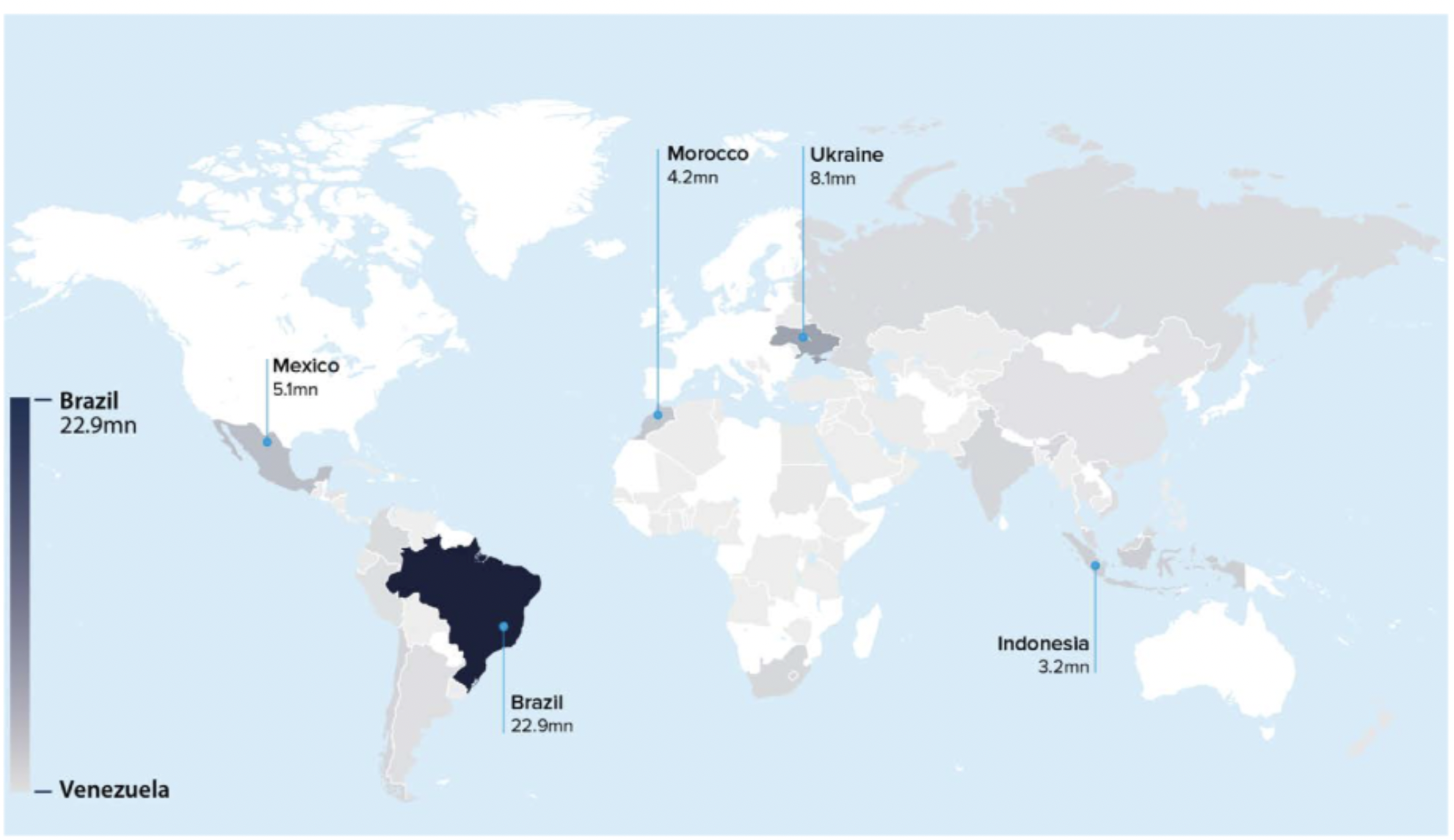
Source: Unearthed and Public Eye (2020)
The way forward
We know that regulations to ban the use of HHPs have saved lives. Food systems must evolve to include strong social and ecological management of fields. While solutions to combat adverse impacts of dangerous chemicals and wastes exist, more ambitious regulations and knowledge dissemination are needed.
Whereas the success of reining in pesticides has been limited due to, among other reasons, the lack of regulations and asymmetry of power among regulators and large companies, there are examples of approaches to chemicals management that inspired positive change. The best known one is the Montreal Protocol to the Vienna Convention for the Protection of the Ozone Layer, which has reduced the use of hazardous pesticides by replacing methyl bromide with less hazardous alternatives. The Stockholm Convention’s early action to restrict 12 POPs, and the Rotterdam Convention, which facilitates information sharing between states about hazardous chemicals entering international trade and about the regulatory actions taken, are good examples of efforts improving informed collective decision making.
There is enough scientific evidence to inform bold decision making in the sphere of food systems transformation and sound chemicals management. However, more work needs to be done to ensure that identified solutions are reaching decision makers, especially in the Global South. In this context, two opportunities for decision makers to demonstrate progress and commitment emerged in 2023.
First, the UN Food Systems Summit +2 in July 2023 built on the UN Secretary-General-led 2021 UN Food Systems Summit, which attested to both the urgency and the political will to do better to overcome all forms of malnutrition. The 2023 Summit was the first-ever opportunity for decision makers and practitioners to disseminate solutions about food systems transformation, overcoming coordination and implementation gaps. As of July 2023, 125 countries had designed or were implementing national pathways to achieve more sustainable food systems. Addressing the use of hazardous pesticides deserves more attention in this conversation. Outcomes from this global gathering deserve to be included in deliberations on how to tackle HHPs, and better alignment between public health and environmental protection policies should also be encouraged.
ICCM5 was another important milestone where countries and multiple stakeholders successfully negotiated a post-2020 platform for the sound management of chemicals and waste to succeed SAICM. The new Global Framework on Chemicals sets the 2035 target for stakeholders to “have taken measures” to phase out HHPs. ICCM5 also launched a Global Alliance on HHPs, a collaborative multistakeholder initiative to scale up global action on HHPs. This target complements the recently agreed Kunming-Montreal Global Biodiversity Framework (GBF). In its Target 7, countries agree, among other aspects, to reduce the “the overall risk from pesticides and highly hazardous chemicals by at least half including through integrated pest management, based on science, taking into account food security and livelihoods; and also preventing, reducing, and working towards eliminating plastic pollution.”
As argued, dangerous chemical exposure affects the most vulnerable disproportionately. Although there has been progress, international agreements remain insufficient to cope with the adverse environmental and health impacts of pesticides and fertilizers. Stakeholders have thus recommended a set of priorities and transformative actions to minimize these impacts:
- Incentivize healthy and sustainable consumer choices and consumption;
- Fundamentally change crop management and adopt ecosystem-based approaches;
- Promote circularity and resource efficiency;
- Use economic instruments to create a level playing field for greener products and approaches;
- Adopt integrated and life cycle approaches for sound pesticide and fertilizer management; and
- Strengthen standards and adopt corporate policies for sustainable supply chain management.
Reducing inequalities will require decision makers to scale up options that allow for a replacement of HHPs. The Guidelines on Alternatives to HHPs, for example, offers options, including agroecology, crop rotation, microbial and semiochemical agents, and botanical pesticides. Moreover, beyond investing in agricultural robotics, drones, and algorithm-driven technologies, which are often benefiting big business but not necessarily the most vulnerable, countries must invest more in educating specialists, infrastructure, and reducing costs of implementation based on true cost accounting of food.
No country or discipline alone can drive the needed change at scale. The need for food system transformation is irrefutable, and chemicals management must be part of the menu of solutions.
While much remains to be done, several countries and cities are leading the transition towards more ecological and healthier options. Examples can be found in the 2018 decision of Kyrgyzstan’s parliament calling for all agriculture to transition to organic production within the next ten years. Over 550 German cities and municipalities have decided to manage their urban greenery partially or completely without pesticides. These examples prove that a healthier and more ecologically friendly future is possible. Thus, it is time to scale political momentum to deliver access to healthy diets, while safeguarding our environment and promoting equitable livelihoods. The incoming Presidency of the UN Climate Change Conference (UNFCCC COP 28) taking place later this year has put forward an action agenda that places nature, people, lives, and livelihoods at the heart of climate action. It has also proposed a leader-level Emirates Declaration on Sustainable Agriculture, Resilient Food Systems, and Climate Action, which could help scale political will to help steer the necessary transformation. It remains to be seen whether and how many countries will support the Presidency’s initiative.
* * *
This Policy Brief is the tenth in a series featuring cross-cutting topics relating to the sound management of chemicals and waste. It was written by Nicole de Paula, Ph.D, Earth Negotiations Bulletin (ENB) contributor and author of ‘Breaking the Silos for Planetary Health – A Roadmap for a Resilient Post-Pandemic World.’ The series editor is Elena Kosolapova, Senior Policy Advisor, Tracking Progress Program, IISD.
RELATED EVENTS


Textiles Under a New Global Chemicals and Waste Framework
When negotiators convene at the fifth International Conference on Chemicals Management (ICCM5) in Bonn, Germany, in September 2023 to decide on a new global framework for the sustainable management of chemicals and waste, they will consider draft targets, and one of the proposals for implementation of the new framework seeks to encourage select “chemical intensive economic sectors and value chains” to scale-up global action that produces concrete results. One specific draft target calls for the development of sustainable chemical and waste management strategies in chemical intensive sectors and industries across value chains. The negotiations seek to develop a new global framework to replace the Strategic Approach to International Chemicals Management (SAICM) created by ICCM1 in 2006.
At a January 2023 workshop convened in Paris, France, by the proponent of the implementation proposal, the Inter-Organization Programme for the Sound Management of Chemicals (IOMC), textiles was discussed as a candidate sector for implementation. The IOMC plans a further stakeholder consultation from 20-21 June 2023 to flesh out ideas for guidance to support strategies and a possible global programme on advancing chemicals and waste management in economic industry sectors and their value chains.
At a negotiating session held in Bucharest, Romania, in August 2022, the textiles sector was an active participant in the talks: the Zero Discharge of Hazardous Chemicals (ZDHC) – a multi-stakeholder organization comprising over 150 contributors, including leading brands such as Adidas, Nike, and Levi Straus – made statements about the sector’s desire to actively engage in the future framework, and offered proposals for framework elements such as sectoral targets and indicators.
The UN Environment Programme (UNEP) has identified textiles – which encompasses not only apparel and footwear, but also some home furnishings (e.g., carpets, curtains, and upholstery) and “technical textiles” (e.g., medical textiles, geotextiles, seat covers, and protective clothing) – as a high-priority industry sector in shifting to a circular economy. Its importance to economies, natural resource management, gender equality, and sustainable development has been reflected in UNEP’s Medium-Term Strategy, resulting in the development of UNEP’s Textile Flagship Initiative. The Initiative aims to align UNEP’s work across three priorities needed to deliver system change towards sustainability and circularity – shifting consumption patterns, improving practices, and investing in infrastructure. These priorities are reflected in UNEP’s forthcoming report titled, ‘Sustainability and Circularity in the Textile Value Chain: A Global Roadmap.’ One of the impact areas of the project aims to reduce pollution in the environment and its impacts on human health by managing chemicals of concern across the textiles value chain.
This Policy Brief discusses SAICM’s longstanding interest in the textiles sector, the IOMC’s proposal, and how an implementation programme under the successor framework might engage with the industry.
SAICM and its interest in the textiles sector
SAICM grew out of a goal endorsed by the 2002 World Summit on Sustainable Development (WSSD) for the world to use and produce chemicals by 2020 in ways that minimize significant adverse effects on human health and the environment. The WSSD also called for developing “a strategic approach to international chemicals management” by 2005. This led to SAICM’s launch at ICCM1 in 2006 as a flexible, voluntary, non-binding, multi-stakeholder, and multi-sectoral initiative dedicated to promoting collaboration aimed at achieving the 2020 goal.
As originally conceived, SAICM was due to expire when ICCM5 convened in 2020. However, by the time ICCM4 convened in September 2015, it became clear that the 2020 goal would not be achieved in most countries. ICCM4 decided to launch an intersessional process aimed at designing a post-2020 framework or platform for the sound management of both chemicals and waste for consideration by ICCM5 in 2020. Due to delays in negotiations caused by the COVID-19 pandemic, ICCM5 was postponed until September 2023.
SAICM’s interest in the textiles sector as a significant user of chemicals came early, primarily through its Chemicals in Products (CiP) initiative. CiP was designated as an Emerging Policy Issue in 2009, and a CiP Programme was created by ICCM3 in 2012, led by UNEP, with a focus on four priority sectors, one of which was textiles. In the run up to ICCM3, UNEP produced a CiP case study on chemicals in textiles.
SAICM has also produced relevant knowledge products, such as the report and a policy brief on addressing per- and polyfluoroalkyl substances (PFAS) as a chemical class in the textile industry. The report and brief suggest how SAICM might advance the concept of approaching PFAS as a class of chemicals for control purposes, rather than chemical-by-chemical as the Stockholm Convention on Persistent Organic Pollutants (POPs) does, and phase out non-essential uses, the textile sector serving as a test case.
IOMC’s proposal for sectoral implementation programmes under a new global framework
The IOMC is an international coordinating group bringing together nine Participating Organizations to promote sound chemical management worldwide through coordination of policies and activities. Participating Organizations include UNEP, the Food and Agriculture Organization of the UN (FAO), the International Labour Organization (ILO), the UN Development Programme (UNDP), the UN Industrial Development Organization (UNIDO), the UN Institute for Training and Research (UNITAR), the World Health Organization (WHO), the World Bank, and the Organisation for Economic Co-operation and Development (OECD).
In a discussion paper presenting its proposals for an implementation programme under the new global framework, the IOMC suggests encouraging further action “based on industry initiatives that have been initiated voluntarily, resulted from regulatory requirements, or responded to pressure from public interest groups.” It also suggests choosing industry sectors and product value chains whose retailers have already undertaken “frontrunner” initiatives demonstrating commitment and willingness to engage, with a view to strengthening, linking, and expanding such initiatives.
The textiles industry qualifies on all counts. Major brands and retailers form the backbone of ZDHC. They have already developed several chemical restriction lists, management guidance, and standards, and backed certification and labeling schemes. Major brands, retailers, trade associations, and others in the sector have also engaged in the Ellen MacArthur Foundation’s Make Textiles Circular initiative, the Fashion Pact, the Policy Hub, and the Fashion Industry Charter for Climate Action.
In addition, the Global Environment Facility (GEF) can be recruited for realizing this implementation programme, as it is already committed to such work under GEF-8 programming directions. The GEF’s new Elimination of Hazardous Chemicals from Supply Chains Integrated Program commits the Facility to work on the textiles supply chain. A recently launched UNEP-implemented GEF project will work with four Asian nations – Bangladesh, Indonesia, Pakistan, and Viet Nam – representing 15% of global clothing exports to address chemicals of concern in their textiles industries.
The IOMC paper suggests engaging a candidate economic industry to develop, through dialogue, a sector vision and roadmap concerning important sustainability parameters, such as minimizing the use of hazardous substances, or advancing circularity objectives, which cover at least four areas:
- advancing the science on chemicals of concern;
- advancing green and sustainable chemistry technology innovation;
- strengthening regulations and policies; and
- mobilizing finance.
The textile sector already has a head start on this front, since it has been engaged with UNEP in dialogue to develop the aforementioned global roadmap for sustainability and circularity for the sector.
The paper further suggests that each sector and industry initiative outline specific measures or steps to take, such as:
- developing a list of hazardous substances causing concern in raw materials and supplies and production processes, such as a manufacturing restricted substances list (MRSL);
- developing standards that specify acceptable levels of chemical residues in finished products, either through a restricted substances list (RSL) or maximum residue levels;
- developing and implementing risk reduction measures to minimize occupational and public exposure, as well as emissions to air, land, and water, when hazardous substances cannot be phased out;
- identifying and implementing sustainable practices and alternatives, including through green and sustainable chemistry innovation, such as changes in processes, recipes, or product design, based on robust criteria and guidance on what constitutes safer alternatives; and
- developing sector-specific indicators to measure progress.
Here, too, the textile sector has a head start on these tasks. Oeko-Tex, the American Apparel & Footwear Association (AAFA), Apparel & Footwear International RSL Management Working Group (AFIRM), and Bluesign have developed RSLs, and most major brands have developed their own RSLs aligned with one or several of these four. Oeko-Tex and ZDHC have developed MRSLs, and individual companies, if they have an MRSL, tend to align theirs with ZDHC’s. There are also several relevant certification and labeling schemes (see Figure 1), and textile-sector goals and targets have been developed to provide indicators for measuring progress (see Figure 2).
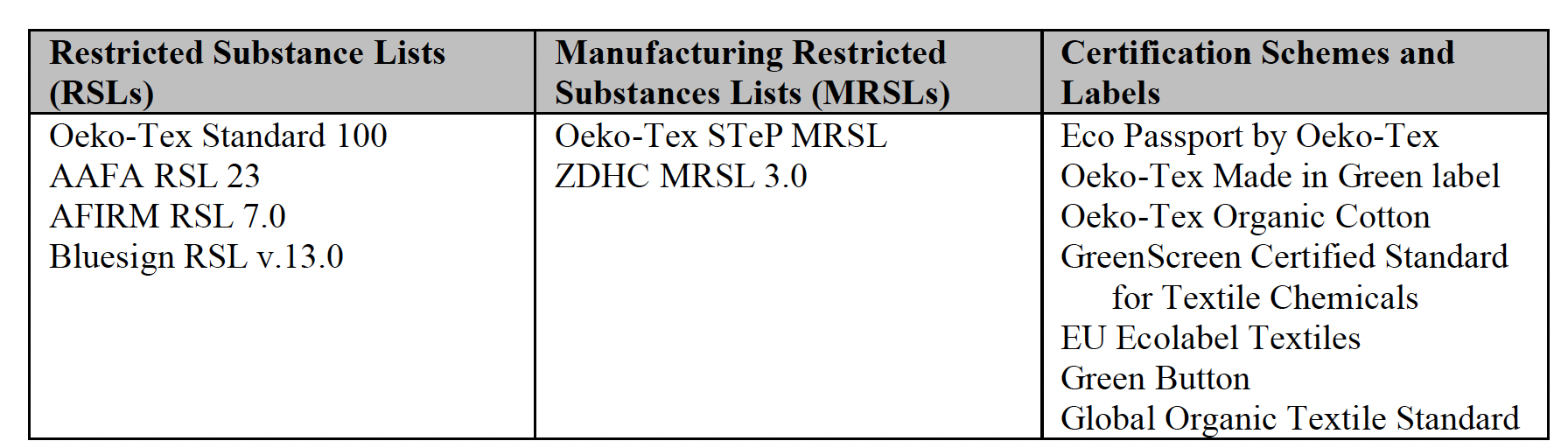
Figure 1: Relevant restricted lists, certification schemes and labels regarding chemicals in textiles
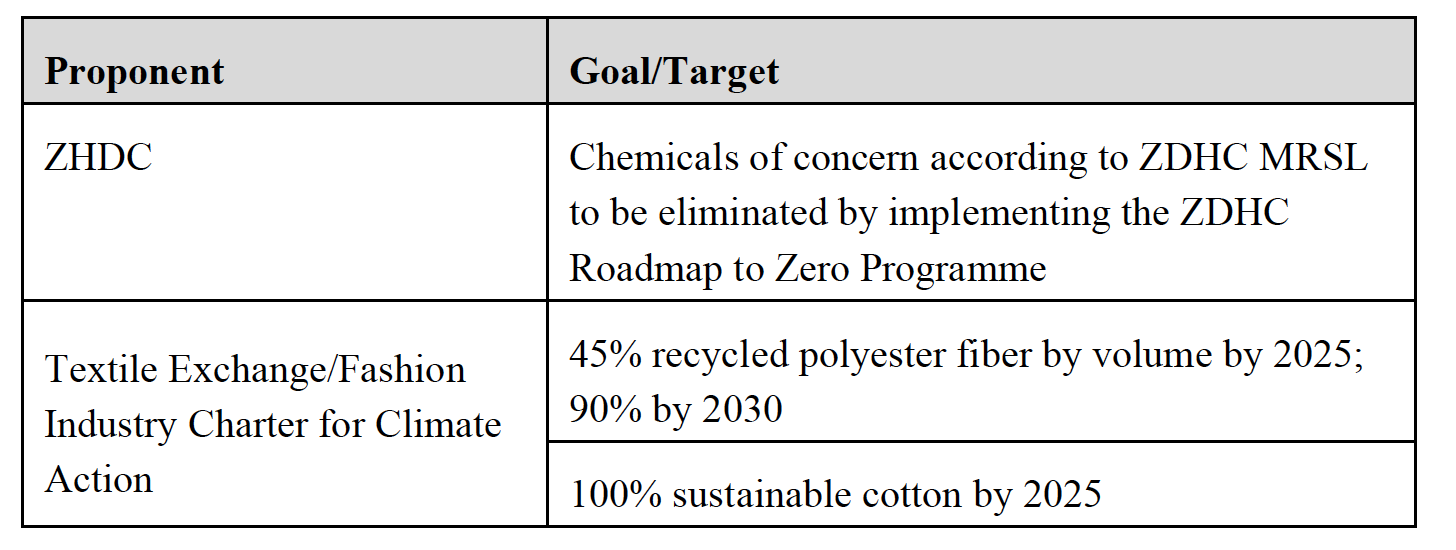
Figure 2: Existing goals/targets regarding chemicals/circularity in textiles
Focusing on chemicals of concern in textile production under a future framework implementation programme
The textile sector may have a head start, but much work on chemicals management in the sector remains that could be taken up by an implementation programme under the new global chemicals and waste framework.
For example, while ZDHC’s MRSL is well regarded, its adherents currently account for only a limited percentage of the industry and the list notably is not taken up by the many small and medium-sized enterprises (SMEs) that comprise much of the textile value chain.
As for RSLs, while many companies have adopted their own, these vary, as do the competing attempts at developing harmonized RSLs (Okeo-Tex, AFIRM, AAFA). Furthermore, existing RSLs tend to reflect only the chemical restrictions currently in place by major regulators – primarily the European Union (EU) – and the principal international convention restricting hazardous substances, the Stockholm Convention on POPs. In addition, these restrictions cover only dozens of the thousands of chemicals used in textile production, usually do not address all categories of concern (prioritizing carcinogens, mutagens, and teratogens, but not always toxins to aquatic life, endocrine disruptors, allergens, or irritants), and involve substances selected on a slow substance-by-substance basis that requires years to arrive at final regulatory decisions.
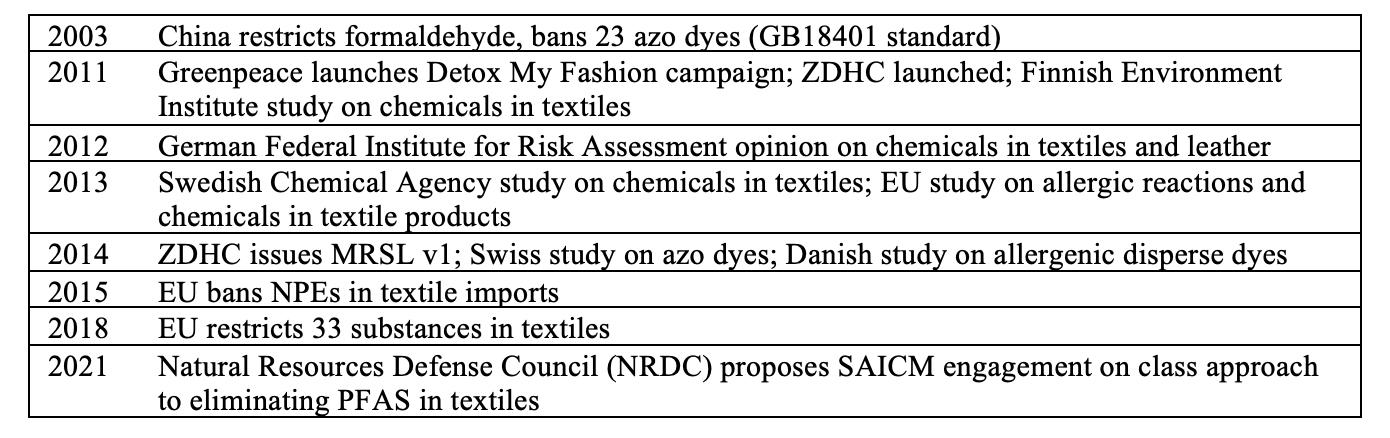
Figure 3: A timeline of existing initiatives on chemicals of concern in textiles
What would it take to address all potential chemicals of concern in the textile value chain?
Among the fibers used in textile production globally in 2021, cotton has the largest share among natural fibers (22% of all fibers), and polyester the largest among synthetic fibers (54% of all fibers). Other inputs include man-made cellulosic fibers, nylon, acrylic, leather, wool, polyurethane, bamboo, and silk.
In the case of natural fibers, chemical use starts during farming. Cotton is a significant consumer of chemical pesticides and fertilizers. In 2019, cotton accounted for 4.71%, by value, of all the chemical pesticides sold globally, and 10.24%, by value of all insecticides used in global crop protection. In 2018, cotton accounted for around 4% of global nitrogen and phosphorus fertilizer consumption. A push for greater global adherence to an organic cotton or organic textile standard, while recognizing the need for in-conversion/ transitional periods and support for farmers to move towards organic practices, could significantly cut consumption of chemicals at this stage in the value chain.
Whether made from natural or synthetic fibers or some combination thereof, all textiles undergo significant chemical treatment at many production and processing stages before their sale to the final consumer.
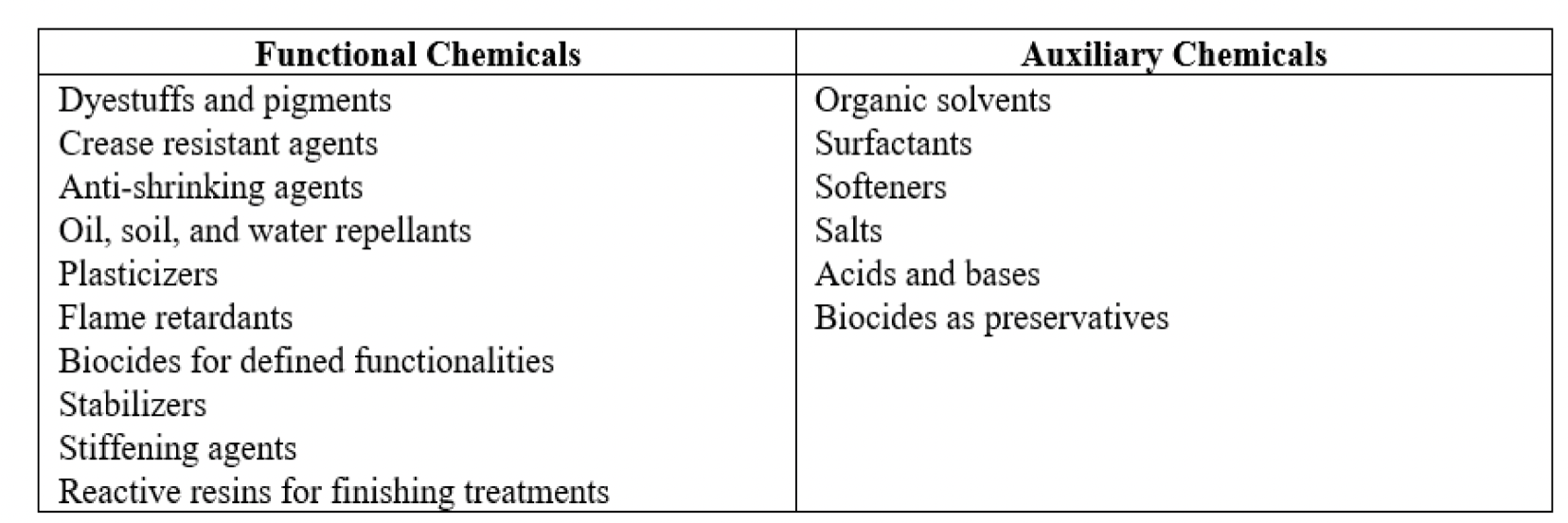
Figure 4: Types of Chemicals Used in the Textiles Industry Source: Adapted from NRDC, A Review of PAS as a Chemical Class in the Textile Sector (2021)
Currently, obtaining complete, accurate, and up-to-date information on the number, volumes, and identities of the chemicals used in textile production is difficult. Two oft-cited estimates are that over 8,000 chemicals are used in textile production and that for every one kilogram (kg) of cotton textiles made, 0.35-1.5 kg of chemicals are used. However, the origins of both estimates are hard to pin down. These figures are also from over ten years ago and may not reflect current market realities.
A comprehensive survey, inventory, or database of chemicals used in textile production would be difficult to complete due to the complexity and global nature of the textiles value chain, involving stages and actors across many countries and jurisdictions with varying ranges of capacity, regulation, industry standards, and diligence. Inter-party communication about, and tracking of, chemicals used among the points in the chain is often minimal. A concerted effort by IOMC Participating Organizations, governments, industry (including SMEs), and non-governmental organizations (NGOs) from across the globe under the umbrella of an implementation programme such as the one the IOMC proposes might be able to accomplish this task.
Without better accounting of the universe of chemicals used in textiles production, it is difficult to identify, triage, assess, and regulate chemicals of concern, deciding which need to be banned, which need to be subjected to occupational exposure and/or emission limits (wet processing of textiles, for example, is a major source of wastewater discharges), and the presence of which chemicals in textile products (and at what levels) should be mandatory to disclose to consumers. Some have already been identified (see Figure 4), but the current extent of their use worldwide remains unclear – another data gap an implementation programme might address.
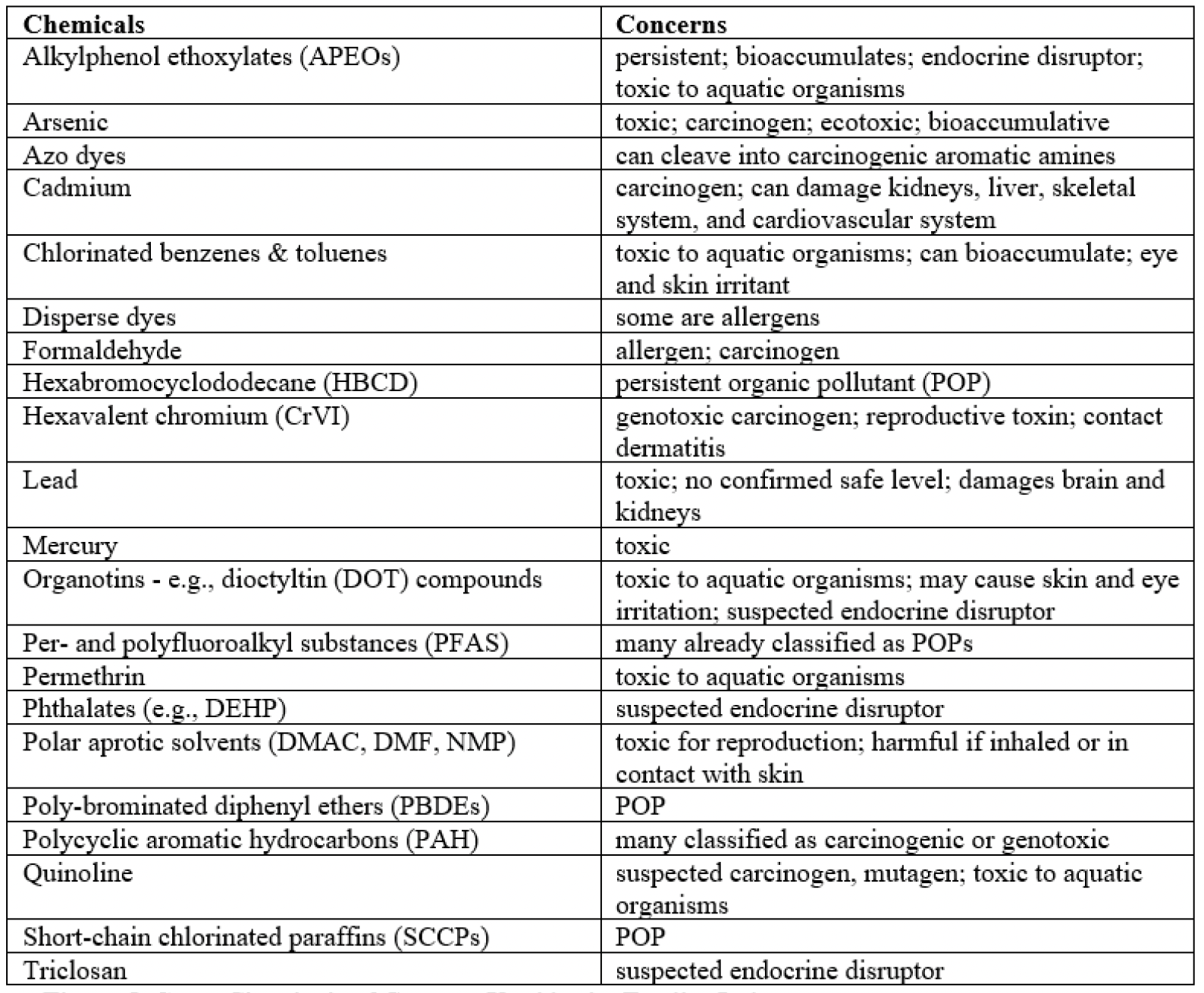
Figure 5: Some Chemicals of Concern Used in the Textiles Industry Source: Compiled by the author from various sources
The stakeholder consultation process involved in an implementation programme could address how to prioritize and allocate reviews of possible chemicals of concern, possibly through the chemical class or family approach instead of substance-by-substance, such as the Natural Resources Defense Council (NRDC) has suggested for PFAS. Identified chemicals of concern could be added to a globally harmonized MRSL. The value chain could then use the MRSL to prioritize chemicals for restrictions or phaseout and for targeting for substitution without waiting for regulatory agencies to act. A commonly agreed certification and/or labeling scheme could identify which brands and products align with the harmonized MRSL. In those cases where emissions or occupational exposure are involved, maximum permissible levels could be identified in accordance with best practice and shared as guidance across the value chain, as ZDHC is seeking to do with its wastewater guidelines.
Another chemicals in textiles issue an implementation programme might address is trade. Several recent studies have shown that even when a jurisdiction outlaws chemicals of concern in textiles, imported apparel found for retail sale in that jurisdiction still contains values violating the restrictions. The new programme can identify trade issues for follow-up in appropriate fora such as the World Trade Organization (WTO) and could also identify and/or provide support required to downstream chemical users, including SMEs.
A possible waste management component for a textiles sector implementation programme?
While SAICM has tended to focus more on chemicals management than waste issues, negotiators of the successor framework conceive of it addressing the latter as well. The IOMC’s proposal for an implementation programme reflects this expected broader mandate, although it elaborates on chemicals management but not on waste management.
The textiles sector is very wasteful and almost entirely linear, so there could be much to discuss under an implementation programme of the type conceived by the IOMC. While textile production volumes doubled from 2000-2015, the clothing utilization rate, that is the number of times a garment is worn before it ceases to be used, decreased by an average of 36%. Reportedly, more than half of “fast fashion” is disposed of within a year. Of the total fiber input used to produce clothing, 87% ends up being landfilled or incinerated – the equivalent of one garbage truck full of clothes disposed every second. Less than 1% of material used to produce clothing is recycled into new clothing, a recycling rate ranking below that of most single-use plastic packaging.
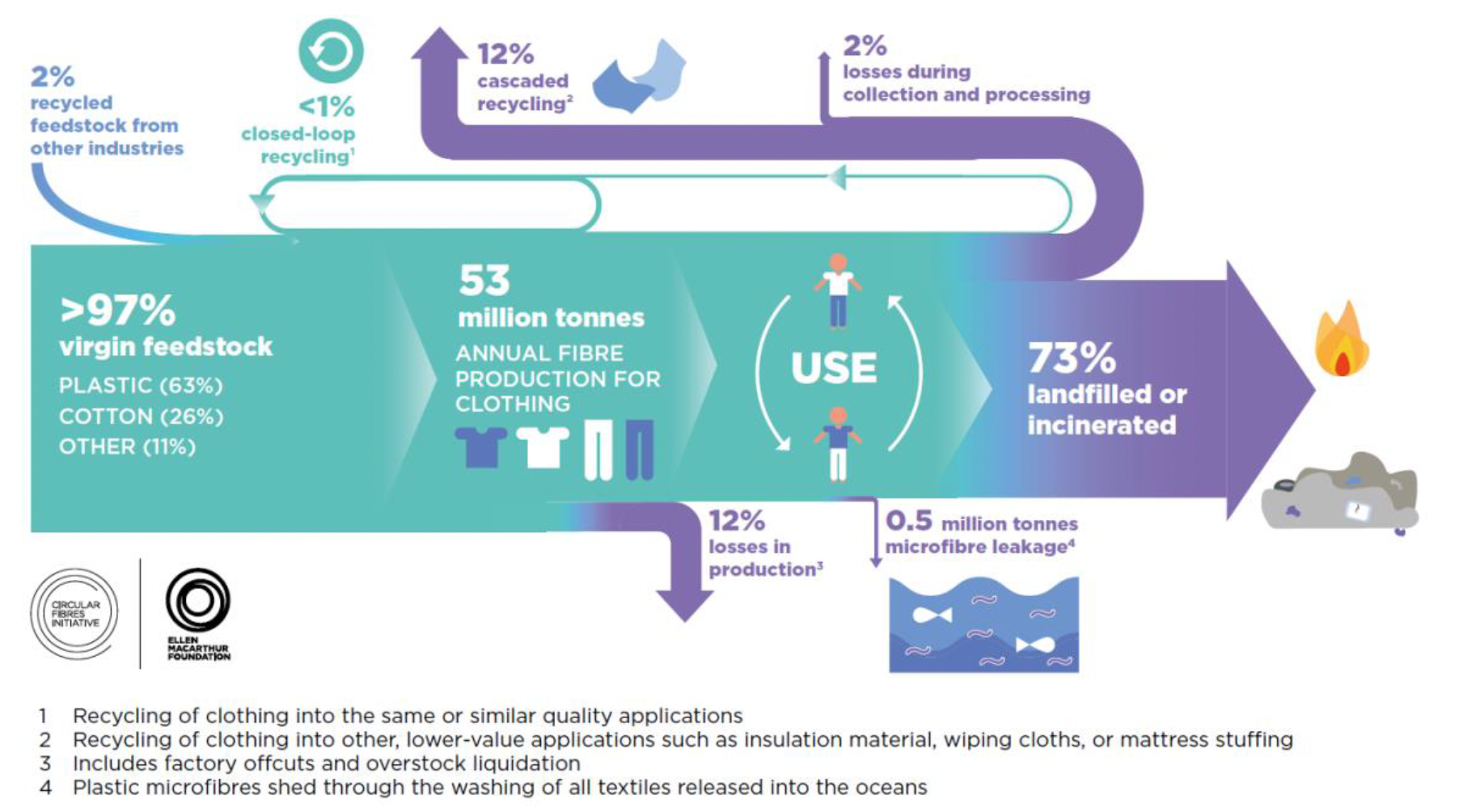
Figure 6: Global material flows for clothing in 2015
Source: Ellen MacArthur Foundation, A new textiles economy: Redesigning fashion’s future (2017)
Circularity goes well beyond waste management and recycling fibers. As outlined by UNEP (Figure 6), “reduce by design” aims to reduce the amount of material, particularly raw material, and hazardous chemicals consumed during production and during use, from the very beginning of product and service conceptualization. Production and consumption patterns as well as end-of-life processes of textile products are optimized via innovative product designs and business models, resulting in not only eliminated harmful impacts and waste but also improved social protections and business resilience. However, there is a need to reduce the harm of the linear textile system we have today, while preparing for the needs and wants of the circular textile system of tomorrow, and this includes better waste management.
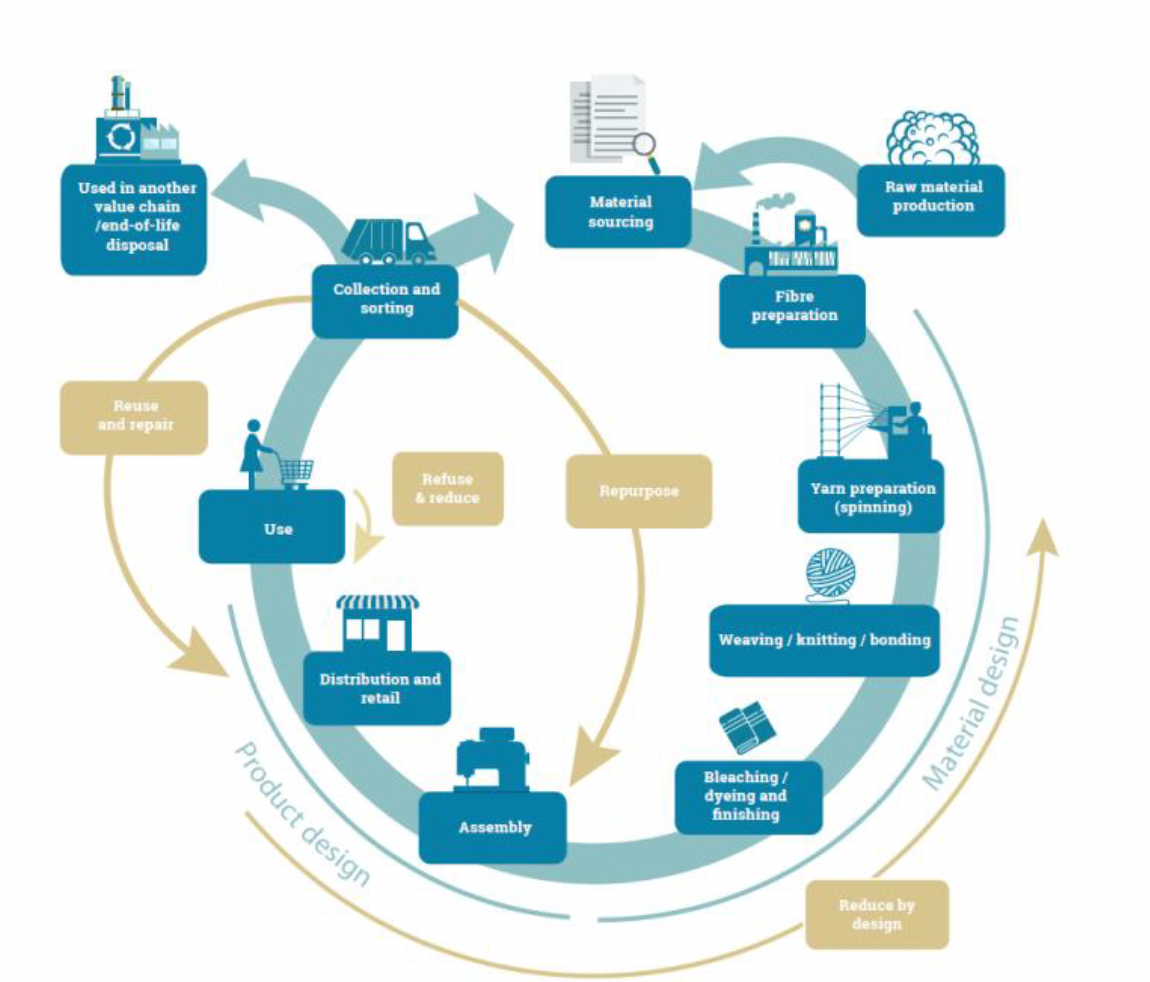
Figure 7. A circular textile value chain
Source: UNEP, Sustainability and Circularity in the Textile Value Chain: Global Stocktaking (2021)
Strategies for a circular economy specific to the textiles value chain have been proposed by UNEP, the Ellen MacArthur Foundation, the EU, Germany, and the Netherlands. The UN Alliance for Sustainable Fashion has engaged the fashion industry in discussions on steps to create a circular economy in textiles, as has UNEP. The Global Fashion Agenda (GFA) has created a Global Circular Fashion Forum and worked with UNEP to identify and converge existing industry targets, including on smart material choices, resource stewardship (including a specific target on chemicals of concern management/phaseout), and circular systems. The GEF has already approved two projects on circular economy and textiles covering four African countries, one implemented by UNEP, the other by UNIDO.
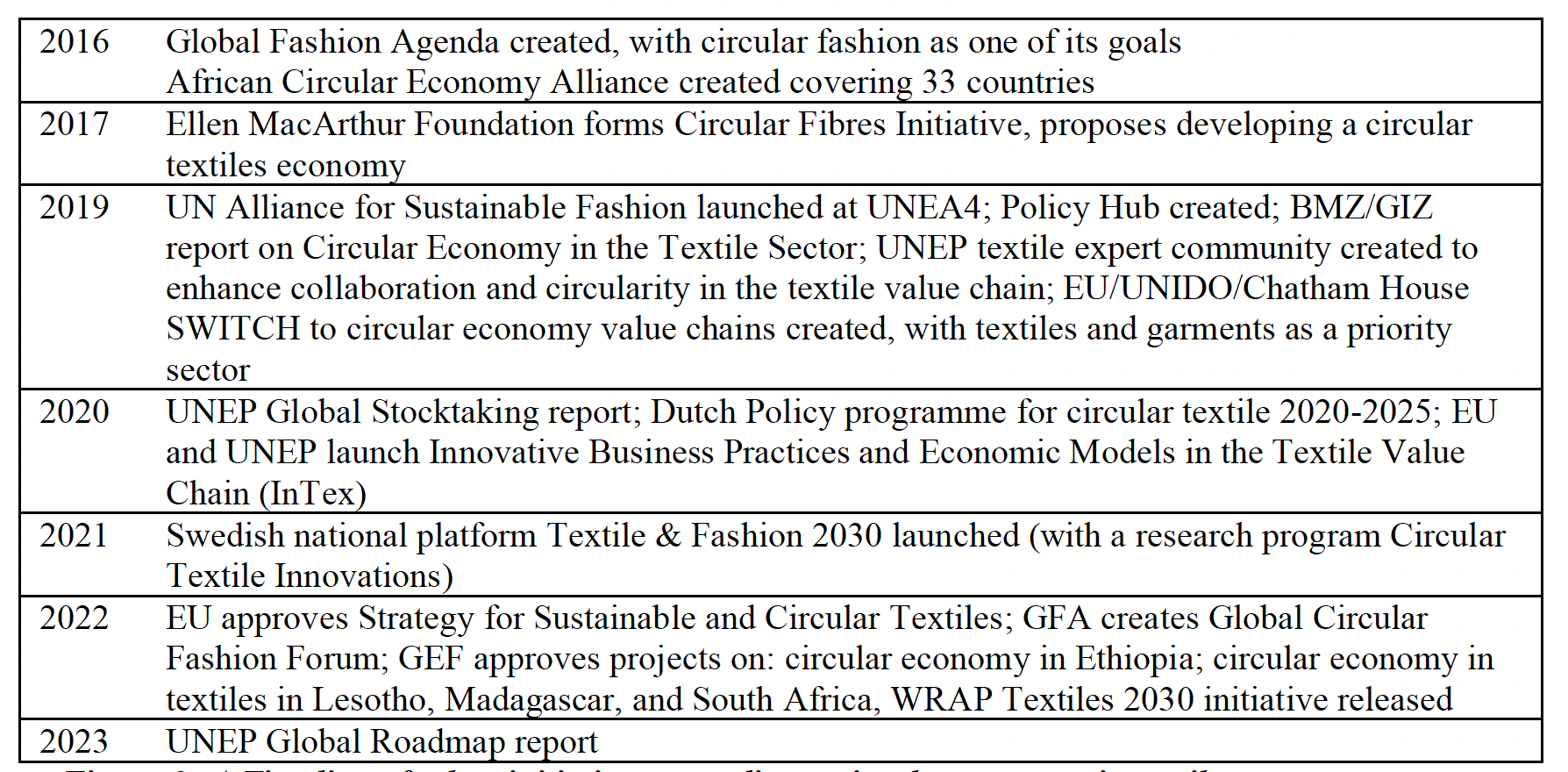
Figure 8: A Timeline of select initiatives regarding a circular economy in textiles
Hence, the building blocks are there to work with in any waste management component of the proposed implementation programme and also look at circularity more widely (with a focus on chemicals), but a rationale for the value added that the SAICM successor can bring needs to be elaborated and the issues for the waste component to focus on remain to be fleshed out.
The new global chemicals and waste framework might contribute to the existing work on circularity in the textiles sector by:
- linking together the disparate country- and regional-focused initiatives, and giving them true global scope, while elevating the challenges and support required into strategic high-level discussions;
- broadening the circular textiles discussions to involve interested IOMC Participating Organizations that are not part of the UN system, such as the OECD and the World Bank, and tabling the central role of chemicals management for circularity in the discussions;
- engaging the GEF in helping to develop the initiative, since IOMC Participating Organizations UNEP, UNIDO, UNDP, and the World Bank are GEF Implementing Agencies, and GEF-8 envisions work in this vein;
- broadening the circular textiles discussions to include more parts of the textiles value chain than just apparel; and
- broadening the discussions beyond the limited group of major brands and retailers already involved in existing circular textile initiatives, particularly by engaging the many SMEs in the chain.
The Road to Bonn: Paving the way for textiles to take the spotlight in implementation of the new chemicals and waste framework
The IOMC plans a stakeholder consultation from 20-21 June 2023 to further flesh out ideas for a possible global programme on advancing chemicals and waste management in economic sectors and value chains. The IOMC, working with Participating Organizations, the SAICM Secretariat, and perhaps engaging the GEF Secretariat as well, should use the stakeholder consultation as a springboard for active dialogue with stakeholders in the months leading up to ICCM5 in September on which chemical-intensive sectors to focus on. The textiles sector is a good candidate to become one of the first focus sectors. With a view to presenting a robust proposal for consideration at ICCM5 in Bonn, the dialogue should outline and flesh out what an implementation programme for the textiles sector might look like, which chemicals and waste management issues the implementation programme could provide value added on and should address, and possible objectives, targets, and indicators for the programme. The dialogue might also highlight global work undertaken in the textile industry which could be relevant for other chemical-intensive sectors facing challenges.
* * *
This document has been developed within the framework of the Global Environment Facility (GEF) project ID: 9771 on Global Best Practices on Emerging Chemical Policy Issues of Concern under the Strategic Approach to International Chemicals Management (SAICM). This project is funded by the GEF, implemented by UNEP, and executed by the SAICM Secretariat. The International Institute for Sustainable Development acknowledges the financial contribution of the GEF to the development of this policy brief.
This Policy Brief is the sixth in a series featuring cross-cutting topics relating to the sound management of chemicals and waste. It was written by Keith Ripley, Earth Negotiations Bulletin (ENB) team leader and writer. The series editor is Elena Kosolapova, Senior Policy Advisor, Tracking Progress Program, IISD.
RELATED EVENTS

From Feedstocks to Feedback Loops: Linking Chemicals and Climate Change
We are in the midst of a triple planetary crisis. Climate change, biodiversity loss, and pollution endanger the environment and all Earth’s inhabitants – including us. Five of the nine planetary boundaries have been crossed, creating an environment beyond the safe operating space for humanity. Each of the problems, from rising rates of extinction to carbon emissions and plastic pollution, is drastic and frightening on its own. They also interact.
Given the rates of environmental decline, the interactions between climate change and chemical pollution are especially pernicious. The chemical sector is part of the climate problem because of its own greenhouse gas (GHG) emissions and the global warming potential (GWP) of some of the chemicals it produces. Yet, through green chemistry, it could be part of the solution. The need for such solutions is urgent. A warmer world, with less predictable weather patterns and more intense storms, alters how chemicals behave in the environment and how we are exposed to them.
There are dangerous feedback loops. Climate change can lead to shifts in chemical production and use, which, in turn, could fuel further climate change. Some of these links are relatively direct. A warmer world increases the demand for air conditioning. This requires chemical refrigerants. More demand boosts production and, consequently, emissions from the sector. Other feedback loops could be less obvious. There will be more droughts and flooding, which could increase pest and disease outbreaks. This could lead to further use of pesticides and fertilizers. Again, there is an increase in demand and emissions, which adds to the climate crisis.
There is growing evidence of the many varied interconnections between climate change and chemical production and use. Yet, governance of these issues is largely working in silos. Climate change actors deal with reducing emissions and adapting to a warmer world but largely ignore chemicals. Chemicals actors are slowly drawing links to climate change (with the exception of the ozone regime that holds global warming as a central issue). This Policy Brief considers the interactions between climate change and chemicals in more detail, maps the governance connections – or lack thereof, and considers options for the future.
Chemicals are a climate problem
The chemicals sector both produces GHGs on its own and contributes significantly to the global demand for fossil fuels. The chemical sector is the third largest industrial emitter of carbon dioxide (CO2). According to the Intergovernmental Panel on Climate Change (IPCC), the chemicals sector was responsible for 14% of industrial GHG emissions in 2019 (see Figure 1). It is also the single biggest industrial user of fossil fuels for both energy and feedstock purposes. Natural gas, followed by coal, are widely used energy feedstocks.
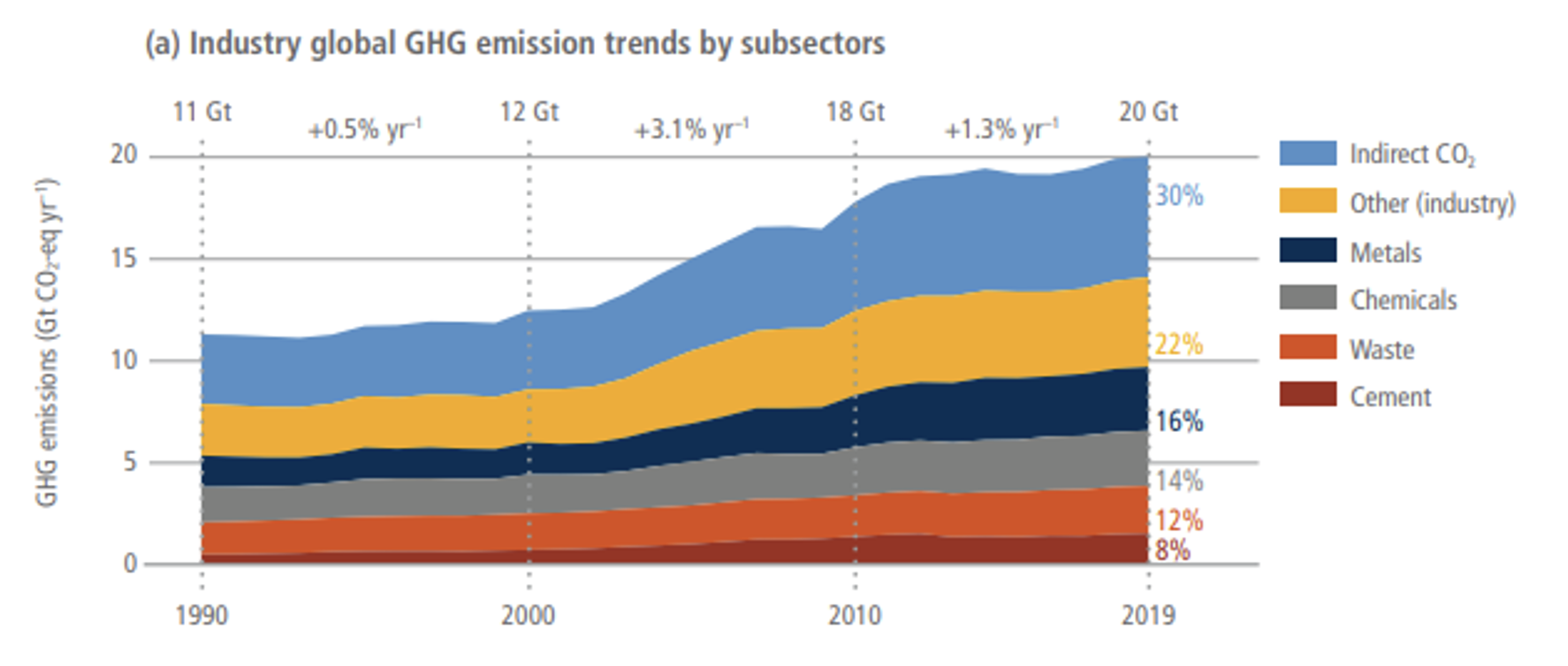
Figure 1. Global GHG emission trends by industry subsectors
Source: IPCC Working Group III Summary for Policymakers
During chemicals manufacture, GHG emissions come from fossil fuel combustion, electricity use, and fossil fuels used as chemical feedstocks. GHG emissions are also by-products of chemical reactions. About quarter of emissions are industrial process emissions, and the rest are from fuel combustion. The highest share of emissions is from ammonia production, followed by high-value chemicals (e.g., ethylene, propylene, benzene, toluene, and mixed xylenes) and methanol. A recent study found that the production of “forever chemicals” (formally per- and poly-fluoroalkyl substances, or PFAS) is associated with substantial hydrochlorofluorocarbons (specifically, HCFC-22) emissions. HCFCs are potent GHGs, far more damaging to the climate than CO2. It is also used as an intermediary in PFAS production.
In addition, some chemicals themselves contribute directly to climate change. Chemicals with high GWP trap heat in the atmosphere. Several fluorinated chemicals, often used as refrigerants, have a high GWP value. These include chlorofluorocarbons (CFCs), hydrofluorocarbons (HFCs), HCFCs, and perfluorocarbons (PFCs), each of which are magnitudes more potent than CO2. The Kigali Amendment to the Montreal Protocol sought to address HFCs, in part because they were increasingly being used to replace CFCs after they were banned under the Protocol.
Climate scientists are closely considering the chemical sector’s emissions. The International Energy Agency (IEA) finds that the chemicals sector is not on track to meet net zero. The IPCC reports that, on average, the sector’s emissions grew by over 1.5% per year between 2010 and 2019. According to the IEA, the carbon intensity of the sector, that is, how much CO2 is produced per tonne of primary chemicals, has remained stable.
There are key regional differences. Chemicals production has shifted to the Global South, bringing with it the emissions from the sector. In 2020, China was responsible for roughly 57% of global GHG emissions associated with petrochemicals, while the US and Europe accounted for 6% and 5%, respectively. In part, this variation is down to where the industry gets its energy. The more coal, for example, in the energy mix, the higher the emissions from the sector.
The chemicals sector has yet to find or implement efficiencies to decrease its CO2 intensity. As a result, increased production necessarily leads to increased emissions. Reducing carbon intensity can be a step toward addressing the sector’s emissions while still meeting demand. While efficiency can be a key solution, the issue of raw materials and feedstocks remains. Overall, we still have an complete picture. Emissions reporting is improving, but as a report from Lund University makes clear, disclosure is partial and inconsistent, and complicated by long, complex value changes.
Potential solutions
Addressing climate change emissions may become a pressing concern for the industry. Pressure from governments, coupled with changes to the global energy system, may require companies to act to reduce emissions and to find alternatives to using fossil fuels as inputs. Climate action could build long-term value. There are also economic opportunities for the industry to help itself, and others, reduce GHGs, including in the transportation and aviation sectors.
There are analyses of potential solutions that the industry can implement to reduce GHG emissions in the sector, many of which point to the opportunities for reaching net zero. Net zero, as a concept, recognizes that some sectors may be difficult to fully decarbonize. Therefore, a mix of emissions reductions and offsetting or carbon capture and storage (CCS) could realize a “balance” between emissions and removals. Some research has advocated for the use of carbon capture technologies to reduce emissions in the sector, and for using carbon from sequestered CO2, called carbon capture and utilization. Biomass could potentially replace fossil fuels as raw materials, although there would be implications for land use.
There are other solutions at hand, drawing from ideas in the chemicals community, particularly green chemistry and circular economy. Green chemistry minimizes the need for hazardous substances when designing products and production processes. It mimics nature, by using renewable and biodegradable materials. The UN Environment Programme (UNEP) has outlined ten objectives for green chemistry, including using chemistry to minimize hazards, avoiding regrettable substitutions, and green sourcing feedstocks and production processes.
Similarly, circular economy thinking can help with identifying potential impacts from a product’s design to its end of life. Tools such as lifecycle assessment can include GHGs. For example, making products more reusable and repairable will decrease demand for new products and chemicals, which will reduce emissions from the sector. Renewable inputs could be a cost effective and sustainable solution for the industry.
Climate change is a chemicals problem
The impacts of climate change complicate chemicals management in several ways. There is a growing need for the sector and governments to think about climate adaptation (that is, building resilience to a warmer, less predictable world) in the context of chemicals management. It can increase the toxicity of some chemicals and amplify their releases into the environment. At the same time, climate change raises risks for chemicals and waste management facilities to keep hazardous products away from the surrounding environment and populations.
Already, the world is more than 1.1°C warmer than the pre-industrial era. Higher temperatures can lead to an increase in the toxicity of persistent organic pollutants (POPs), air pollutants, and pesticides, including organophosphate insecticides such as chlorpyrifos. Increased temperature can influence the fate and behavior of POPs, affecting how humans are exposed to these chemicals. Ecosystems are at risk as well. Ocean acidification may influence the behavior of metals in marine sediments, as well as their toxicity, impacting ecosystems and their inhabitants on the ocean floor. For animals already at the edge of their ability to survive in a warmer world, increased chemical toxicity could be particularly harmful.
Other effects of climate change are likely to amplify the releases of chemicals, either from the environment directly, or by damaging infrastructure. Melting ice is particularly worrying. Melting glaciers on the Tibetan Plateau release PFAS. Mercury may emerge from thawing permafrost. Melting Arctic ice could lead to four-fold increase in banned POPs in Arctic waters.
Flooding, “super-storms,” and other climate-fueled events can challenge chemicals management. These events can exacerbate the risks by increasing the likelihood of spills, contamination, infrastructure damage, and altered environmental conditions. For example, the Krasny Bor hazardous waste site in Russia has previously flooded. Assessment projects have tried to identify the risks of releases into the surrounding environment. The World Health Organization (WHO) has prepared guidance for public health authorities on the types of risks associated with chemicals after cyclones and flooding. For both, it highlights an increased risk of burns, poisoning, respiratory tract injuries, and injuries to workers.
Other tools of chemical management may need to be updated. Risk assessments often involve models or data on human and animal exposure. Altering the toxicity, behavior, and movement of chemicals could require updates to models and methodologies. It may also mean governments and researchers may have to enlarge their sample populations.
There will be regional differences in how climate change affects chemicals management and human exposure. The Arctic is of particular concern. It is highly vulnerable to both climate change and chemical pollution. Melting ice, coupled with changes to precipitation, water salinity, and sea ice quality, could unlock POPs and other chemicals deposited in the region, leading to unintentional releases and movement. These climate factors are associated with POPs concentrations in multiple Arctic biota. Other regions will face their own challenges. Small island States are already experiencing the effects of sea level rise, which could increase chemical releases from waste disposal sites. Solutions to chemical management in the context of a warmer, more turbulent world will have to be tailored to regional, and perhaps local, differences.
The potential impacts of climate change on the sector are wide ranging, from operations to risk assessments. There are equally a wide range of measures that could be implemented, as outlined in a 2015 UK Climate Change Adaptation Guidance.
Governance silos
Despite all the interconnections, climate governance rarely touches on chemicals specifically, and vice versa. The Vienna Convention and Montreal Protocol on ozone depleting chemicals are an exception. These treaties, working together, regulate chemicals that damage the ozone layer, and also consider the GWP of chemicals. The Kigali Amendment to the Montreal Protocol regulates HFCs, potent GHGs.
The Paris Agreement on climate change requires countries to submit or update nationally determined contributions (NDCs) every five years. The content of these pledges is almost entirely up to countries. Developed countries are required to have an economy-wide numerical target. Developing countries are encouraged to do so. In the current set of NDCs, 115 countries’ pledges include a target for industry, of which chemicals is a part. Waste is its own sector in climate planning and reporting, widely included in NDCs.
There is a role in global climate governance for the private sector and other actors to also make pledges under the UN Framework Convention on Climate Change (UNFCCC). The Global Climate Action portal encourages and tracks the pledges of a wide range of non-state actors. The portal allows for searching for chemicals companies specifically. In total, 289 chemicals companies logged an action, 263 of which made a commitment. So far, 207 of these companies have reported on their progress toward that commitment. Many of these seem to be small and medium-sized enterprises (SMEs). Of the top 20 chemical companies in the world, 11 registered on the portal, nine have at least one commitment, and five had reported back. Less than 40% of US-based Independent Commodity Intelligence Services (ICIS) Top 100 companies have net-zero goals or align with the Science Based Targets initiative (SBTi).
In chemicals governance, there have been a growing number of reports to raise awareness of the interconnections between chemicals and climate change, but little in the way of rule making to draw firmer links. The Stockholm Convention has repeatedly explored the connections between POPs and climate change. In conjunction with the Arctic Monitoring and Assessment Programme, the Secretariat produced a report as early as 2011. Another report, co-authored with the Minamata Convention Secretariat, was published in 2022. The Persistent Organic Pollutants Review Committee (POPRC) published a report on POPs and climate change in 2013 It noted that climate change could affect some criteria that the Committee’s considers when assessing chemicals, such as toxicity and long-range environmental transport (LRET).
As yet, climate change has not been incorporated in the Committee’s work. In part, this may be due to its mandate to consider the persistence, toxicity, bioaccumulation, and LRET of a chemical based on existing information and data. Models predicting future values are not considered as part of the Committee’s reviews.
In the current negotiations for the post-2020 strategic approach to chemicals and waste, there is a target related to synergies and linkages with other policies (currently, target E6). At present, the text mentions climate change, biodiversity, and other areas such as health. There is also a target related to implementing policies to encourage production with sustainable and safer alternatives. This could include policies to facilitate the use of cleaner production technologies, or product re-use and recycling, which could indirectly help reduce GHG emissions. Realizing these targets, in whatever final, adopted form they will take, will require further drawing the links between these two governance arenas.
Bridging the gaps
The biodiversity-climate link could be instructive. It took years of work, largely on the part of the Convention on Biological Diversity (CBD) Secretariat, to forge the connections and conduct outreach to the climate community. Recently, there have been decisions in the UNFCCC and CBD that recognize these connections. Most revolve around the idea of nature-based solutions (NbS). The concept has proved useful to articulate nature-climate connections in a way that facilitates actions on both sides.
At present, the chemicals-climate link lacks such a unifying concept. Climate actors may ask, “why should we do more on chemicals, specifically? What’s the value added?” Chemicals actors could ask the same questions. A concept bridging and articulating the solutions could help provide a common frame of reference and action.
Building this bridge may require collaboration. Some Secretariats, namely the UNFCCC and the Basel, Rotterdam, and Stockholm Conventions (BRS) Secretariats, are already talking about commonalities. Wider engagement among scientific communities, activists, and states could further improve knowledge of how intertwined the climate and pollution crises are, and the implications for the future.
* * *
This document has been developed within the framework of the Global Environment Facility (GEF) project ID: 9771 on Global Best Practices on Emerging Chemical Policy Issues of Concern under the Strategic Approach to International Chemicals Management (SAICM). This project is funded by the GEF, implemented by UNEP, and executed by the SAICM Secretariat. The International Institute for Sustainable Development acknowledges the financial contribution of the GEF to the development of this policy brief.
This Policy Brief is the seventh in a series featuring cross-cutting topics relating to the sound management of chemicals and waste. It was written by Jen Allan, Earth Negotiations Bulletin (ENB) Strategic Advisor. The series editor is Elena Kosolapova, Senior Policy Advisor, Tracking Progress Program, IISD.
