748 resources found

Case studies

Future Policy Award 2021: Colombia - Environmentally Persistent Pharmaceutical Pollutants

Despite the fact that pharmaceuticals are indispensable for human and animal health, they may cause undesired adverse effects. Specifically, environmentally persistent pharmaceutical pollutants (EPPPs) are slowly degradable or nondegradable, presenting a special risk when they enter, persist or disseminate in the environment. Colombia’s Resolution 371, addressing EPPPs, was awarded for regulating waste management from hazardous products.The World Future Council focuses on identifying, developing, highlighting and spreading effective, future-just solutions for current challenges humanity is facing and promote their implementation worldwide

Community of practice summary of discussions

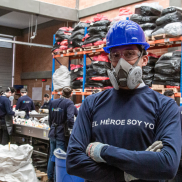
Making the case: raising awareness about importance of lead paint laws

September 2021
copied to clipboard
The Secretariat of the Strategic Approach to Chemicals Management (SAICM) and the University of Cape Town (UCT) have established a Community of Practice (CoP) on Lead in Paint to bring representatives from different sectors together and to create a learning network around issues related to the elimination of Lead Paint. This is a summary of the discussion on Making the case: raising awareness about importance of lead paint laws, which took place on 14 September 2021.Presenters: Lesley Onyon (WHO), Siddika
Emerging Policy Issues: Lead in paint
Report

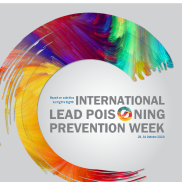
Report of the 2020 International Lead poisoning Prevention Week

The eighth International Lead Poisoning Prevention Week (ILPPW) was held on 25–31 October 2020, with more than 90 events in 60 countries organized by governments, civil society organizations, health partners, industry and other institutions.ILPPW is an ongoing initiative of the Global Alliance to Eliminate Lead Paint (the Lead Paint Alliance), led jointly by the United Nations Environment Programme (UNEP) and WHO. The aim of the Week is to raise awareness about the health effects of lead exposure, highlight the efforts
Emerging Policy Issues: Lead in paint
Policy document

Compendium of WHO and other UN guidance on health and environment

This compendium provides a systematic compilation of published guidance from WHO and other UN organizations on health and environment. Guidance on policies and actions as well as awareness raising and capacity building interventions is presented for all major areas of health and environment. Guidance referring to priority settings for action such as cities and other urban settlements, housing, workplaces and health care facilities is also listed.For greater practical relevance, each guidance is classified according to principally involved sectors, level of
Newsletter

Era of leaded petrol over, eliminating a major threat to human and planetary health

by |
September 2021
copied to clipboard
Official end of use of leaded petrol will prevent more than 1.2 million premature deaths and save USD 2.45 trillion a yearThe end of leaded petrol follows a 19-year campaign led by the UN Environment Programme (UNEP) and partnersUNEP urges countries to work towards zero emissions vehicles to further address air pollution and climate changeNairobi, 30 August 2021 – When service stations in Algeria stopped providing leaded petrol in July, the use of leaded petrol ended globally. This development follows
Emerging Policy Issues: Chemicals in products
Report

Regional Electronics Study and Circularity Roadmap in the LAC Region: Mapping of Existing Initiatives

Technological development has made electrical and electronic equipment (EEE1) essential parts of contemporary life and indispensable products in today’s societies. Information technology (IT) combined with the technological advances in recent decades, has resulted in EEE having a great influence on the daily life of consumers in aspects such as health, safety, knowledge, comfort information, among others. The global consumption of electronics is growing 2.5 million metric tons per year (Forti, Baldé, Kuehr, & Bel, 2020), because technology increases the living

Case studies

Future Policy Award 2021: Sweden, Region Stockholm - Chemicals in products

Although chemicals are important components in many products, they may be released at any stage of the product life cycle, resulting in potential exposures of humans and the environment. The second 2021 Gold Awardee addressing Chemicals in Products is Sweden, Region Stockholm: Phase-Out Lists for Chemicals Hazardous to the Environment and Human Health (2012-2016, revised for 2017-2021).The World Future Council focuses on identifying, developing, highlighting and spreading effective, future-just solutions for current challenges humanity is facing and promote their implementation

Emerging Policy Issues: Chemicals in products

Avatar