72 resources found

Academic article

Antimicrobial pharmaceuticals in the aquatic environment - occurrence and environmental implications

by
ScienceDirect
|
November 2019
copied to clipboard
The environmental occurrence of antimicrobial pharmaceuticals and antibiotic resistant bacteria and antibiotic resistant genes has become a global phenomenon and a multifaceted threat. Integrated actions of many parties are needed to prevent further aggravation of the problem. Well-directed actions require clear understanding of the problem, which can be ensured by frequent revaluation of the existing knowledge and disseminating it among relevant audiences. The goal of this review paper is to discuss the occurrence and abundance of antimicrobial pharmaceuticals in the
Emerging Policy Issues: Pharmaceutical pollutants
Website

International Lead Poisoning Prevention Week (ILPPW)

The International Lead Poisoning Prevention Week of action (ILPPW) takes place every year at the end of October. The objectives of the campaign are to raise awareness about health effects of lead poisoning; highlight countries and partners' efforts to prevent particularly childhood lead poisoning; and urge further action to eliminate lead paint through regulatory action at country level.The campaign website presents a multilingual campaign resource package, including posters, flyers, infographics, graphics and web banners in various formats, including an editable
Emerging Policy Issues: Lead in paint
Website

Lead levels in paint around the world

by
IPEN ,
|
March 2019
copied to clipboard
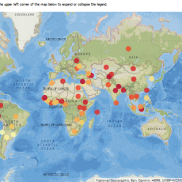
This interactive map provides country-specific data on lead paint levels around the world. Lead in paint is a major source of lead exposure for children globally. Since 2009, more than 100 studies from 59 countries have shown that lead paints are still widely sold in low- and middle-income countries. IPEN-affiliated NGOs conducted the majority of these studies, comprising more than 3,300 solvent-based paints. Many of these paints contained very high levels of lead above 10,000 parts per million (ppm) of
Emerging Policy Issues: Lead in paint
Topics: Policymaking
Academic article

Nanomaterials in the environment: Behavior, fate, bioavailability, and effects—An updated review

by
Wiley Online Library
|
April 2018
copied to clipboard
The present review covers developments in studies of nanomaterials (NMs) in the environment since our much cited review in 2008. We discuss novel insights into fate and behavior, metrology, transformations, bioavailability, toxicity mechanisms, and environmental impacts, with a focus on terrestrial and aquatic systems. Overall, the findings were that: 1) despite substantial developments, critical gaps remain, in large part due to the lack of analytical, modeling, and field capabilities, and also due to the breadth and complexity of the area
Emerging Policy Issues: Nanotechnology
Website

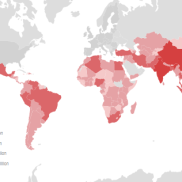
Economic Costs of Childhood Lead Exposure in Low- & Middle-Income Countries

by
New-York University - Division of Environmental Pediatrics
|
September 2014
copied to clipboard
This interactive map reflects the results of research by New-York University that estimates the economic costs linked to childhood lead exposure in low- and middle-income countries. Information as average lead level, cost for countries and population at risk under the age of five are available for selected countries.Exposure to lead has a permanent negative impact on children's developing brains. One impact is a reduction in intelligence quotient (IQ), which can be correlated with decreases in lifetime earning potential. Lead exposure
Emerging Policy Issues: Lead in paint
Topics: Policymaking
Academic article

Spot the difference: engineered and natural nanoparticles in the environment—release, behavior, and fate

The production and use of nanoparticles leads to the emission of manufactured or engineered nanoparticles into the environment. Those particles undergo many possible reactions and interactions in the environment they are exposed to. These reactions and the resulting behavior and fate of nanoparticles in the environment have been studied for decades through naturally occurring nanoparticulate (1-100 nm) and colloidal (1-1000 nm) substances. The knowledge gained from these investigations is nowhere near sufficiently complete to create a detailed model of the
Emerging Policy Issues: Nanotechnology
Academic article

Endocrine disrupting compounds (EDCs) and pharmaceuticals and personal care products (PPCPs) in the aquatic environment: implications for the drinking water industry and global environmental health

by
IWA Publishing
|
February 2009
copied to clipboard
Endocrine disrupting compounds (EDCs) and pharmaceuticals and personal care products (PPCPs) are a group of chemical compounds with diverse physical and chemical properties. Recent studies have indicated undesired effects of EDCs and PPCPs at their reported trace concentrations. This paper reviews the current knowledge on the sources, properties, occurrence and health impacts of EDCs and PPCPs, and their removal from drinking water using ozonation and ozone/hydrogen peroxide-based advanced oxidation. The paper also examines the potential threats posed by these chemicals
Academic article

Occurrence, Treatment, and Toxicological Relevance of EDCs and Pharmaceuticals in Water

by
International Ozone Association
|
March 2008
copied to clipboard
Over the past decade a great amount of interest has arisen regarding the occurrence and fate of trace organic contaminants in the aquatic environment. Of particular concern are human hormones and pharmaceuticals, many of which are ubiquitous contaminants in conventional municipal wastewater treatment plant effluents when measured with ng/L detection limits. As analytical procedures and bioassay techniques become more readily available and increasingly sensitive, new contaminants will be discovered. The presence or absence of any chemical in a wastewater effluent
Avatar