101 resources found

Report

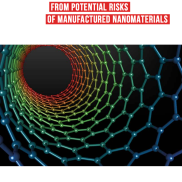
WHO guidelines on protecting workers from potential risks of manufactured nanomaterials

The term nanomaterials refers to materials that have at least one dimension (height, width or length) that is smaller than 100 nanometres (10−7 metre), which is about the size of a virus particle. This particular size dimension represents a major characteristic of manufactured nanomaterials (MNMs). The unique properties of MNMs may result in highly desirable behaviour leading to such varying applications as better paints, better drugs and faster electronics. However, for the same reason, MNMs may also present health hazards
Emerging Policy Issues: Nanotechnology
Report

A journey into the tanning industry

by
Centro Nuovo Modello di Sviluppo
|
November 2016
copied to clipboard
A Tough Story of Leather analyses the situation for workers in the Italian tanning industry.This report has been produced by Centro Nuovo Modello di Sviluppo (CNMS) and the Campagna Abiti Puliti in 2016. This research, which forms part of the Change your Shoes project, focuses on the so called Leather Republic: the Santa Croce District. This report has been produced by Centro Nuovo Modello di Sviluppo (CNMS) and the Campagna Abiti Puliti in 2016. A Tough Story of Leather analyses
Report

Sources, Fate and Effects of Microplastics in the Marine Environment (Part 2)

by
GESAMP
|
May 2015
copied to clipboard
This report provides an update and further assessment of the sources, fate and effects of microplastics in the marine environment, carried out by Working Group 40 (WG40) of GESAMP (The Joint Group of Experts on Scientific Aspects of Marine Protection).It follows publication of the first assessment report in this series in April 2015 (GESAMP 2015). The issue of marine plastic litter was raised during the inaugural meeting of the United Nations Environment Assembly (UNEA) in June 2014. Delegates from 160
Emerging Policy Issues: Nanotechnology
Report

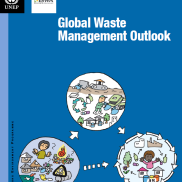
Global Waste Management Outlook

Better waste management offers great potential to help us meet the sustainability challenges ahead. Targeting decision-makers and many other inter-connected sectors, the Global Waste Management Outlook (GWMO) was launched at the World Congress of The International Solid Waste Association (ISWA) in Belgium on 7 September, 2015 . The publication also contains two summary documents, making the information concise and accessible.Developed by UNEP in collaboration with ISWA in response to the UNEP Governing Council request of February 2013, its goal was
Report

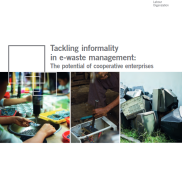
Tackling informalityin e-waste management: The potential of cooperative enterprises

December 2014
copied to clipboard
The present paper is the product of a joint effort by the Sectoral Activities Depart-ment and the Cooperatives Unit of the International Labour Organization (ILO).This initiative supports the ILO’s commitment to promote forms of employment that safeguard the environment, eradicate poverty and promote social justice through sustainable enterprises and decent work, as reinforced by the International Labour Con-ference (ILC), at its 102nd session in June 2013. Electrical and electronic waste (e-waste) is currently the fastest growing waste stream, and it
Website

Economic Costs of Childhood Lead Exposure in Low- & Middle-Income Countries

by
New-York University - Division of Environmental Pediatrics
|
September 2014
copied to clipboard
This interactive map reflects the results of research by New-York University that estimates the economic costs linked to childhood lead exposure in low- and middle-income countries. Information as average lead level, cost for countries and population at risk under the age of five are available for selected countries.Exposure to lead has a permanent negative impact on children's developing brains. One impact is a reduction in intelligence quotient (IQ), which can be correlated with decreases in lifetime earning potential. Lead exposure
Emerging Policy Issues: Lead in paint
Topics: Policymaking
Report

Environmental fate and behaviour of nanomaterials (2014) and Environmental assessment of nanomaterial use in Denmark (2015)

by
The Danish Environmental Protection Agency
|
July 2014
copied to clipboard

Both reports arose from the Danish project “NanoDEN”, commissioned by the Danish EPA.Environmental fate and behaviour of nanomaterials by Hartmann N, Skjolding L, Foss Hansen S, Gottschalk F, Baun A (2014)The report 1 provides an overview of the to date knowledge regarding processes relevant for environmental fate and behaviour of ENMs. Key environmental processes are identified, discussed and prioritized according to their relevance as inputs for fate modelling for ENMs. Furthermore, knowledge gaps are identified and prioritised with regard to

Emerging Policy Issues: Nanotechnology
Report

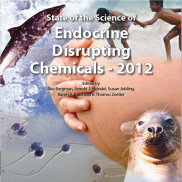
State of the Science of Endocrine Disrupting Chemicals - 2012

This document done by a group of experts for the United Nations Environment Programme and World Health Organization provides the global status of scientific knowledge on exposure to and effects of endocrine disrupting chemicals (EDCs).The work is based on the fact that endocrine systems are very similar across vertebrate species and that endocrine effects manifest themselves independently of species. The effects are endocrine system related and not necessarily species dependent. Effects shown in wildlife or experimental animals may also occur
Emerging Policy Issues: Endocrine-Disrupting Chemicals

Avatar