79 resources found

Policy document

Understanding chemicals in products: SAICM Policy Brief

by |
November 2019
copied to clipboard

The transparency of information about chemicals in global supply chains has been an emerging policy issue for the Strategic Approach to International Chemicals Management (SAICM) since 2009, leading to programmes such as the UNEP Chemicals in Products (CiP) Programme. The CiP programme focuses specifically on the textiles, toys, electronics and building materials sectors.Information exchange in the value chain is key in identifying and addressing any chemicals of concern1 in products. Brands and retailers frequently lack crucial knowledge about the properties

Tarkett-Case-Study
Case studies

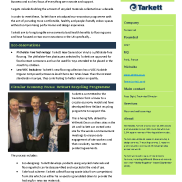
Tarkett Sustainable Flooring Case Study

November 2019
copied to clipboard

Tarkett have introduced an eco-innovation programme with the aim of providing more comfortable, healthy and people-friendly indoor spaces without compromising performance and design experience. Key initiatives include:

  • Phthalate free technology in their New Generation Vinyl flooring;
  • Low VOC emissions in flooring;
  • ReStart Takeback and Recycling Programme, and use of recycled materials in new products.
Emerging Policy Issues: Chemicals in products
SAICM-USEtox_D2.1
Report

List of Chemicals of Concern and of potential alternatives for toys sector, with supporting information on criteria and selection

by |
September 2019
copied to clipboard

In this report, we present a list of Chemicals of Concern (CoCs) in plastic toys, with supporting information on the applied selection criteria. To identify the CoCs, we started from a literature review of available plastic toys compositions studies, and obtained the chemical mass fraction in plastic toy as well as the chemical functions. The chemical emissions from the plastic toys and subsequent human exposures were then estimated using a series of models and the coupled nearfield and far-field exposure assessment framework. Finally, the human exposure doses were compared to toxicity measures such as the reference dose (RfD), or median effective dose (ED50) for cancer effects, to evaluate the health risks on children. Chemical-material combinations that have a hazard quotient (HQ) > 10, a margin of exposure (MoE) < 100, or a lifetime cancer risk > 10-6 were included in the list of CoCs. In total, 35 (less than 10%) of all chemical-material combinations studied were identified as CoCs. The results indicate that a relevant amount of chemicals used in plastic toys may pose a non-negligible health risk to children, calling for more refined investigations and more human- and eco-friendly alternatives.

This document has been developed within the framework of the Global Environment Facility (GEF) project ID: 9771 on Global Best Practices on Emerging Chemical Policy Issues of Concern under the Strategic Approach to International Chemicals Management (SAICM). This project is funded by the GEF, implemented by UNEP and executed by the SAICM Secretariat.

Emerging Policy Issues: Chemicals in products
Policy document

Model Law and Guidance for Regulating Lead Paint

UN Environment, in cooperation with World Health Organization, United States Environment Protection Agency and other partners, has developed a model law and guidance in order to assist countries in establishing and implementing regulation on lead paint.The purpose of this guidance is to assist countries to enact new laws (or to modify their existing laws) to establish a single regulatory limit on the total lead content in paints. The guidance describes the key elements of effective and enforceable legal requirements. It

Emerging Policy Issues: Lead in paint
Topics: Policymaking
2212521_SAICM_GEF9771_LIP_TechGuide_cover
Manuals and toolkits

Reformulation is Entirely Possible: Summary of the Lead Paint Reformulation Technical Guidelines and How to Use this Information

This document summarizes information from the Lead Paint Reformulation Technical Guidelines, the findings and recommendations of the reformulation pilot demonstrations, and two case studies of paint manufacturers which have reformulated paint products. This summary is also intended to highlight how the information from the Guidelines can be used by different stakeholders involved in the phasing out of lead paint.The full set of technical guidelines can be accessed here.The guidelines were made possible under a global project funded by the Global

Emerging Policy Issues: Lead in paint
Topics: Policymaking
Community of practice summary of discussions

The Link between Climate Change and Chemical Accidents

The Secretariat of the Strategic Approach to Chemicals Management (SAICM) and the University of Cape Town (UCT) have launched a Community of Practice (CoP) on Chemicals and SDGs to bring representatives from different sectors together and to create a learning network around issues related to addressing Chemicals and the Sustainable Development Goals (SDGs). This is a summary of the discussion on The Link between Climate Change and Chemical Accidents, which took place on 20 April 2022.Presenters: Marie-Ange Baucher (OECD), Dr
Report

Sustainable Chemicals and Materials Policy for Protecting the Climate and Biodiversity

by |
April 2022
copied to clipboard
Chemicals and materials policy deals with both the risks and the opportunities of chemicals as well as with the volume of material flows from raw material extraction to waste. As with the policy areas of climate and biodiversity, there is a need for a global transformation in chemicals and materials policy with a strong focus on the guiding principles of precaution and sustainability. The boundaries of our planet must no longer be exceeded.The impacts of chemicals and materials are closely
Emerging Policy Issues: Chemicals in products

Avatar