25 resources found

Lead_Paint_Guide
Manuals and toolkits

Lead Paint Reformulation Technical Guidelines

The Lead Paint Reformulation Technical Guidelines have developed by the United Nations Environment Programme (UNEP) and guided by the Global Alliance to Eliminate Lead Paint. The document provide a comprehensive starting point for all stakeholders to learn more about paint reformulation and best practices. They offer general information on processes and provide a step-by-step approach to reformulation, indicating where to find relevant information such as alternative raw materials and additional details such as standards for testing and in-depth case studies.The

Emerging Policy Issues: Lead in paint
Topics: Policymaking
GSCF
Manuals and toolkits

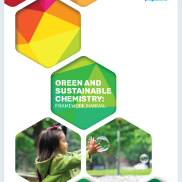
Green and Sustainable Chemistry: Framework Manual

The Framework Manual introduces, in a structured way, various facets of green and sustainable chemistry, with the intention to foster learning, reflection and scale up action based on a common global understanding of the concept. It features an organizing framework that unpacks various topics relevant for green and sustainable chemistry literature. The Manual is setting objectives and guiding considerations from green and sustainable chemistry, as well as an innovation and research framework are offered to stimulate stakeholder action at various levels and in different settings. Ultimately, the Manual seeks to promote innovation that unveils the full power of chemistry, and is compatible with, and supports implementation of global sustainable development goals and targets. The range of topics covered in the Manual have been identified following a review of the green and sustainable chemistry literature, the 2019 UNEP report on best practices in sustainable chemistry, and the second edition of the Global Chemicals Outlook (GCO-II). Resources permitting, the Framework Manual will be complemented by specific manuals, covering selected topics of interest to stakeholders. The Manual is structured alongside the elements of the conceptual framework “Advancing sustainability through green and sustainable chemistry” which was developed through a consultative process and is introduced below. Chapters 2, 3 and 4 address the question of: “Why” is green and sustainable chemistry needed and “What” does it aim to achieve, and in which specific innovation areas. Chapters 5, 6 and 7 focus on enabling tools and measures to advance green and sustainable chemistry (the “How”). These action-enabling elements range from promoting life cycle approaches, to strengthening research and innovation policies and programmes. An important cross-cutting topic is the need to scale up awareness raising and education initiatives at all levels that bring the green and sustainable chemistry agenda to potential actors, through formal and informal education.

Emerging Policy Issues: Chemicals in products
Policy document

Model Law and Guidance for Regulating Lead Paint

by
UNEP ,
|
July 2018
copied to clipboard

UN Environment, in cooperation with World Health Organization, United States Environment Protection Agency and other partners, has developed a model law and guidance in order to assist countries in establishing and implementing regulation on lead paint.The purpose of this guidance is to assist countries to enact new laws (or to modify their existing laws) to establish a single regulatory limit on the total lead content in paints. The guidance describes the key elements of effective and enforceable legal requirements. It

Emerging Policy Issues: Lead in paint
Topics: Policymaking
2212521_SAICM_GEF9771_LIP_TechGuide_cover
Manuals and toolkits

Reformulation is Entirely Possible: Summary of the Lead Paint Reformulation Technical Guidelines and How to Use this Information

This document summarizes information from the Lead Paint Reformulation Technical Guidelines, the findings and recommendations of the reformulation pilot demonstrations, and two case studies of paint manufacturers which have reformulated paint products. This summary is also intended to highlight how the information from the Guidelines can be used by different stakeholders involved in the phasing out of lead paint.The full set of technical guidelines can be accessed here.The guidelines were made possible under a global project funded by the Global

Emerging Policy Issues: Lead in paint
Topics: Policymaking
Report

Sustainable Chemicals and Materials Policy for Protecting the Climate and Biodiversity

by |
April 2022
copied to clipboard
Chemicals and materials policy deals with both the risks and the opportunities of chemicals as well as with the volume of material flows from raw material extraction to waste. As with the policy areas of climate and biodiversity, there is a need for a global transformation in chemicals and materials policy with a strong focus on the guiding principles of precaution and sustainability. The boundaries of our planet must no longer be exceeded.The impacts of chemicals and materials are closely
Emerging Policy Issues: Chemicals in products
Community of practice summary of discussions

Cross-sectoral global minimum transparency standard for hazardous chemicals in products - an essential tool to detoxify material cycles

The SAICM Secretariat, in partnership with the University of Cape Town, established a community of practice on Chemicals in Products to bring representatives from different sectors together and to create a learning network around issues related to addressing Chemicals in Products (CiP). This is a summary of the discussion on Cross-sectoral global minimum transparency standard for hazardous chemicals in products - an essential tool to detoxify material cycles, which took place on 17 March 2022.Presenters: Mafoko Phomane (groundWork South Africa)
Emerging Policy Issues: Chemicals in products

Community of practice summary of discussions

Lead Paint Testing: Case Studies of Impact

The Secretariat of the Strategic Approach to Chemicals Management (SAICM) and the University of Cape Town (UCT) have established a Community of Practice (CoP) on Lead in Paint to bring representatives from different sectors together and to create a learning network around issues related to the elimination of Lead Paint. This is a summary of the discussion on Lead Paint Testing: Case Studies of Impact, which took place on 9 March 2022.Presenters: Lucia Coulter (LEEP), Raja Ram Pote Shrestha (WHO)
Emerging Policy Issues: Lead in paint
Report

Fluorochemicals: Persistent, Dangerous, Avoidable

by |
December 2021
copied to clipboard
PFAS are non-aromatic, organic chemicals in which the hydrogen atoms in the carbon chain are fully replaced (“per”) or partly but almost entirely replaced (“poly”) by fluorine atoms. At least 4,700 substances belong to this group of substances. All these chemicals have in common that their environmental degradability is fairly slow and very limited and therefore remain resistant for years to decades.PFAS are “forever chemicals.” Even when being incinerated for disposal, very high temperatures are required for these compounds to
Emerging Policy Issues: Chemicals in products
Avatar