8 resources found

Case Study 3
Case studies

Piloting the Extended Producer Responsibility scheme in Nigeria

This case study highlights three main achievements resulting from the EPR pilot that tested potential collection channels, determined local e-waste treatment costs, and promoted environmentally sound e-waste management and gender equality in Nigeria's electronics sector.

  1. Setting an EPR financial mechanism by understanding local collection and recycling costs and estimating the EPR fee based on local costs.
  2. Reducing the health and environmental risks associated with e-waste management practices by ensuring hazardous materials like mercury and Persistent Organic Pollutants in e-waste are recycled in an environmentally sound manner.
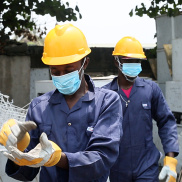
  3. Improving the health, security, and safety of waste management workers, including women who face various risks in the sector.

The study concludes with a summary of the next steps and key learnings that emphasize the importance of environ-mentally and socially responsible e-waste management with a focus on gender equality in the sector.

Case Study 1
Case studies

Gaining legal ground in the Extended Producer Responsibility scheme for electronics in Nigeria

by |
March 2023
copied to clipboard

Strengthening legal efforts in Nigeria is crucial for successful implementation of Extended Producer Responsibility (EPR) systems. By having the National Environmental Standards and Regulations Enforcement Agency of Nigeria (NESREA) having the enforcing EPR laws create a more sustainable and accountable e-waste sector.

Developing and updating EPR legistlations helps clarify the different responsibilities and enforce producers to comply with their obligations and responsibility. However, effective EPR implementation will require further law enforcement measures.
The case study outlines two achievements of the "Circular Economy Approaches for The Electronics Sector In Nigeria" project towards establishing a stronger legal system in Nigeria:

  • The development and gazette of the EPR Guidance document in 2020: the guidance defines the roles and responsibilities of the key public and private stakeholders, the product categories to be covered by the EPR scheme, and the collection and recycling targets.
  • The amendment of the National Environmental (Electrical and Electronic Sector) Regulations in 2022: which legally requires EPR subscriptions and prohibits suboptimal treatment of e-waste.

The study concludes with a summary of key lessons and next steps, emphasizing the importance of enforcing EPR laws, engaging stakeholders, raising public awareness, and collaborating with regional and international partners.

Case Study 2
Case studies

Data management automation for the Extended Producer Responsibility scheme for electronics in Nigeria

by |
March 2023
copied to clipboard

The establishment of an EPR database is critical in operationalising and formalising the management of EPR-related data. The EPR database allows e-waste flow tracking and EPR fee and recovery rate calculation while ensuring producers' information confidentiality and helping prevent counterfeiting activities.

The case study outlines the project’s efforts towards establishing this automation system in Nigeria in the following areas:

  • Developing the EPR database: to manage producers’ market share data, calculate and collect the EPR fees.
  • Registering Producers and products in the database: To ensure electronic and electrical producers are registered and to oversee the EPR operation.
  • Securing the database: Enhancing producers' trust in the database and ensuring its confidentiality.

The study concludes with a summary of next steps and key learnings, emphasizing the importance of law enforcement, database registration, secure systems for producers, and encouraging the participation of producers in the database registration.

Hinkley employees dismantling a laptop
Factsheets and brochures

Initiating Circularity for electronic waste in Nigeria: A promising paradigm for treating e-waste globally

Over half a million tonnes of discarded electronic appliances are improperly processed in Nigeria every year, threatening the country's environment and the health of approximately 100,000 informal workers in the recycling industry.
With support from the Global Environment Facility (GEF), the Government of Nigeria has joined forces with the United Nations Environment Programme (UNEP) and partners to turn the tide on e-waste under the “Circular Economy Approaches for the Electronics Sector in Nigeria” project. Led by UNEP and supported by the National Environmental Standards and Regulations Enforcement Agency of Nigeria (NESREA), the $15-million initiative brought together players from the Government, the private sector, and civil society to design and operationalise a financially self-sustaining circular economy (CE) for electronics in Nigeria.
The project aims to stimulate a CE pilot through an Extended Producer Responsibility (EPR) scheme that serves as a model for countries facing similar challenges. EPR is an integrated waste management approach that extends the responsibility of manufacturers to the entire lifecycle of their product, particularly to the end-of-life treatment. By applying this approach, the producers will be obliged to commission for collecting, pre-treating and recycling their originated e-waste. 
The project creates synergies among pre-existing elements of an EPR system in Nigeria to establish a sustainable management system and financing mechanism for EPR implementation. Establishing and enforcing a sustainable approach in Nigeria with supporting regulations and legally binding requirements is expected to recover and re-introduce usable materials into the value chain, dispose of hazardous e-waste streams in an environmentally sound manner, and create safe employment for Nigerian e-waste workers.


Circular_Economy_Electronics_Central_Eastern_Europe
Report

Toward a Circular Economy for the Electronics Sector in Central and Eastern Europe: Overview, Actions and Recommendations

by |
December 2022
copied to clipboard

This report provides an overview of the current status and conditions of the Circular Economy in the electronics value chain in the Central and Eastern Europe (CEE) region, identifies key areas of concern, provides appropriate recommendations, and proposes priority actions to improve circularity of the sector. The recommendations and roadmap focus on the individual life cycle stages of the electronics value chain, as well as on aspects that cut across the value chain. The transition towards a more circular electronics sector in Central and Easter Europe (CEE) would require a holistic and coordinated approach to progress toward a more circular electronics value chain in the CEE region.

This publication was prepared under the framework of the Global Environment Facility (GEF) full-sized project 9771: Global best practices on emerging chemical policy issues of concern under the Strategic Approach to International Chemicals Management (SAICM). This project is funded by the GEF, implemented by UNEP and executed by the SAICM Secretariat.

eco-i_electronics
Manuals and toolkits

Eco-innovation (Eco-i) manual – Electronics Supplement

by |
December 2022
copied to clipboard

UNEP's new Eco-innovation Electronics Supplement was created to respond to the electronics sector's need for more guidance in building resilient, competitive, and sustainable business models for SMEs. Designed together with the World Resources Forum and to be read alongside UNEP's Eco-innovation (Eco-i) Manual, the supplement provides electronics specific examples, learning case studies, and advice on applying the eco-innovation methodology and its opportunities in the electronic sector.

This publication was prepared under the framework of the Global Environment Facility (GEF) full-sized project 9771: Global best practices on emerging chemical policy issues of concern under the Strategic Approach to International Chemicals Management (SAICM). This project is funded by the GEF, implemented by UNEP and executed by the SAICM Secretariat.

Report

Regional Electronics Study and Circularity Roadmap in the LAC Region: Mapping of Existing Initiatives

Technological development has made electrical and electronic equipment (EEE1) essential parts of contemporary life and indispensable products in today’s societies. Information technology (IT) combined with the technological advances in recent decades, has resulted in EEE having a great influence on the daily life of consumers in aspects such as health, safety, knowledge, comfort information, among others. The global consumption of electronics is growing 2.5 million metric tons per year (Forti, Baldé, Kuehr, & Bel, 2020), because technology increases the living

Report

Tackling informalityin e-waste management: The potential of cooperative enterprises

December 2014
copied to clipboard
The present paper is the product of a joint effort by the Sectoral Activities Depart-ment and the Cooperatives Unit of the International Labour Organization (ILO).This initiative supports the ILO’s commitment to promote forms of employment that safeguard the environment, eradicate poverty and promote social justice through sustainable enterprises and decent work, as reinforced by the International Labour Con-ference (ILC), at its 102nd session in June 2013. Electrical and electronic waste (e-waste) is currently the fastest growing waste stream, and it
Avatar