748 resources found

Policy document

Role of economic instruments for the sound management of chemicals and waste

by |
September 2020
copied to clipboard
“The vast majority of human health costs linked to chemicals production, consumption, and disposal are not borne by chemicals producers, nor shared down the value-chain.” GCO-IThis policy brief draws from and complements: ‘Review of cost recovery mechanisms and other economic instruments for financing of the sound management of chemicals and waste’ (SAICM/IP.4/7). With the Beyond 2020 framework for chemicals and waste under deliberation, and key outcomes expected at the fifth session of the International Conference on Chemicals Management (ICCM5) in
Manuals and toolkits

Brief guide to analytical methods for measuring lead in blood (Second edition)

Lead is a toxic metal whose widespread use has caused extensive environmental contamination and health problems in many parts of the world. Lead is a cumulative toxicant that affects multiple body systems, including the neurological, haematological, gastrointestinal, cardiovascular, musculoskeletal and renal systems. Long-term effects include increased risk of hypertension, ischaemic heart disease and renal disease. Children are particularly vulnerable to the neurotoxic effects of lead, and even low levels of exposure can impair cognitive development and cause behavioural disorders. These
Emerging Policy Issues: Lead in paint
Factsheets and brochures

Gender mainstreaming in chemicals and waste policies

by
HEJSupport International
|
August 2020
copied to clipboard
New Fact Sheet: Gender mainstreaming in chemicals and waste policiesGender equality is a core human rights and development issue, as highlighted in several international and regional human rights instruments, including those that are part of multilateral environmental agreements. Law-binding and voluntary agreements on chemicals and waste are no exception and play an essential role in increasing the participation of women and men in the management of chemicals and waste, while contributing to gender equality.The fact sheet includes examples of texts
Community of practice summary of discussions

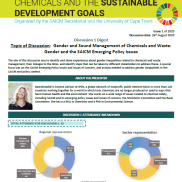
Gender and sound management of chemicals and waste: Gender and the SAICM Emerging Policy Issues

The Secretariat of the Strategic Approach to Chemicals Management (SAICM) and the University of Cape Town (UCT) have launched a Community of Practice (CoP) on Chemicals and SDGs to bring representatives from different sectors together and to create a learning network around issues related to addressing Chemicals and the Sustainable Development Goals (SDGs). This is a summary of the discussion on Gender and sound management of chemicals and waste: Gender and the SAICM Emerging Policy Issues, which took place on
Community of practice summary of discussions

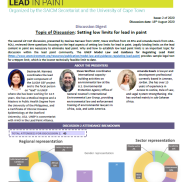
Setting low limits for lead in paint – legal side

The Secretariat of the Strategic Approach to Chemicals Management (SAICM) and the University of Cape Town (UCT) are launching a new Community of Practice (CoP) on Lead in Paint to bring representatives from different sectors together and to create a learning network around issues related to the elimination of Lead Paint. This is a summary of the discussion on Setting low limits for lead in paint – legal side, which took place on 18 August 2020.Presenters: Desiree M. Narvaez (UNEP)
Emerging Policy Issues: Lead in paint
Policy document

Global elimination of lead paint: why and how countries should take action - Policy brief

Lead has toxic effects on almost all body systems and is especially harmful for children and pregnant women. Lead paint is an avoidable source of exposure to lead. “Lead paint” or “lead-based paint” is paint to which one or more lead compounds have been intentionally added by the manufacturer to obtain specific characteristics. One important way to prevent exposure is for countries to establish legally binding regulatory measures prohibiting the addition of lead to paint.This policy brief summarizes key information
Emerging Policy Issues: Lead in paint
Avatar