748 resources found

Infographic

Lead infographics

by |
September 2016
copied to clipboard
What are the sources of lead in the environment? Where can you find lead? Who is at risk? How are children exposed to lead? What can you do? Did you know? - Part 1 Did you know? - Part 2 Celebrating our achievements
Emerging Policy Issues: Lead in paint
Policy document

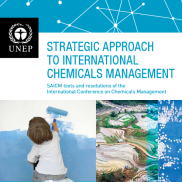
SAICM texts and resolutions of the International Conference on Chemicals Management
September 2015
copied to clipboard
The new version of SAICM texts exists in English only and includes the resolutions adopted by ICCM at its first, second and third sessions. The older other language versions include only resolutions adopted by ICCM at its first session.New activities included in the Global Plan of ActionAt ICCM3 (17-21 September 2012), SAICM stakeholders agreed to the inclusion of new activities relating to the environmentally sound management of nanotechnologies and manufactured nanomaterials and hazardous substances within the life-cycle of electrical and
Manuals and toolkits

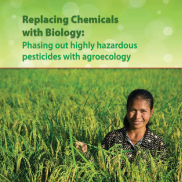
Replacing Chemicals with Biology: Phasing out highly hazardous pesticides with agroecology

September 2015
copied to clipboard
Adverse effects of highly hazardous pesticides (HHPs) on people and the environment have been a global concern for many years. In 2006, this was clearly expressed by the FAO Council when it recommended a progressive ban on HHPs. The concern crystallized at UNEP’s Fourth International Conference on Chemicals Management (ICCM4) in Nairobi in 2012, with the submission of a conference room paper supported by at least 65 countries and organizations. The proposed resolution included supporting “a progressive ban on HHPs
Emerging Policy Issues: Highly Hazardous Pesticides
Policy document

Overall Orientation and Guidance for achieving the 2020 goal of sound management of chemicals

The future we want for the sound management of chemicals1.In paragraph 23 of the Johannesburg Plan of Implementation, adopted at the World Summit on Sustainable Development in 2002, Governments identified the goal of “achiev[ing] by 2020, that chemicals are used and produced in ways that lead to the minimization of significant adverse effects on human health and the environment” (see appendixA).That goal was further adopted as part of the Strategic Approach to International Chemicals Management by the International Conference on
Report

Sources, Fate and Effects of Microplastics in the Marine Environment (Part 2)

by
GESAMP
|
May 2015
copied to clipboard
This report provides an update and further assessment of the sources, fate and effects of microplastics in the marine environment, carried out by Working Group 40 (WG40) of GESAMP (The Joint Group of Experts on Scientific Aspects of Marine Protection).It follows publication of the first assessment report in this series in April 2015 (GESAMP 2015). The issue of marine plastic litter was raised during the inaugural meeting of the United Nations Environment Assembly (UNEA) in June 2014. Delegates from 160
Emerging Policy Issues: Nanotechnology
Video

We're almost there. Let's get there together

SAICM - International Conference on Chemicals Management - Curtain raiser from UN Environment on Vimeo.

Report

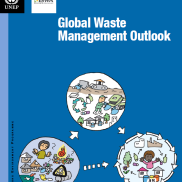
Global Waste Management Outlook

Better waste management offers great potential to help us meet the sustainability challenges ahead. Targeting decision-makers and many other inter-connected sectors, the Global Waste Management Outlook (GWMO) was launched at the World Congress of The International Solid Waste Association (ISWA) in Belgium on 7 September, 2015 . The publication also contains two summary documents, making the information concise and accessible.Developed by UNEP in collaboration with ISWA in response to the UNEP Governing Council request of February 2013, its goal was
Avatar