58 resources found

Case studies

Future Policy Award 2021: Philippines - Lead in Paint

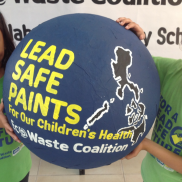
Lead is a cumulative toxic element particularly harmful to young children and pregnant women. Lead can be present at high levels in paint and is a major health concern specially in low and middle income countries. Philippines legislation towards lead-safe paint has provided safer alternatives to protect human health and the environment, actively involving all stakeholders. The Special Award Lead in Paint was awarded to Philippines’ Chemical Control Order for Lead and Lead Compounds (CCO, 2013-24).The World Future Council focuses

Emerging Policy Issues: Lead in paint Chemicals in products

Case studies

Future Policy Award 2021: Kyrgyzstan - Globally Harmonized System of Classification and Labelling of Chemicals

Globally Harmonized System of Classification and Labelling of Chemicals is a non-binding internationally agreed-upon system managed by the UN which defines and classifies the hazards of chemical products. Kyrgyzstan’s Resolution No. 43 on Approval of the Chemical Hazard Classification System and Hazard Information Requirements (2015) has legally bound GHS.The World Future Council focuses on identifying, developing, highlighting and spreading effective, future-just solutions for current challenges humanity is facing and promote their implementation worldwide. The Future Policy Award 2021 highlights exemplary

Emerging Policy Issues: Chemicals in products
Academic article

Exposure and toxicity characterization of chemical emissions and chemicals in products: global recommendations and implementation in USEtox

by
Springer Nature
|
April 2021
copied to clipboard
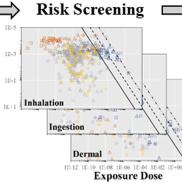
Reducing chemical pressure on human and environmental health is an integral part of the global sustainability agenda. Guidelines for deriving globally applicable, life cycle–based indicators are required to consistently quantify toxicity impacts from chemical emissions as well as from chemicals in consumer products. In response, we elaborate the methodological framework and present recommendations for advancing near-field/far-field exposure and toxicity characterization, and for implementing these recommendations into the scientific consensus model USEtox.The present work was supported by the “Global Best Practices
Emerging Policy Issues: Chemicals in products
Academic article

Blood lead levels in low-income and middle-income countries: a systematic review

by
Elsevier
|
March 2021
copied to clipboard
Since the global phase-out of leaded petrol, reports have suggested that lead exposure remains substantial or is increasing in some low-income and middle-income countries (LMICs). However, few studies have attempted to systematically assess blood lead levels over the full range of LMICs. This study is aimed to describe values for blood lead level in LMICs.In this systematic review, PubMed was searched for studies published between Jan 1, 2010, and Oct 31, 2019, that reported blood lead levels in the 137
Emerging Policy Issues: Lead in paint
Academic article

Chemicals of concern in plastic toys

by
ScienceDirect
|
October 2020
copied to clipboard
We present a list of Chemicals of Concern (CoCs) in plastic toys. We started from available studies reporting chemical composition of toys to group plastic materials, as well as to gather mass fractions and function of chemicals in these materials. Chemical emissions from plastic toys and subsequent human exposures were then estimated using a series of models and a coupled near-field and far-field exposure assessment framework. Comparing human doses with reference doses shows high Hazard Quotients of up to 387
Emerging Policy Issues: Chemicals in products
Academic article

Alternative societal solutions to pharmaceuticals in the aquatic environment

by
ScienceDirect
|
September 2020
copied to clipboard
Environmental contamination with pharmaceuticals is widespread, inducing risks to both human health and the environment. This paper explores potential societal solutions to human and veterinary pharmaceuticals in the aquatic environment. To this end, we adopt transition research’s multi-level perspective framework, which allows us to understand the dynamics underlying pharmaceutical emissions and to recognize social and technical factors triggering change. The authors' qualitative analysis is based on data collected through literature research and interviews with actors from pharmaceutical industry, the health
Emerging Policy Issues: Pharmaceutical pollutants
Academic article

Endocrine-disrupting chemicals: economic, regulatory, and policy implications

by
ScienceDirect
|
July 2020
copied to clipboard
Endocrine-disrupting chemicals (EDCs) substantially cost society as a result of increases in disease and disability but—unlike other toxicant classes such as carcinogens—have yet to be codified into regulations as a hazard category.This Series paper examines economic, regulatory, and policy approaches to limit human EDC exposures and describes potential improvements. In the EU, general principles for EDCs call for minimisation of human exposure, identification as substances of very high concern, and ban on use in pesticides. In the USA, screening and
Emerging Policy Issues: Endocrine-Disrupting Chemicals
Academic article

Life cycle based alternatives assessment (LCAA) for chemical substitution

by
Green Chemistry
|
July 2020
copied to clipboard
AbstractThe world faces an increasing need to phase out harmful chemicals and design sustainable alternatives across various consumer products and industrial applications. Alternatives assessment is an emerging field focusing on identifying viable solutions to substitute harmful chemicals. However, current methods fail to consider trade-offs from human and ecosystem exposures, and from impacts associated with chemical supply chains and product life cycles. To close this gap, we propose a life cycle based alternatives assessment (LCAA) framework for consistently integrating quantitative exposure
Avatar