58 resources found

gender-case-studies-cover
Case studies

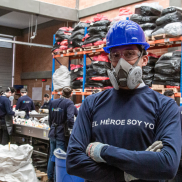
Women Leaders: Addressing Chemicals and Waste Issues

by
IPEN ,
|
June 2022
copied to clipboard

People of all gender identities must have the same rights and opportunities to participate fully in their communities, free from the health threats posed by toxic chemicals. It is especially important to understand the factors that put women at risk from chemical health threats.

The IPEN report “Women Leaders: Addressing Chemicals and Waste Issues” highlights women’s leadership through ten organizations from around the world working to address chemical health threats. The report was developed within the framework of the United Nations Environment Program and its Global Environment Facility (GEF), under the Strategic Approach to International Chemicals Management (SAICM), executed by the SAICM Secretariat. It was produced with support from the Swedish Government.

Women face greater risks from chemical exposures and experience higher rates of adverse health outcomes because of their physiology, different types of occupational exposures, and differential exposures to chemicals, including from personal care and household products. Women are also exposed to chemicals — such as endocrine disrupting chemicals, lead in paint, and chemicals in toys — that pose health threats during pregnancy and to their developing children.

These toxic exposures can lead to serious health problems that impact women’s lives and their opportunities to participate in their communities fully and equally. This is especially so for women in low-income communities who are often managing multiple pathways for toxic exposures and multiple obstacles to gender equality.

Women cannot be empowered nor gender equality achieved while exposures to hazardous chemicals put them at risk for cancer, chronic illnesses, infertility, and damage to their nervous systems.

In 2015, the United Nations Member States adopted the 2030 Agenda for Sustainable Development, which includes 17 Sustainable Development Goals (SDGs). “Gender Equality” is one of the goals (Goal 5) and the SDGs also recognize that gender equality is a prerequisite for reaching most of the other goals. Reducing and eliminating chemical exposures will also be essential for achieving all of the 17 goals.

The stories that follow highlight women across the globe who are leading work in their communities, nations, and internationally for stronger protections from harmful chemicals. Supporting their work and the work of countless other women who are leading similar efforts will be critical for achieving the SDGs.

Tarkett-Case-Study
Case studies

Tarkett Sustainable Flooring Case Study

November 2019
copied to clipboard

Tarkett have introduced an eco-innovation programme with the aim of providing more comfortable, healthy and people-friendly indoor spaces without compromising performance and design experience. Key initiatives include:

  • Phthalate free technology in their New Generation Vinyl flooring;
  • Low VOC emissions in flooring;
  • ReStart Takeback and Recycling Programme, and use of recycled materials in new products.
Emerging Policy Issues: Chemicals in products
The Lancet
Academic article

Risk of cancer associated with residential exposure to asbestos insulation: a whole-population cohort study

November 2017
copied to clipboard

The health risks associated with living in houses insulated with asbestos are unknown. Loose-fill asbestos was used to insulate some houses in the Australian Capital Territory (ACT). This study published in The Lancet compared the incidence of mesothelioma and other cancers in residents of the ACT who did and did not live in these houses.

Academic article

Chemicals of concern in building materials: A high-throughput screening

by
Elsevier
|
December 2021
copied to clipboard

Chemicals used in building materials can be a major passive emission source indoors, associated with the deterioration of indoor environmental quality. This study aims to screen the various chemicals used in building materials for potential near-field human exposures and related health risks, identifying chemicals and products of concern to inform risk reduction efforts. We propose a mass balance-based and high-throughput suited model for predicting chemical emissions from building materials considering indoor sorption. Using this model, we performed a screening-level human

Emerging Policy Issues: Chemicals in products
Academic article

Estimating mouthing exposure to chemicals in children’s products

by
Springer Nature
|
December 2021
copied to clipboard
AbstractBackgroundExisting models for estimating children’s exposure to chemicals through mouthing currently depends on the availability of chemical- and material-specific experimental migration rates, only covering a few dozen chemicals.ObjectiveThis study objective is hence to develop a mouthing exposure model to predict migration into saliva, mouthing exposure, and related health risk from a wide range of chemical-material combinations in children’s products.MethodsWe collected experimental data on chemical migration from different products into saliva for multiple substance groups and materials, identifying chemical concentration and
Emerging Policy Issues: Chemicals in products
Case studies

Future Policy Award 2021: Colombia - Environmentally Persistent Pharmaceutical Pollutants

Despite the fact that pharmaceuticals are indispensable for human and animal health, they may cause undesired adverse effects. Specifically, environmentally persistent pharmaceutical pollutants (EPPPs) are slowly degradable or nondegradable, presenting a special risk when they enter, persist or disseminate in the environment. Colombia’s Resolution 371, addressing EPPPs, was awarded for regulating waste management from hazardous products.The World Future Council focuses on identifying, developing, highlighting and spreading effective, future-just solutions for current challenges humanity is facing and promote their implementation worldwide

Case studies

Future Policy Award 2021: Sweden, Region Stockholm - Chemicals in products

Although chemicals are important components in many products, they may be released at any stage of the product life cycle, resulting in potential exposures of humans and the environment. The second 2021 Gold Awardee addressing Chemicals in Products is Sweden, Region Stockholm: Phase-Out Lists for Chemicals Hazardous to the Environment and Human Health (2012-2016, revised for 2017-2021).The World Future Council focuses on identifying, developing, highlighting and spreading effective, future-just solutions for current challenges humanity is facing and promote their implementation

Emerging Policy Issues: Chemicals in products
Case studies

Future Policy Award 2021: Sri Lanka - Pesticides

The Special Award Highly Hazardous Pesticides is one of the most ambitious and impactful solutions that minimizes the adverse effects of pesticides, which cause disproportionate harm to the environment and human health. Pesticides can cause severe environmental hazards, high acute, chronic toxicity and are also a very common suicide agent. Particularly, in Sri Lanka, two thirds of suicides were due to self-poisoning with pesticides. The Special Award Highly Hazardous Pesticides was awarded to Sri Lanka’s Control of Pesticides Act No

Avatar