13 resources found

Newsletter

SAICM Secretariat Newsletter

by |
December 2022
copied to clipboard

We would like to extend our sincere appreciation to the ICCM5 President, members of the ICCM5 Bureau, and to all our partners for the ongoing commitment and support extended to the Secretariat as it continues to deliver on its mandate.

Season’s Greetings, as we look forward to greater collaboration in 2023!

E-learning

Ecosystem Restoration 2022

September 2022
copied to clipboard

In this Massive Open Online Course, you will learn to develop a step-by-step ecosystem restoration plan and apply effective restoration solutions in your national and subnational context.Start date: 19 September 2022End date: 20 November 2022Languages: English, French, SpanishEstimated effort: 3-5 hours per weekDuration: 8 weeks (Part 1 and Part 2)Partners: United Nations Development Programme, Convention on Biological Diversity, Korea Forest Service, The European Union, UN Decade on Ecosystem RestorationAbout the courseThe course serves as an introduction to the Short-Term Action

Newsletter

Lead Paint Alliance Newsletter

The Global Alliance to Eliminate Lead Paint is working to achieve the phase-out of the manufacture, sale and import of paints containing lead through the establishment of laws. The Lead Paint Alliance publishes a regular newsletter to inform its partners and interested stakeholders on the latest achievements and progress towards its goal.In the newsletter, you will find news articles on lead paint, updates about global efforts to address the issue, progress towards law, and update about our partners.

Emerging Policy Issues: Lead in paint
Newsletter

Era of leaded petrol over, eliminating a major threat to human and planetary health

by
UNEP ,
|
September 2021
copied to clipboard
Official end of use of leaded petrol will prevent more than 1.2 million premature deaths and save USD 2.45 trillion a yearThe end of leaded petrol follows a 19-year campaign led by the UN Environment Programme (UNEP) and partnersUNEP urges countries to work towards zero emissions vehicles to further address air pollution and climate changeNairobi, 30 August 2021 – When service stations in Algeria stopped providing leaded petrol in July, the use of leaded petrol ended globally. This development follows
Emerging Policy Issues: Chemicals in products
E-learning

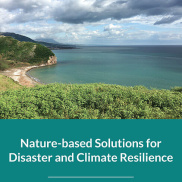
Massive Open Online Course on Nature-based Solutions for Disaster and Climate Resilience

by |
January 2021
copied to clipboard
Who is the course aimed at?Nature offers many solutions to reduce the impacts of disasters and climate change, such as protecting forests on steep slopes, maintaining sand dunes along coastline and wetlands to buffer excess rainwater. In this course, find out how people around the world are building resilience to disasters and climate change impacts through Nature-based Solutions.This course will help you understand how to apply these Nature-based Solutions that restore or protect natural or modified ecosystems and biodiversity and
E-learning

Massive Open Online Course on Marine Litter

UN Environment Programme and Open Universiteit have created a Massive Open Online Course (MOOC) on Marine Litter as a key activity of the Global Partnership on Marine Litter (you can join the GPML). It is also part of the Clean Seas Campaign. The course starts on October 26, 2020. It is free for all students and available in 10 different languages. You can still enroll until November 15. Register here!Marine litter is a global problem that affects every ocean of
E-learning

Earth School

Today, over 1.5 billion children are unable to go to school. Coronavirus’ impact goes beyond the health and economic crisis; it is also jeopardizing the education of students around the world.Teachers are scrambling to offer students lessons online and parents are desperate for activities that will keep their kids engaged and connected to the outside world.In response to this crisis, an unprecedented coalition of over fifty environmental and education experts are collaborating to launch The Earth School: 30 adventures for
E-learning

Updated course on the Minamata Convention on Mercury

by
UNEP ,
|
June 2020
copied to clipboard
Mercury is a heavy metal that occurs naturally but can also be released into air, water, and soil through anthropogenic activities such as mining, metal and cement production, and combustion of fossil fuels. It is highly toxic and persistent in the environment. It can be transported in the atmosphere great distances, and can enter the food chain and accumulate in flora and fauna.This free and self-paced course introduces you to the Minamata Convention on Mercury, which seeks to protect human
Avatar