43 resources found

Website

Green Growth Knowledge Platform
by
Green Growth Knowledge Platform
|
February 2021
copied to clipboard
The GGKP is a global community of organisations and experts committed to collaboratively generating, managing and sharing green growth knowledge and data to mobilise a sustainable future.
E-learning

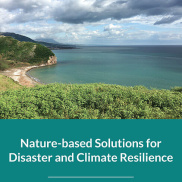
Massive Open Online Course on Nature-based Solutions for Disaster and Climate Resilience

by |
January 2021
copied to clipboard
Who is the course aimed at?Nature offers many solutions to reduce the impacts of disasters and climate change, such as protecting forests on steep slopes, maintaining sand dunes along coastline and wetlands to buffer excess rainwater. In this course, find out how people around the world are building resilience to disasters and climate change impacts through Nature-based Solutions.This course will help you understand how to apply these Nature-based Solutions that restore or protect natural or modified ecosystems and biodiversity and
E-learning

Massive Open Online Course on Marine Litter

UN Environment Programme and Open Universiteit have created a Massive Open Online Course (MOOC) on Marine Litter as a key activity of the Global Partnership on Marine Litter (you can join the GPML). It is also part of the Clean Seas Campaign. The course starts on October 26, 2020. It is free for all students and available in 10 different languages. You can still enroll until November 15. Register here!Marine litter is a global problem that affects every ocean of
Website

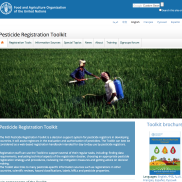
Pesticide Registration Toolkit

by
FAO
|
June 2020
copied to clipboard
The FAO Pesticide Registration Toolkit is a decision support system for pesticide registrars in developing countries. It will assist registrars in the evaluation and authorization of pesticides. The Toolkit can best be considered as a web-based registration handbook intended for day-to-day use by pesticide registrars.Registration staff can use the Toolkit to support several of their regular tasks, including: finding data requirements, evaluating technical aspects of the registration dossier, choosing an appropriate pesticide registration strategy and procedures, reviewing risk mitigation measures
Emerging Policy Issues: Highly Hazardous Pesticides
E-learning

Earth School
Today, over 1.5 billion children are unable to go to school. Coronavirus’ impact goes beyond the health and economic crisis; it is also jeopardizing the education of students around the world.Teachers are scrambling to offer students lessons online and parents are desperate for activities that will keep their kids engaged and connected to the outside world.In response to this crisis, an unprecedented coalition of over fifty environmental and education experts are collaborating to launch The Earth School: 30 adventures for
E-learning

Updated course on the Minamata Convention on Mercury

Mercury is a heavy metal that occurs naturally but can also be released into air, water, and soil through anthropogenic activities such as mining, metal and cement production, and combustion of fossil fuels. It is highly toxic and persistent in the environment. It can be transported in the atmosphere great distances, and can enter the food chain and accumulate in flora and fauna.This free and self-paced course introduces you to the Minamata Convention on Mercury, which seeks to protect human
Website

UNITAR Nanotechnology webpage

by
UNITAR
|
April 2020
copied to clipboard
UNITAR Website webpage indicates activities and resources to learn more about nanotechnology and manufactured nanomaterials (nano). The third International Conference on Chemicals Management (ICCM3) emphasized: “the need for UNITAR and the Organization for Economic Cooperation and Development to continue development of international guidance and training materials for the sound management of manufactured nanomaterials, drawing on existing initiatives, needs assessment and best practices, within their respective mandates and subject to available resources in cooperation with the regions and other relevant stakeholders"
Emerging Policy Issues: Nanotechnology
Website

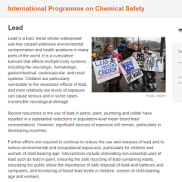
Health information about Lead

A range of documents provide information about the health impacts of lead, sources of lead exposure and methods for evaluating exposure. Key WHO risk assessment documents concerning lead are also provided. These resources can be used by governments and international and national organizations as the basis for taking preventive actions against adverse health and environmental impacts.
Emerging Policy Issues: Lead in paint
Avatar