33 resources found

Factsheets and brochures

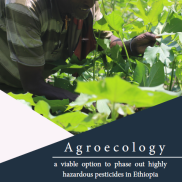
Agroecology – a viable option to phase out highly hazardous pesticides in Ethiopia

Agriculture in Ethiopia is the foundation of the country's economy. In an effort to increase production and productivity, the agriculture sector puts the use of inputs like pesticides and fertilizers as driving forces.The use of agricultural inputs, including pesticides, was introduced to smallholder farmers from the 1960s through agricultural extension systems. Since then, pesticide use by smallholder farmers showed a steady growth. This increasing trend in the use of pesticides as part of a development plan poses threats to human
Emerging Policy Issues: Highly Hazardous Pesticides
Newsletter

UNEP Science Alerts - March 2019

by
UNEP ,
|
March 2020
copied to clipboard

UNEP's newsletter from March 2020 on scientific articles, research and knowledge on selected topics.TopicTitleChemicals and Waste / PollutionAdvancing environmental exposure assessment science to benefit society / A. Caplin et al. 2019. Nature.Assessment of air pollution caused by illegal e-waste burning to evaluate the human health risk / C. Gangwar et al. Environment International 125, Pages 191-199, 2019. ScienceDirect.A Comparison of hourly to annual air pollutant emissions: Implications for estimating acute exposure and public health risk / M. Stewart et al

Factsheets and brochures

Factsheet of The Quick Start Programme: 13 years of advancing sound chemicals management

by |
January 2020
copied to clipboard
The Quick Start Programme: 13 years of advancing sound chemicals management. Established in 2006 by the first International Conference on Chemicals Management – the Quick Start Programme (QSP) concluded in December 2019. The factsheet shares impact through successful projects and activities across the globe.
Factsheets and brochures

SAICM Factsheet
by |
November 2019
copied to clipboard
The ChallengeThe Strategic Approach To International Chemicals Management (SAICM) mandate expires in 2020, long before we will reach the target of minimizing the health and environmental impacts of chemicals throughout their lifecycle. Overall progress has been uneven and there is still a significant need for development and implementation of effective chemical and waste management policies and practices around the globe.What We DoSAICM provides a valuable multi-stakeholder forum to discuss and address the many challenges facing the adoption and implemen-tation of
Factsheets and brochures

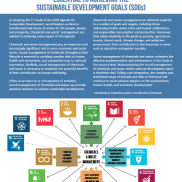
Chemicals and waste management: essential to achieving the Sustainable Development Goals (SDGs)

by |
October 2019
copied to clipboard
In adopting the 17 Goals of the 2030 Agenda for Sustainable Development, world leaders outlined a transformational course of action for the people, planet, and prosperity. Chemicals and waste management are related to achieving every aspect of this Agenda.Chemicals and waste management play an important and increasingly significant role in every economic and social sector. Sound management of chemicals throughout their lifecycle is essential to avoiding complex risks to human health and ecosystems, and substantial costs to national economies. Similarly
Factsheets and brochures

Lead poisoning and health

This factsheet compiles the latest information on the effects of lead on human health. It is presented in the 6 UN languages.The factsheet lists the Key Facts, and describes the Sources and routes of exposure, the Health effects of lead poisoning on children, and the WHO response. The factsheet also points to relevant related websites.
Emerging Policy Issues: Lead in paint
Factsheets and brochures

Pollinators and Pesticides - Keeping our bees safe

by
UNEP ,
|
May 2019
copied to clipboard
Pollination is the transfer of pollen between the male and female parts of flowers to enable fertilization and reproduction. The majority of cultivated and wild plants depend on animal vectors, known as pollinators, to transfer pollen. However, other means of pollen transfer such as self-pollination or wind-pollination are also important. Pollinators comprise a diverse group of animals dominated by insects, especially bees. More than 75% of the leading types of global good crops are visited by animal pollinators, such as
Emerging Policy Issues: Highly Hazardous Pesticides
Avatar