87 resources found

Tarkett-Case-Study
Case studies

Tarkett Sustainable Flooring Case Study

November 2019
copied to clipboard

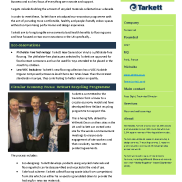
Tarkett have introduced an eco-innovation programme with the aim of providing more comfortable, healthy and people-friendly indoor spaces without compromising performance and design experience. Key initiatives include:

  • Phthalate free technology in their New Generation Vinyl flooring;
  • Low VOC emissions in flooring;
  • ReStart Takeback and Recycling Programme, and use of recycled materials in new products.
Emerging Policy Issues: Chemicals in products
SAICM-USEtox_D2.1
Report

List of Chemicals of Concern and of potential alternatives for toys sector, with supporting information on criteria and selection

by |
September 2019
copied to clipboard

In this report, we present a list of Chemicals of Concern (CoCs) in plastic toys, with supporting information on the applied selection criteria. To identify the CoCs, we started from a literature review of available plastic toys compositions studies, and obtained the chemical mass fraction in plastic toy as well as the chemical functions. The chemical emissions from the plastic toys and subsequent human exposures were then estimated using a series of models and the coupled nearfield and far-field exposure assessment framework. Finally, the human exposure doses were compared to toxicity measures such as the reference dose (RfD), or median effective dose (ED50) for cancer effects, to evaluate the health risks on children. Chemical-material combinations that have a hazard quotient (HQ) > 10, a margin of exposure (MoE) < 100, or a lifetime cancer risk > 10-6 were included in the list of CoCs. In total, 35 (less than 10%) of all chemical-material combinations studied were identified as CoCs. The results indicate that a relevant amount of chemicals used in plastic toys may pose a non-negligible health risk to children, calling for more refined investigations and more human- and eco-friendly alternatives.

This document has been developed within the framework of the Global Environment Facility (GEF) project ID: 9771 on Global Best Practices on Emerging Chemical Policy Issues of Concern under the Strategic Approach to International Chemicals Management (SAICM). This project is funded by the GEF, implemented by UNEP and executed by the SAICM Secretariat.

Emerging Policy Issues: Chemicals in products
Report

Management of Pharmaceutical Household Waste

Management of Pharmaceutical Household Waste: Limiting Environmental Impacts of Unused or Expired MedicinePharmaceutical household waste from expired or unused medicine does not only offer zero therapeutic benefit, but also contributes to environmental pollution when disposed of via improper routes. Medicines discarded in sinks and flushed down toilets enter sewage waters and, if not filtered out, leak into aquatic systems. Disposal of unused or expired medicines via solid household waste can also result in pharmaceutical residues entering the environment if this
Report

Sustainable Chemicals and Materials Policy for Protecting the Climate and Biodiversity

by |
April 2022
copied to clipboard
Chemicals and materials policy deals with both the risks and the opportunities of chemicals as well as with the volume of material flows from raw material extraction to waste. As with the policy areas of climate and biodiversity, there is a need for a global transformation in chemicals and materials policy with a strong focus on the guiding principles of precaution and sustainability. The boundaries of our planet must no longer be exceeded.The impacts of chemicals and materials are closely
Emerging Policy Issues: Chemicals in products
Report

Study on industry involvement in the integrated approach to financing the sound management of chemicals and waste
The integrated approach to financing the sound management of chemicals and waste was proposed to the Governing Council of UNEP, at its twenty-seventh session in 2013, by the Executive Director of UNEP, in his report on the consultative process on financing options for chemicals and wastes.Industry involvement is one of the three pillars of the integrated approach, along with the mainstreaming of the sound management of chemicals and wastes into development planning and dedicated external financing, and it is central
Report

Summary for Policymakers - Environmental Dimensions of Antimicrobial Resistance

by |
February 2022
copied to clipboard
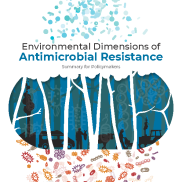
The Summary for Policymakers - Environmental Dimensions of Antimicrobial Resistance (AMR) launched on the sidelines of UNEA 5.2 taking place from 28 February to 4 March 2022.The report calls to strengthen environmental action within the ‘One Health’ response to AMR, looks at the pollutants that exacerbate AMR in the environment, where they come from, and provides an overview of the environmental action required.
Report

State of Sustainability Research – Chemicals of Concern

February 2022
copied to clipboard
The State of Sustainability Research for Chemicals of Concern identifies the impacts of chemicals of concern within and for the manufacturing of ICT products on human health and the environment and illustrates the need to shift to safer, more sustainable substances in electronics. The research identifies strategies to reduce chemicals of concern through understanding the chemical used within products and processes, determining the health impacts of chemicals, preventing the use of known toxic chemicals, and identifying safer alternatives. Finally, this
Emerging Policy Issues: Lead in paint
Report

Addressing the Issue of Chemicals of Concern in Electronics: Challenges and recommendations for labelling initiatives

by |
January 2022
copied to clipboard
Chemicals provide a variety of specific functions in electric and electronic products or in their manufacturing process. However, some of these chemicals are hazardous and can cause concern related to their potential for adverse impacts on human health and the environment. Such impacts can occur throughout the product’s life cycle, including raw material extraction, processing and manufacturing, but also during product use or at end-of-life. However, decisions influencing product ingredients are usually taken at upstream stages of the value chain
Emerging Policy Issues: Chemicals in products

Avatar