128 resources found

Community of practice summary of discussions

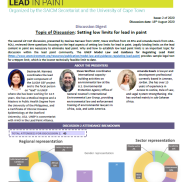
Setting low limits for lead in paint – legal side

The Secretariat of the Strategic Approach to Chemicals Management (SAICM) and the University of Cape Town (UCT) are launching a new Community of Practice (CoP) on Lead in Paint to bring representatives from different sectors together and to create a learning network around issues related to the elimination of Lead Paint. This is a summary of the discussion on Setting low limits for lead in paint – legal side, which took place on 18 August 2020.Presenters: Desiree M. Narvaez (UNEP)
Emerging Policy Issues: Lead in paint
Community of practice summary of discussions

Mapping the global landscape of HHP risk reduction work

The SAICM Secretariat, in partnership with the University of Cape Town, established a community of practice on Highly Hazardous Pesticides (HHPs) to foster discussions, exchange of best practices, and recommendations to address HHPs amongst relevant stakeholders. This is a summary of the discussion on Mapping the global landscape of HHP risk reduction work, which took place on 15 July 2020.Presenter: Ivy Saunyama (FAO)Highly Hazardous Pesticides (HHPs) are responsible for significant environmental, economic and human health problems including acute and chronic
Emerging Policy Issues: Highly Hazardous Pesticides
Community of practice summary of discussions

Steps toward adoption of national lead paint laws

The Secretariat of the Strategic Approach to Chemicals Management (SAICM) and the University of Cape Town (UCT) are launching a new Community of Practice (CoP) on Lead in Paint to bring representatives from different sectors together and to create a learning network around issues related to the elimination of Lead Paint. This is a summary of the discussion on Steps toward adoption of national lead paint laws, which took place on 9 July 2020.Presenter: Angela Bandemehr (US EPA)The first LiP
Emerging Policy Issues: Lead in paint
Report

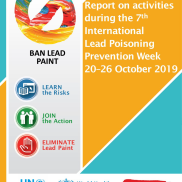
Report of the 2019 International Lead poisoning Prevention Week

From 20 to 26 October 2019 the seventh International Lead Poisoning Prevention Week of action (ILPPW) took place in countries around the world. This report describes some of the activities held during the week. As with earlier years, the Global Alliance to Eliminate Lead Paint (the Lead Paint Alliance) provided a campaign resource package and a range of multilingual campaign materials. All the materials were made available from the World Health Organization (WHO) website.
Emerging Policy Issues: Lead in paint
Report

The Illegal Trade in Chemicals
This novel publication provides an overview of the knowledge gap and enforcement challenges in the illegal trade of toxic, hazardous and severely restricted chemicals, as well as in non-existing or low areas of chemical regulations.Chemicals surround us in our daily lives providing benefit to people and society. However, chemicals can contaminate all components of ecosystems and are implicated in a range of acute and chronic health problems. Though a range of guidelines now govern the trade in chemicals, many remain
Report

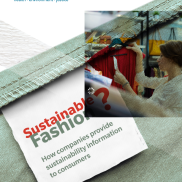
Sustainable Fashion? How companies provide sustainability information to consumers

by
HEJSupport International
|
March 2020
copied to clipboard
The new report “Sustainable Fashion? How companies provide sustainability information to consumers” by HEJSupport touches upon gaps in the current provision of product sustainability information to consumers, with the aim of suggesting a way forward which makes consumers a driving force able to shape the future of sustainable textiles.The report provides recommendations for business, policy makers and consumers.The sustainability of the fashion industry largely depends on the work of regulators and product manufacturers, including their suppliers. But very often the
Emerging Policy Issues: Chemicals in products
Report

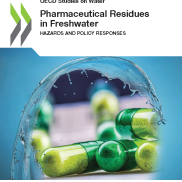
Pharmaceutical Residues in Freshwater: Hazards and Policy Responses

by |
November 2019
copied to clipboard
Pharmaceutical Residues in Freshwater: Hazards and Policy ResponsesThis report calls for a better understanding of the effects of pharmaceutical residues in the environment, greater international collaboration and accountability distribution, and policy actions to prevent and remedy emerging concerns. Laboratory and field tests show traces of oral contraceptives causing the feminisation of fish and amphibians, and residues of psychiatric drugs altering fish behaviour. Antimicrobial resistance, linked to the overuse of antibiotics, has rapidly escalated into a global health crisis. Unless adequate
Report

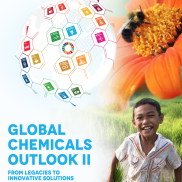
Global Chemicals Outlook II: From Legacies to Innovative Solutions

by |
April 2019
copied to clipboard
The Global Chemicals Outlook II – From Legacies to Innovative Solutions: Implementing the 2030 Agenda for Sustainable Development, mandated by the UN Environment Assembly in 2016, seeks to alert policymakers and other stakeholders to the critical role of the sound management of chemicals and waste in sustainable development. It takes stock of global trends as well as progress made and gaps in achieving the global goal to minimize the adverse impacts from chemicals and waste by 2020.Part I of the
Emerging Policy Issues: Chemicals in products
Avatar