105 resources found

Report

Single-Use Plastic Products (SUPP) and their alternatives: Recommendations from Life Cycle Assessments

UN Environment Programme (UNEP) defines single use plastic products as “an umbrella term for different types of products that are typically used once before being thrown away or recycled” (UNEP 2018), which includes food packaging, bottles, straws, containers, cups, cutlery and shopping bags. It has been estimated that about 100-150 million tonnes of plastics are produced for single use products and about 8 million tonnes of plastics are dumped into the oceans every year (Plastics Oceans 2019)There is a need
Emerging Policy Issues: Chemicals in products
Topics: Life Cycle
Report

Plastics Pose a Threat to Human Health

Plastics Pose a Threat to Human Health: Authoritative Reports Shows Plastics and Microplastics are Pervasive Sources of Exposure to Dangerous Endocrine-disrupting ChemicalsPlastics contain and leach hazardous chemicals, including endocrine-disrupting chemicals (EDCs) that threaten human health. An authoritative new report, Plastics, EDCs, & Health, from the Endocrine Society and the IPEN (International Pollutants Elimination Network), presents a summary of international research on the health impacts of EDCs and describes the alarming health effects of widespread contamination from EDCs in plastics.EDCs are
Emerging Policy Issues: Endocrine-Disrupting Chemicals
Report

Women, Chemicals and the SDGs

by |
December 2020
copied to clipboard
Gender Review Mapping with a Focus on Women and Chemicals: Impact of Emerging Policy Issues and the Relevance for the Sustainable Development GoalsThe aim of this report is to show the impact chemicals have on women as a vulnerable group highly exposed to hazardous chemicals and gender inequalities re­lated to decision-making around the management of chemicals and waste. The report also means to provide concrete steps that can be taken to safeguard the health of women and empower women in
Report

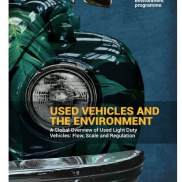
Used Vehicles and the Environment

by |
October 2020
copied to clipboard
Used Vehicles and the Environment - A Global Overview of Used Light Duty Vehicles: Flow, Scale and RegulationMillions of used cars, vans and minibuses exported from Europe, the USA and Japan to low- and middle-income countries are hindering efforts to combat climate change. They are contributing to air pollution and are often involved in road accidents. Many of them are of poor quality and would fail road-worthiness tests in the exporting countries.A landmark, first-of-its-kind United Nations Environment Programme (UNEP) report
Emerging Policy Issues: Chemicals in products
Topics: Circularity
Academic article

Chemicals of concern in plastic toys

by
ScienceDirect
|
October 2020
copied to clipboard
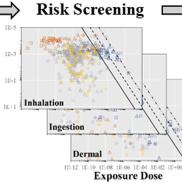
We present a list of Chemicals of Concern (CoCs) in plastic toys. We started from available studies reporting chemical composition of toys to group plastic materials, as well as to gather mass fractions and function of chemicals in these materials. Chemical emissions from plastic toys and subsequent human exposures were then estimated using a series of models and a coupled near-field and far-field exposure assessment framework. Comparing human doses with reference doses shows high Hazard Quotients of up to 387
Emerging Policy Issues: Chemicals in products
Report

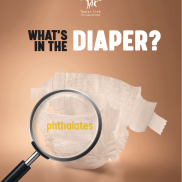
What's in the Diaper

Presence of Phthalates in Baby DiapersThe use of disposable diapers have been the standard for baby hygiene for many years.Among polymers used in diapers Phthalates are generally used as plasticizers and catalysts for the polymerization. Phthalates provide flexibility & durability to these polymers because of which they are used in the manufacturing of diapers.As Phthalates have been characterized as an endocrine disrupting chemical, the use of Phthalates in the diapers raises concern of possible health impacts on children.
Academic article

Alternative societal solutions to pharmaceuticals in the aquatic environment

by
ScienceDirect
|
September 2020
copied to clipboard
Environmental contamination with pharmaceuticals is widespread, inducing risks to both human health and the environment. This paper explores potential societal solutions to human and veterinary pharmaceuticals in the aquatic environment. To this end, we adopt transition research’s multi-level perspective framework, which allows us to understand the dynamics underlying pharmaceutical emissions and to recognize social and technical factors triggering change. The authors' qualitative analysis is based on data collected through literature research and interviews with actors from pharmaceutical industry, the health
Emerging Policy Issues: Pharmaceutical pollutants
Report

An Assessment Report on Issues of Concern: Chemicals and Waste Issues Posing Risks to Human Health and the Environment

by |
September 2020
copied to clipboard
Many countries and regions have set up regulatory and policy frameworks to achieve sound chemicals and waste management. In addition to national and regional efforts, the international community has taken concerted joint actions to address specific issues of concern, including chemicals that can be transported over long distances by wind and water, are transported through global trade in resources, products and waste, or are used or are present in many countries.Substantial progress has been made by the international community, including
Avatar