105 resources found

Academic article

Rethinking chemistry for a circular economy

by
ScienceDirect
|
January 2020
copied to clipboard
Earth is running out of resources needed for manufacturing materials such as chemicals, minerals, and petroleum. Thus, these components are available only at increasing economic and environmental costs. As an important contribution to a sustainable future, chemistry and its products must be adapted to a circular economy (CE)—a system aimed at eliminating waste, circulating and recycling products, and saving resources and the environment.Nearly 140,000 industrial chemicals are marketed worldwide, and new chemicals are becoming more complex (e.g., stereochemistry, functional groups)
Emerging Policy Issues: Chemicals in products
Academic article

Preventing disease through healthy environments: exposure to lead: a major public health concern

November 2019
copied to clipboard
This WHO policy brief presents the consequences of lead exposure on human health and details its toxicity in the body system explaining why it is important to reduce the use and releases of lead, and to reduce environmental and occupational exposures, particularly for children and women of childbearing age.The policy brief also lists the sources of lead releases and contamination in industrial process, drinking water and domestic sources. The brief also gives guidelines for tolerable intake levels of lead and
Emerging Policy Issues: Lead in paint
Academic article

Antimicrobial pharmaceuticals in the aquatic environment - occurrence and environmental implications

by
ScienceDirect
|
November 2019
copied to clipboard
The environmental occurrence of antimicrobial pharmaceuticals and antibiotic resistant bacteria and antibiotic resistant genes has become a global phenomenon and a multifaceted threat. Integrated actions of many parties are needed to prevent further aggravation of the problem. Well-directed actions require clear understanding of the problem, which can be ensured by frequent revaluation of the existing knowledge and disseminating it among relevant audiences. The goal of this review paper is to discuss the occurrence and abundance of antimicrobial pharmaceuticals in the
Emerging Policy Issues: Pharmaceutical pollutants
Report

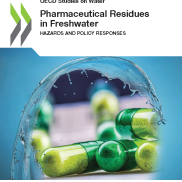
Pharmaceutical Residues in Freshwater: Hazards and Policy Responses

by |
November 2019
copied to clipboard
Pharmaceutical Residues in Freshwater: Hazards and Policy ResponsesThis report calls for a better understanding of the effects of pharmaceutical residues in the environment, greater international collaboration and accountability distribution, and policy actions to prevent and remedy emerging concerns. Laboratory and field tests show traces of oral contraceptives causing the feminisation of fish and amphibians, and residues of psychiatric drugs altering fish behaviour. Antimicrobial resistance, linked to the overuse of antibiotics, has rapidly escalated into a global health crisis. Unless adequate
Report

Global Chemicals Outlook II: From Legacies to Innovative Solutions

by |
April 2019
copied to clipboard
The Global Chemicals Outlook II – From Legacies to Innovative Solutions: Implementing the 2030 Agenda for Sustainable Development, mandated by the UN Environment Assembly in 2016, seeks to alert policymakers and other stakeholders to the critical role of the sound management of chemicals and waste in sustainable development. It takes stock of global trends as well as progress made and gaps in achieving the global goal to minimize the adverse impacts from chemicals and waste by 2020.Part I of the
Emerging Policy Issues: Chemicals in products
Report

Gender & SAICM Beyond 2020: How to create a gender-just healthy planet

The present publication was produced as part of the project: "Gender and Chemicals - Together for a gender-just healthy planet", conducted by the MSP Institute in 2019.There is a number of gender aspects relevant to chemicals and chemicals and waste management. However, many of them are not receiving the attention they should in order to ensure the best possible decisions in policy-making and effective implementation.The goal of this report is to increase the integration of gender in international chemicals and
Report

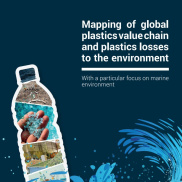
Mapping of Global Plastics Value Chain and Plastics Losses to the Environment: With a Particular Focus on Marine Environment

by |
November 2018
copied to clipboard
Plastics have become one of the most ubiquitous materials used globally, and global production has on average increased by about 9% per year since 1950.The plastic industry has become a major economic actor with revenue of about 1,722 billion Euros in 2015. The issue of plastics ending up in the oceans and harming marine lifeforms has been known since the 1970s. Research focusing on the impacts associated with exposure of organisms to marine micro and macroplastics has been ongoing for
Emerging Policy Issues: Chemicals in products
Academic article

Nanomaterials in the environment: Behavior, fate, bioavailability, and effects—An updated review

by
Wiley Online Library
|
April 2018
copied to clipboard
The present review covers developments in studies of nanomaterials (NMs) in the environment since our much cited review in 2008. We discuss novel insights into fate and behavior, metrology, transformations, bioavailability, toxicity mechanisms, and environmental impacts, with a focus on terrestrial and aquatic systems. Overall, the findings were that: 1) despite substantial developments, critical gaps remain, in large part due to the lack of analytical, modeling, and field capabilities, and also due to the breadth and complexity of the area
Emerging Policy Issues: Nanotechnology

Avatar