77 resources found

Report

An Assessment Report on Issues of Concern: Chemicals and Waste Issues Posing Risks to Human Health and the Environment

by |
September 2020
copied to clipboard
Many countries and regions have set up regulatory and policy frameworks to achieve sound chemicals and waste management. In addition to national and regional efforts, the international community has taken concerted joint actions to address specific issues of concern, including chemicals that can be transported over long distances by wind and water, are transported through global trade in resources, products and waste, or are used or are present in many countries.Substantial progress has been made by the international community, including
Report

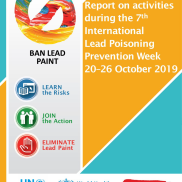
Report of the 2019 International Lead poisoning Prevention Week

From 20 to 26 October 2019 the seventh International Lead Poisoning Prevention Week of action (ILPPW) took place in countries around the world. This report describes some of the activities held during the week. As with earlier years, the Global Alliance to Eliminate Lead Paint (the Lead Paint Alliance) provided a campaign resource package and a range of multilingual campaign materials. All the materials were made available from the World Health Organization (WHO) website.
Emerging Policy Issues: Lead in paint
Infographic

biodiversity in danger from poor management of chemicals and waste

World Environment Day took place on 5 June 2020 and the theme this year was biodiversity. SAICM celebrated by creating an infographic on how chemicals and waste can impact biodiversity and releasing an article on how we can do more to protect and help our planet's biodiversity flourish.
Infographic

Crops that drive world trade in hazardous pesticides

Unearthed and Public Eye analysed more than USD 23bn of agrochemical sales data for 2018 - about 40% of the global market - to identify sales of highly hazardous pesticides (HHPs). Across 12 groups analysed, those shown here accounted for more than four out of every five dollars spent on HHPs.
Emerging Policy Issues: Highly Hazardous Pesticides
Infographic

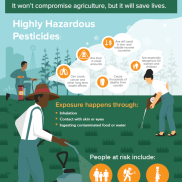
Infographics on Highly Hazardous Pesticides

It's time to regulate Highly Hazardous Pesticides!It won’t compromise agriculture, but it will save lives.This document was prepared by WHO under the Global Environment Facility (GEF) full sized project 9771: Global best practices on emerging chemical policy issues of concern under the Strategic Approach to International Chemicals Management (SAICM). This project is funded by the GEF, implemented by UNEP and executed by the SAICM Secretariat. WHO acknowledges the financial contribution of the Global Environment Facility for the development, editing and
Emerging Policy Issues: Highly Hazardous Pesticides
Infographic

Interactive visualisation of the Quick Start Programme implementation
Interactive visualisation of the Quick Start Programme implementation in 108 developing countries through 184 projects to produce and use chemicals in ways that minimise adverse impacts on the environment and human health.
Report

The Illegal Trade in Chemicals
This novel publication provides an overview of the knowledge gap and enforcement challenges in the illegal trade of toxic, hazardous and severely restricted chemicals, as well as in non-existing or low areas of chemical regulations.Chemicals surround us in our daily lives providing benefit to people and society. However, chemicals can contaminate all components of ecosystems and are implicated in a range of acute and chronic health problems. Though a range of guidelines now govern the trade in chemicals, many remain
Report

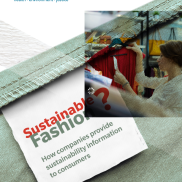
Sustainable Fashion? How companies provide sustainability information to consumers

by
HEJSupport International
|
March 2020
copied to clipboard
The new report “Sustainable Fashion? How companies provide sustainability information to consumers” by HEJSupport touches upon gaps in the current provision of product sustainability information to consumers, with the aim of suggesting a way forward which makes consumers a driving force able to shape the future of sustainable textiles.The report provides recommendations for business, policy makers and consumers.The sustainability of the fashion industry largely depends on the work of regulators and product manufacturers, including their suppliers. But very often the
Emerging Policy Issues: Chemicals in products

Avatar