106 resources found

Policy document

Global elimination of lead paint: why and how countries should take action - Policy brief

Lead has toxic effects on almost all body systems and is especially harmful for children and pregnant women. Lead paint is an avoidable source of exposure to lead. “Lead paint” or “lead-based paint” is paint to which one or more lead compounds have been intentionally added by the manufacturer to obtain specific characteristics. One important way to prevent exposure is for countries to establish legally binding regulatory measures prohibiting the addition of lead to paint.This policy brief summarizes key information
Emerging Policy Issues: Lead in paint
Policy document

Global elimination of lead paint: why and how countries should take action - Technical brief

This document has been developed for officials in government who have a role in regulating lead paint, to provide them with concise technical information on the rationale and steps required to phase out lead paint. “Lead paint” or “lead-based paint” is paint to which one or more lead compounds have been intentionally added by the manufacturer to obtain specific characteristics. This document explains the health and economic importance of preventing lead exposure by establishing legally binding controls to stop the
Emerging Policy Issues: Lead in paint
Policy document

Plastics and Chemicals of Concern In Consumer Products

Plastics are used across the economy and in diverse downstream sectors such as packaging, construction, transportation, healthcare, textiles, and electronics. Durable products, ranging from construction materials to medical devices make up nearly half of the global plastics market, while packaging products are the largest uses of single-use plastics. Some plastics contain chemicals that are considered to be harmful for health and the environment. Phthalates, poly-fluorinated chemicals, bisphenol A (BPA), brominated flame retardants and antimony trioxide are considered most harmful for
Emerging Policy Issues: Chemicals in products
Topics: Circularity
Policy document

New digital technologies to tackle trade in illegal pesticides

Global trade in illegal pesticides has been steadily growing in recent years, posing serious threats to agriculture, the environment, human health, and the economy. Evidence of this trend can be found in the increasing number of seizures of counterfeit, fake, and unauthorised pesticides, as well as their growing share in the global pesticide market. This paper identifies the main drivers and enablers of this illicit trade, and explores the potential of digital technologies, such as blockchain, to support policies to
Report

Report of the 2019 International Lead poisoning Prevention Week

From 20 to 26 October 2019 the seventh International Lead Poisoning Prevention Week of action (ILPPW) took place in countries around the world. This report describes some of the activities held during the week. As with earlier years, the Global Alliance to Eliminate Lead Paint (the Lead Paint Alliance) provided a campaign resource package and a range of multilingual campaign materials. All the materials were made available from the World Health Organization (WHO) website.
Emerging Policy Issues: Lead in paint
Report

The Illegal Trade in Chemicals
This novel publication provides an overview of the knowledge gap and enforcement challenges in the illegal trade of toxic, hazardous and severely restricted chemicals, as well as in non-existing or low areas of chemical regulations.Chemicals surround us in our daily lives providing benefit to people and society. However, chemicals can contaminate all components of ecosystems and are implicated in a range of acute and chronic health problems. Though a range of guidelines now govern the trade in chemicals, many remain
Report

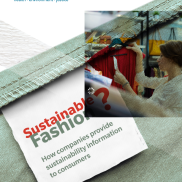
Sustainable Fashion? How companies provide sustainability information to consumers

by
HEJSupport International
|
March 2020
copied to clipboard
The new report “Sustainable Fashion? How companies provide sustainability information to consumers” by HEJSupport touches upon gaps in the current provision of product sustainability information to consumers, with the aim of suggesting a way forward which makes consumers a driving force able to shape the future of sustainable textiles.The report provides recommendations for business, policy makers and consumers.The sustainability of the fashion industry largely depends on the work of regulators and product manufacturers, including their suppliers. But very often the
Emerging Policy Issues: Chemicals in products
Policy document

Challenges for a Sustainable Chemicals and Materials Policy: The Need for Transformation in the Global Context

by |
December 2019
copied to clipboard
Over the past few years the use of natural resources and the production of chemicals have increased dramatically – and a further increase is forecast. Whereas earlier the main focus was on local effects on health and the environment, in the meantime it has become clear that current ways of dealing with natural resources, chemicals and products manufactured from chemicals are threatening the biosphere as a whole.In 2009 and 2015 scientists introduced the concept of planetary boundaries. As part of
Avatar