106 resources found

Report

Women, Chemicals and the SDGs

by |
December 2020
copied to clipboard
Gender Review Mapping with a Focus on Women and Chemicals: Impact of Emerging Policy Issues and the Relevance for the Sustainable Development GoalsThe aim of this report is to show the impact chemicals have on women as a vulnerable group highly exposed to hazardous chemicals and gender inequalities re­lated to decision-making around the management of chemicals and waste. The report also means to provide concrete steps that can be taken to safeguard the health of women and empower women in
Policy document

Pharmaceuticals in the environment

by |
December 2020
copied to clipboard
Medicinal products are physiologically highly active substances that enter the water and soil, particularly through human and animal excretion. They are being detected in the environment to a greater and greater extent, often in concentrations that are not harmless to humans and other living organisms. The consumption of pharmaceuticals is increasing, mainly due to the aging of the population. Consequently, measures to reduce environmental pollution are therefore necessary.
Emerging Policy Issues: Pharmaceutical pollutants
Policy document

Eliminating Lead Paint: The Role of the Paint Industry

by |
October 2020
copied to clipboard
The Strategic Approach to International Chemicals Management (SAICM) is a global policy framework which aims to protect human health and the environment from the unsound management of chemicals and waste. Since its inception in 2006, the voluntary and multisectoral and multistakeholder nature of SAICM has been viewed as one of its core strengths. SAICM provided a space for government and non-government actors alike to discuss and deliberate on the management of chemicals and waste.A key obstacle that has been limiting
Emerging Policy Issues: Lead in paint
Report

Used Vehicles and the Environment

by |
October 2020
copied to clipboard
Used Vehicles and the Environment - A Global Overview of Used Light Duty Vehicles: Flow, Scale and RegulationMillions of used cars, vans and minibuses exported from Europe, the USA and Japan to low- and middle-income countries are hindering efforts to combat climate change. They are contributing to air pollution and are often involved in road accidents. Many of them are of poor quality and would fail road-worthiness tests in the exporting countries.A landmark, first-of-its-kind United Nations Environment Programme (UNEP) report
Emerging Policy Issues: Chemicals in products
Topics: Circularity
Policy document

Lessons from the past to inform SAICM and the Sound Management of Chemicals and Waste Beyond 2020
by |
October 2020
copied to clipboard
An Independent Evaluation of SAICM over the 2006 to 2015 period (SAICM/IP3/INF/3) was conducted to assess the degree by which SAICM has delivered on its 2020 goal. It finds that SAICM made significant progress in a number of areas in terms of strengthening capacity, commitment, technical knowledge and political will to implement and mainstream chemicals into national planning. However, the evaluation also reconfirms the findings of the Global Chemicals Outlook II, that SAICM’s objectives and 2020 goal would not be
Report

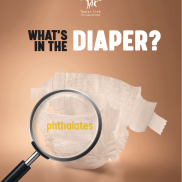
What's in the Diaper

Presence of Phthalates in Baby DiapersThe use of disposable diapers have been the standard for baby hygiene for many years.Among polymers used in diapers Phthalates are generally used as plasticizers and catalysts for the polymerization. Phthalates provide flexibility & durability to these polymers because of which they are used in the manufacturing of diapers.As Phthalates have been characterized as an endocrine disrupting chemical, the use of Phthalates in the diapers raises concern of possible health impacts on children.
Report

An Assessment Report on Issues of Concern: Chemicals and Waste Issues Posing Risks to Human Health and the Environment

by |
September 2020
copied to clipboard
Many countries and regions have set up regulatory and policy frameworks to achieve sound chemicals and waste management. In addition to national and regional efforts, the international community has taken concerted joint actions to address specific issues of concern, including chemicals that can be transported over long distances by wind and water, are transported through global trade in resources, products and waste, or are used or are present in many countries.Substantial progress has been made by the international community, including
Policy document

Role of economic instruments for the sound management of chemicals and waste

by |
September 2020
copied to clipboard
“The vast majority of human health costs linked to chemicals production, consumption, and disposal are not borne by chemicals producers, nor shared down the value-chain.” GCO-IThis policy brief draws from and complements: ‘Review of cost recovery mechanisms and other economic instruments for financing of the sound management of chemicals and waste’ (SAICM/IP.4/7). With the Beyond 2020 framework for chemicals and waste under deliberation, and key outcomes expected at the fifth session of the International Conference on Chemicals Management (ICCM5) in
Avatar