90 resources found

Video

SAICM Perflourinated Chemicals Video

Perflourinated Chemicals (PFCs) are the key ingredient in many stain, water and grease repellent coatings that make outdoor jackets water tight and frying pans non sticky. These chemicals consist of long molecules that contain carbon chains surrounded by fluorine. That bond between carbon and fluorine is incredibly tight. They interact so strongly with each other that the normal, inter-molecular forces, that cause substances to stick to each other, don’t stand a chance.While some types of PFCs are either safe or
Emerging Policy Issues: Perfluorinated Chemicals
Video

SAICM Environmentally Persistent Pharmaceuticals Pollutants Video

Pharmaceuticals are chemicals we specifically design to act on living cells. They regulate, in organisms, hormonal balance and the way it metabolizes its nutrients. Pharmaceuticals even change the way signals travel between cells. In order to work, many drugs have to resist the stomach’s acid environment, so the compounds can reach their destination inside the body. That’s why they are formulated to degrade very slowly or not at all. When active pharmaceuticals pass through our bodies and enter the environment
Emerging Policy Issues: Pharmaceutical pollutants
Video

SAICM Highly Hazardous Pesticides Video

We use a wide variety of chemical compounds to prevent living organisms from damaging crops and spreading diseases like malaria. These compounds are collectively termed pesticides. These days the majority of pesticides have low to moderate acute toxicity. But despite their many positive developments, there remain a small but significant group of Highly Hazardous Pesticides that cause illness and environmental damage.Not only because they are very toxic, but also because they remain active for a long time after being released
Emerging Policy Issues: Highly Hazardous Pesticides
Report

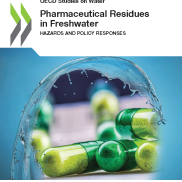
Pharmaceutical Residues in Freshwater: Hazards and Policy Responses

by |
November 2019
copied to clipboard
Pharmaceutical Residues in Freshwater: Hazards and Policy ResponsesThis report calls for a better understanding of the effects of pharmaceutical residues in the environment, greater international collaboration and accountability distribution, and policy actions to prevent and remedy emerging concerns. Laboratory and field tests show traces of oral contraceptives causing the feminisation of fish and amphibians, and residues of psychiatric drugs altering fish behaviour. Antimicrobial resistance, linked to the overuse of antibiotics, has rapidly escalated into a global health crisis. Unless adequate
Video

Be the change beyond 2020 for the sound management of chemicals and waste!

Curtain raising video of the third meeting of the intersessional process held at the United Nations Conference Centre in Bangkok, Thailand, from 1 to 4 October 2019. Regional meetings and technical briefings took place on 30 September 2019. These meetings support stakeholders in their efforts to elaborate the future arrangements of the Strategic Approach and the sound management of chemicals and waste beyond 2020 for consideration and adoption at the next session of the International Conference on Chemicals Management (ICCM5)
Video

Global Chemicals Outlook 2019

The Global Chemicals Outlook II – From Legacies to Innovative Solutions: Implementing the 2030 Agenda for Sustainable Development, mandated by the UN Environment Assembly in 2016, seeks to alert policymakers and other stakeholders to the critical role of the sound management of chemicals and waste in sustainable development. It takes stock of global trends as well as progress made and gaps in achieving the global goal to minimize the adverse impacts from chemicals and waste by 2020. The Global Chemicals
Avatar