47 resources found

Database

PHARMS-UBA database

by
Umweltbundesamt
|
July 2021
copied to clipboard
Residues of pharmaceuticals are known to occur widely in the aquatic environment of industrialized countries. Even in developing and emerging countries, information on the occurrence of pharmaceutical residues in the environment has become more readily available in recent years. However, a concise and comprehensive overview of the relevant pharmaceuticals, their concentrations in the environment and their potential effects on human health and ecosystems is still pending. The information on worldwide exposure of pharmaceuticals is increasing and the German Environment Agency
Emerging Policy Issues: Pharmaceutical pollutants
Database

Lead in paint laboratory database

The Lead in Paint Laboratory Database lists laboratories from all UN regions capable of identifying and quantifying lead in paint samples.It is established by UNEP in close cooperation with the United States Environmental Protection Agency and the World Health Organization as part of an activity of the Global Alliance to Eliminate Lead Paint. For each listed laboratory, the databank offers publicly available information of interest, such as contact details, number of staff, instrumentation, analytical techniques, accreditation, etc. This database of
Emerging Policy Issues: Lead in paint
Database

Special programme projects database
by |
January 2021
copied to clipboard

The Special Programme has successfully processed three rounds of applications since its inception in 2015. The Programme is currently funding projects from 42 countries. You can explore the projects through our Projects Database.Use the tool below to discover more about projects that have been funded by the Special Programme. It provides an overview of the activities each project has been undertaking to implement the Basel, Rotterdam and Stockholm Conventions, the Minamata Convention and SAICM. It also categorizes the objectives of

Database

Chemical Entities of Biological Interest

by
European Bioinformatics Institute
|
January 2021
copied to clipboard
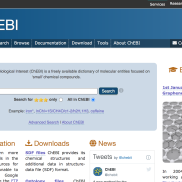
Chemical Entities of Biological Interest, also known as ChEBI is a chemical database and ontology of molecular entities focused on 'small' chemical compounds, that is part of the Open Biomedical Ontologies (OBO) effort at the European Bioinformatics Institute (EBI).The term "molecular entity" refers to any "constitutionally or isotopically distinct atom, molecule, ion, ion pair, radical, radical ion, complex, conformer, etc., identifiable as a separately distinguishable entity". The molecular entities in question are either products of nature or synthetic products which
Database

Chemical Awareness toolkit

What is CAt and where does all the data come from?The Chemical Awareness toolkit (CAt) is a free web application that provides rapid access to chemical information for product stewards, risk assessors, toxicologists, chemists, microbiologists, engineers, and other researchers. It includes screening tools that provide chemical information including toxicological hazards, environmental fate, persistence & bioaccumulation, occupational exposure limits, government regulations, and public perception.CAt utilizes an integrated database containing information from key lists provided by Verisk 3E, publicly available lists, databases
Emerging Policy Issues: Chemicals in products
Database

IOMC Toolbox

IOMC Toolbox for decision making in chemicals management The IOMC Toolbox has been redesigned to provide easier and more direct access to 8 management schemes, 6 toolkits, and more than 500 IOMC tools, guidance documents, and training materials. This new and improved platform enables users to access information with fewer steps and clicks.The IOMC Internet-based Toolbox for Decision Making in Chemicals Management (IOMC Toolbox) is aimed at countries who wish to address specific national issues regarding chemicals management.The IOMC Toolbox
Infographic

biodiversity in danger from poor management of chemicals and waste

World Environment Day took place on 5 June 2020 and the theme this year was biodiversity. SAICM celebrated by creating an infographic on how chemicals and waste can impact biodiversity and releasing an article on how we can do more to protect and help our planet's biodiversity flourish.
Database

EU Chemicals Legislation Finder

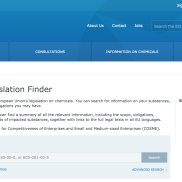
EU Chemicals Legislation Finder (EUCLEF) gives you an overview of the European Union’s legislation on chemicals. You can search for information on your substances, find applicable laws and check what obligations you may have.For each piece of legislation below, you can find a summary of all the relevant information, including the scope, obligations, exemptions, regulatory activities and lists of impacted substances, together with links to the full legal texts in all EU languages.EUCLEF is funded by the EU Programme for
Avatar