5 resources found

Policy document

A review of PFAS as a Chemical Class in the Textiles Sector - Policy Brief

For over a decade, under both SAICM and the Stockholm Convention on Persistent Organic Pollutants (POPs), the class of chemicals known as PFAS is gaining increasing international attention. Since 2009, chemicals in products have been identified as an Emerging Policy Issue and PFAS as an Issue of Concern by the SAICM. The textiles sector is currently considered in the SAICM context through the ‘Chemicals in Products Programme’, which focuses on four priority sectors: textiles, toys, building products and electronics. The
Factsheets and brochures

Using a value chain approach to reduce chemicals of concern

by |
October 2021
copied to clipboard
Chemicals of concern (CoCs) contained in everyday products can have harmful impacts on human health and the environment. While chemical-related impacts can often occur during a product’s use or end-of-life, decisions influencing product ingredients are taken further upstream of the value chain. Action to address CoCs in products thus need to consider the entire value chain and impactful interventions need to be made at upstream stages to protect human health and the environment from chemical pollution. UNEP is working on
Community of practice summary of discussions

Chemicals in toys

The SAICM Secretariat, in partnership with the University of Cape Town, established a community of practice on Chemicals in Products to bring representatives from different sectors together and to create a learning network around issues related to addressing Chemicals in Products (CiP). This is a summary of the discussion on Chemicals in toys, which took place on 17 June 2021.Presenters: Olga Speranskaya (HEJSupport), Varuzhan Gyurjyan (Mankan LLC), Gohar Khojayan (AWHHE), Thony Dizon (EcoWaste Coalition), Ram Charitra Sah (CEPHED)This SAICM/UCT discussion
Emerging Policy Issues: Chemicals in products
Video

Global Chemicals Outlook 2019

The Global Chemicals Outlook II – From Legacies to Innovative Solutions: Implementing the 2030 Agenda for Sustainable Development, mandated by the UN Environment Assembly in 2016, seeks to alert policymakers and other stakeholders to the critical role of the sound management of chemicals and waste in sustainable development. It takes stock of global trends as well as progress made and gaps in achieving the global goal to minimize the adverse impacts from chemicals and waste by 2020. The Global Chemicals
Project document

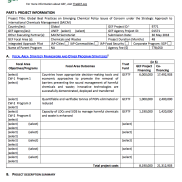
Project document: Global Best Practices on Emerging Chemical Policy Issues of Concern under the Strategic Approach to International Chemicals Management (SAICM)

Project document of Global Best Practices on Emerging Chemical Policy Issues of Concern under the Strategic Approach to International Chemicals Management (SAICM).
Avatar