62 resources found

building-code-fact-sheet-19-01-23
Factsheets and brochures

Building Insulation Code Change Fact Sheet

In January 2019, the California Building Standards Commission unanimously approved changes to the state building codes proposed by the California Office of the State Fire Marshal. The changes allow use of polystyrene insulation without flame retardants below a concrete slab-on-grade. These changes would maintain fire safety while improving human and environmental health.  This fact sheet details the key considerations for implementation of a policy on allowing flame retardant-free insulation within a building code, and the associated health and technical considerations.

Emerging Policy Issues: Chemicals in products
pharos-hbn
Database

Pharos

December 2022
copied to clipboard

Pharos provides resources to assess human and environmental health hazards of chemicals and building materials, plus tools to collaborate to find safer alternatives. The goal of this effort is to reduce the use of hazardous chemicals and improve the inherent safety of materials and products.

Pharos provides hazard, use, and exposure information on 178,411 chemicals and 220 different kinds of building products.

Hazard Assessments

Certified GreenScreen assessments in the public domain or for sale.

Hazard Lists

Authoritative scientific lists for health and environmental hazards and restricted substance lists.

Common Products

Common contents and hazards of 220 different kinds of building products.

Data Services

Pharos data in bulk and expert analysis from HBN researchers.

Emerging Policy Issues: Chemicals in products
Circular_Economy_Electronics_Central_Eastern_Europe
Report

Toward a Circular Economy for the Electronics Sector in Central and Eastern Europe: Overview, Actions and Recommendations

by |
December 2022
copied to clipboard

This report provides an overview of the current status and conditions of the Circular Economy in the electronics value chain in the Central and Eastern Europe (CEE) region, identifies key areas of concern, provides appropriate recommendations, and proposes priority actions to improve circularity of the sector. The recommendations and roadmap focus on the individual life cycle stages of the electronics value chain, as well as on aspects that cut across the value chain. The transition towards a more circular electronics sector in Central and Easter Europe (CEE) would require a holistic and coordinated approach to progress toward a more circular electronics value chain in the CEE region.

This publication was prepared under the framework of the Global Environment Facility (GEF) full-sized project 9771: Global best practices on emerging chemical policy issues of concern under the Strategic Approach to International Chemicals Management (SAICM). This project is funded by the GEF, implemented by UNEP and executed by the SAICM Secretariat.

eco-i_electronics
Manuals and toolkits

Eco-innovation (Eco-i) manual – Electronics Supplement

by |
December 2022
copied to clipboard

UNEP's new Eco-innovation Electronics Supplement was created to respond to the electronics sector's need for more guidance in building resilient, competitive, and sustainable business models for SMEs. Designed together with the World Resources Forum and to be read alongside UNEP's Eco-innovation (Eco-i) Manual, the supplement provides electronics specific examples, learning case studies, and advice on applying the eco-innovation methodology and its opportunities in the electronic sector.

This publication was prepared under the framework of the Global Environment Facility (GEF) full-sized project 9771: Global best practices on emerging chemical policy issues of concern under the Strategic Approach to International Chemicals Management (SAICM). This project is funded by the GEF, implemented by UNEP and executed by the SAICM Secretariat.

Plastic paints the Environment
Report

Plastic Paints the Environment

February 2022
copied to clipboard

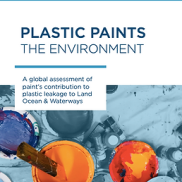
This report provides a global assessment of the level of plastic paint leakage worldwide.

It is based on the baseline year 2019 with a global paint demand of 52 Mt, that included 19.5 Mt of plastics and distributed across different sectors: Architectural, Marine, Road Marking, General Industrial, Automotive and Industrial Wood and Others.

Emerging Policy Issues: Chemicals in products
HML-Cabinetry-Spectrum-Dec3
Manuals and toolkits

Healthier Cabinetry Guide

December 2021
copied to clipboard

At face value, cabinetry may seem to be made of one type of wood, but its construction is much more complex. Many prefabricated cabinets are built using a combination of three or more wood composites and veneers, which typically use toxic glues containing formaldehyde, a known human carcinogen.

By comparing the material contents and construction in prefabricated cabinets, we created a spectrum that indicates the relationship between affordability and health. We typically consider the health effects during all phases of product development, but these diagrams are focused on the health effects during installation and inhabitation.

Currently, prefabricated cabinets are composed of 5%-30% healthier materials. Designers can increase this percentage by requesting manufacturers to build with NAF (no added formaldehyde) composite woods. This often comes with an increased price. Our Composite Wood Product and Spec Guidance gives a range of healthier substitutions.

Emerging Policy Issues: Chemicals in products
Report

Chemicals of concern in electronics: Review of legislative and regulatory approach

by
UNEP ,
|
February 2021
copied to clipboard
This UNEP report provides a comprehensive but not necessarily exhaustive overview of the various regulatory approaches for CoC in EEE. Further inputs from the international community are welcomed to complement the research, especially with regards to relevant regulations that are not yet captured in the report.Chemicals in products and hazardous substances within the life cycle of electrical and electronic products have been longstanding emerging policy issues under the Strategic Approach to International Chemicals Management (SAICM). To further advance these issues
Emerging Policy Issues: Chemicals in products
Avatar