41 resources found

Report

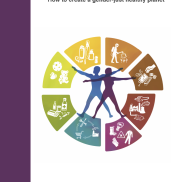
Gender & SAICM Beyond 2020: How to create a gender-just healthy planet

The present publication was produced as part of the project: "Gender and Chemicals - Together for a gender-just healthy planet", conducted by the MSP Institute in 2019.There is a number of gender aspects relevant to chemicals and chemicals and waste management. However, many of them are not receiving the attention they should in order to ensure the best possible decisions in policy-making and effective implementation.The goal of this report is to increase the integration of gender in international chemicals and
Policy document

Gender and the sound management of chemicals and waste

by |
September 2018
copied to clipboard
“Gender mainstreaming” is defined as a strategy for making both men and women’s concerns and experiences an integral part of policies and programmes in all political, economic and societal spheres.In practice, gender mainstreaming supports the contribution of men and women to society equally, through policies and programmes that address their specific needs. The Sustainable Development Goals (SDGs) of the 2030 Agenda aim to address inequalities among all population groups, especially women, children, and the impoverished. Directly addressing the links between
Emerging Policy Issues: Chemicals in products
Policy document

Gender and the sound management of chemicals and waste: Prepared for the SAICM intersessional process beyond 2020
A request was made at the first intersessional meeting for information on the relationship between women and chemical safety as it relates to emerging policy issues and issues of concern, covering in particular the period beyond 2020. The Bureau agreed at its May 2017 meeting for the secretariat to prepare a paper, for the second intersessional meeting, that reviews the broader concept of gender and the sound management of chemicals and waste, in line with the 2030 Agenda for Sustainable
Report

Gender and Chemicals: Questions, Issues and Possible Entry Points

The present paper was produced as part of the project: "Gender and Chemicals: Issues, Stakeholders, Strategies", conducted by the MSP Institute in 2017. We reviewed relevant literature and international policy making processes, and conducted 20 expert interviews between May and October 2017.
Report

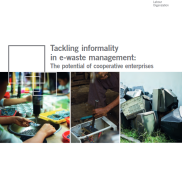
Tackling informalityin e-waste management: The potential of cooperative enterprises

December 2014
copied to clipboard
The present paper is the product of a joint effort by the Sectoral Activities Depart-ment and the Cooperatives Unit of the International Labour Organization (ILO).This initiative supports the ILO’s commitment to promote forms of employment that safeguard the environment, eradicate poverty and promote social justice through sustainable enterprises and decent work, as reinforced by the International Labour Con-ference (ILC), at its 102nd session in June 2013. Electrical and electronic waste (e-waste) is currently the fastest growing waste stream, and it
Report

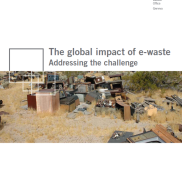
The global impact of e-waste: Addressing the challenge

December 2012
copied to clipboard
Electrical and electronic waste (e-waste) is currently the largest growing waste stream. It is hazardous, complex and expensive to treat in an environmentally sound manner, and there is a general lack of legislation or enforcement surrounding it.Today, most e-waste is being discarded in the general waste stream. Of the e-waste in developed countries that is sent for recycling, 80 per cent ends up being shipped (often illegally) to developing countries to be recycled by hundreds of thou-sands of informal workers
Avatar