9 resources found

E-learning

Ecosystem Restoration 2022

September 2022
copied to clipboard

In this Massive Open Online Course, you will learn to develop a step-by-step ecosystem restoration plan and apply effective restoration solutions in your national and subnational context.Start date: 19 September 2022End date: 20 November 2022Languages: English, French, SpanishEstimated effort: 3-5 hours per weekDuration: 8 weeks (Part 1 and Part 2)Partners: United Nations Development Programme, Convention on Biological Diversity, Korea Forest Service, The European Union, UN Decade on Ecosystem RestorationAbout the courseThe course serves as an introduction to the Short-Term Action

E-learning

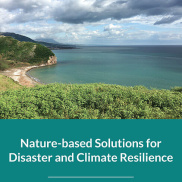
Massive Open Online Course on Nature-based Solutions for Disaster and Climate Resilience

by |
January 2021
copied to clipboard
Who is the course aimed at?Nature offers many solutions to reduce the impacts of disasters and climate change, such as protecting forests on steep slopes, maintaining sand dunes along coastline and wetlands to buffer excess rainwater. In this course, find out how people around the world are building resilience to disasters and climate change impacts through Nature-based Solutions.This course will help you understand how to apply these Nature-based Solutions that restore or protect natural or modified ecosystems and biodiversity and
E-learning

Massive Open Online Course on Marine Litter

UN Environment Programme and Open Universiteit have created a Massive Open Online Course (MOOC) on Marine Litter as a key activity of the Global Partnership on Marine Litter (you can join the GPML). It is also part of the Clean Seas Campaign. The course starts on October 26, 2020. It is free for all students and available in 10 different languages. You can still enroll until November 15. Register here!Marine litter is a global problem that affects every ocean of
E-learning

Earth School

Today, over 1.5 billion children are unable to go to school. Coronavirus’ impact goes beyond the health and economic crisis; it is also jeopardizing the education of students around the world.Teachers are scrambling to offer students lessons online and parents are desperate for activities that will keep their kids engaged and connected to the outside world.In response to this crisis, an unprecedented coalition of over fifty environmental and education experts are collaborating to launch The Earth School: 30 adventures for
E-learning

Updated course on the Minamata Convention on Mercury

Mercury is a heavy metal that occurs naturally but can also be released into air, water, and soil through anthropogenic activities such as mining, metal and cement production, and combustion of fossil fuels. It is highly toxic and persistent in the environment. It can be transported in the atmosphere great distances, and can enter the food chain and accumulate in flora and fauna.This free and self-paced course introduces you to the Minamata Convention on Mercury, which seeks to protect human
E-learning

E-learning on Multilateral Environmental Agreements

Free online courses on the Multilateral Environmental Agreements in various topics: biological diversity, chemicals and waste, climate and atmosphere, environmental governance, marine and freshwater, land and agriculture.These courses are hosted by the United Nations Information Portal on Multilateral Environmental Agreements (InforMEA)
E-learning

UN Environment Programme and Partners Massive Open Online Courses (MOOCs)

Suite of online Massive Open Online Courses (MOOCs), developed by the UN Environment Programme and partners on different topics:Marine litterUrban metabolism for policy makersIntroduction to life cycle thinkingEnvironmental security and sustaining peaceDisasters and ecosystems: Resilience in a changing climateWheels of metals: Urban mining for a circular economyFood and our future: Sustainable Food Systems in Southeast AsiaGreening consumption and productionClose the Loop - SDG 12 Introduction to Sustainable Consumption and production in LACAll courses are available here
E-learning

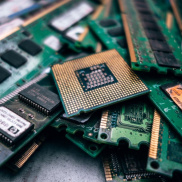
The E-Waste Challenge

This course will help the participants to understand why and how to manage e-waste in an environmentally sound manner and how action on e-waste could be taken in their own life, business, or organization.The aims of the course are to:Show how sound management of e-waste can help reduce GHG emissions, mitigate climate change and prevent hazards to health and the environment in accordance with the Basel, Rotterdam, and Stockholm conventions;Share best practices, technological innovations, and sustainable e-waste recovery and inclusive

Avatar