12 resources found

Website

International Waters Learning Exchange and Resource Network (IW Learn)

by
GEF
|
June 2021
copied to clipboard
IW:LEARN is the Global Environment Facility's (GEF) International Waters Learning Exchange and Resource Network. The IW:LEARN project was established to strengthen transboundary water management around the globe by collecting and sharing best practices, lessons learned, and innovative solutions to common problems across the GEF International Waters portfolio. It promotes learning among project managers, country official, implementing agencies, and other partners.
Database

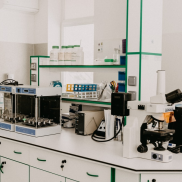
Lead in paint laboratory database

The Lead in Paint Laboratory Database lists laboratories from all UN regions capable of identifying and quantifying lead in paint samples.It is established by UNEP in close cooperation with the United States Environmental Protection Agency and the World Health Organization as part of an activity of the Global Alliance to Eliminate Lead Paint. For each listed laboratory, the databank offers publicly available information of interest, such as contact details, number of staff, instrumentation, analytical techniques, accreditation, etc. This database of
Emerging Policy Issues: Lead in paint
Database

Chemical Entities of Biological Interest

by
European Bioinformatics Institute
|
January 2021
copied to clipboard
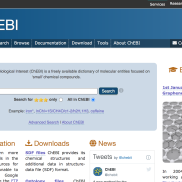
Chemical Entities of Biological Interest, also known as ChEBI is a chemical database and ontology of molecular entities focused on 'small' chemical compounds, that is part of the Open Biomedical Ontologies (OBO) effort at the European Bioinformatics Institute (EBI).The term "molecular entity" refers to any "constitutionally or isotopically distinct atom, molecule, ion, ion pair, radical, radical ion, complex, conformer, etc., identifiable as a separately distinguishable entity". The molecular entities in question are either products of nature or synthetic products which
Database

Chemical Awareness toolkit

What is CAt and where does all the data come from?The Chemical Awareness toolkit (CAt) is a free web application that provides rapid access to chemical information for product stewards, risk assessors, toxicologists, chemists, microbiologists, engineers, and other researchers. It includes screening tools that provide chemical information including toxicological hazards, environmental fate, persistence & bioaccumulation, occupational exposure limits, government regulations, and public perception.CAt utilizes an integrated database containing information from key lists provided by Verisk 3E, publicly available lists, databases
Emerging Policy Issues: Chemicals in products
E-learning

Massive Open Online Course on Marine Litter

UN Environment Programme and Open Universiteit have created a Massive Open Online Course (MOOC) on Marine Litter as a key activity of the Global Partnership on Marine Litter (you can join the GPML). It is also part of the Clean Seas Campaign. The course starts on October 26, 2020. It is free for all students and available in 10 different languages. You can still enroll until November 15. Register here!Marine litter is a global problem that affects every ocean of
E-learning

E-learning on Multilateral Environmental Agreements

Free online courses on the Multilateral Environmental Agreements in various topics: biological diversity, chemicals and waste, climate and atmosphere, environmental governance, marine and freshwater, land and agriculture.These courses are hosted by the United Nations Information Portal on Multilateral Environmental Agreements (InforMEA)
E-learning

UN Environment Programme and Partners Massive Open Online Courses (MOOCs)

Suite of online Massive Open Online Courses (MOOCs), developed by the UN Environment Programme and partners on different topics:Marine litterUrban metabolism for policy makersIntroduction to life cycle thinkingEnvironmental security and sustaining peaceDisasters and ecosystems: Resilience in a changing climateWheels of metals: Urban mining for a circular economyFood and our future: Sustainable Food Systems in Southeast AsiaGreening consumption and productionClose the Loop - SDG 12 Introduction to Sustainable Consumption and production in LACAll courses are available here
E-learning

The E-Waste Challenge

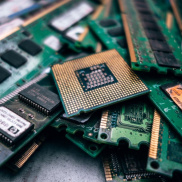
This course will help the participants to understand why and how to manage e-waste in an environmentally sound manner and how action on e-waste could be taken in their own life, business, or organization.The aims of the course are to:Show how sound management of e-waste can help reduce GHG emissions, mitigate climate change and prevent hazards to health and the environment in accordance with the Basel, Rotterdam, and Stockholm conventions;Share best practices, technological innovations, and sustainable e-waste recovery and inclusive

Avatar