46 resources found

Academic article

Chemicals of concern in plastic toys

by
ScienceDirect
|
October 2020
copied to clipboard
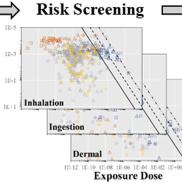
We present a list of Chemicals of Concern (CoCs) in plastic toys. We started from available studies reporting chemical composition of toys to group plastic materials, as well as to gather mass fractions and function of chemicals in these materials. Chemical emissions from plastic toys and subsequent human exposures were then estimated using a series of models and a coupled near-field and far-field exposure assessment framework. Comparing human doses with reference doses shows high Hazard Quotients of up to 387
Emerging Policy Issues: Chemicals in products
Academic article

Alternative societal solutions to pharmaceuticals in the aquatic environment

by
ScienceDirect
|
September 2020
copied to clipboard
Environmental contamination with pharmaceuticals is widespread, inducing risks to both human health and the environment. This paper explores potential societal solutions to human and veterinary pharmaceuticals in the aquatic environment. To this end, we adopt transition research’s multi-level perspective framework, which allows us to understand the dynamics underlying pharmaceutical emissions and to recognize social and technical factors triggering change. The authors' qualitative analysis is based on data collected through literature research and interviews with actors from pharmaceutical industry, the health
Emerging Policy Issues: Pharmaceutical pollutants
Academic article

Endocrine-disrupting chemicals: economic, regulatory, and policy implications

by
ScienceDirect
|
July 2020
copied to clipboard
Endocrine-disrupting chemicals (EDCs) substantially cost society as a result of increases in disease and disability but—unlike other toxicant classes such as carcinogens—have yet to be codified into regulations as a hazard category.This Series paper examines economic, regulatory, and policy approaches to limit human EDC exposures and describes potential improvements. In the EU, general principles for EDCs call for minimisation of human exposure, identification as substances of very high concern, and ban on use in pesticides. In the USA, screening and
Emerging Policy Issues: Endocrine-Disrupting Chemicals
Academic article

Life cycle based alternatives assessment (LCAA) for chemical substitution

by
Green Chemistry
|
July 2020
copied to clipboard
AbstractThe world faces an increasing need to phase out harmful chemicals and design sustainable alternatives across various consumer products and industrial applications. Alternatives assessment is an emerging field focusing on identifying viable solutions to substitute harmful chemicals. However, current methods fail to consider trade-offs from human and ecosystem exposures, and from impacts associated with chemical supply chains and product life cycles. To close this gap, we propose a life cycle based alternatives assessment (LCAA) framework for consistently integrating quantitative exposure
Academic article

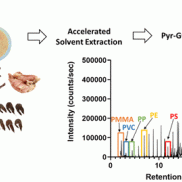
Quantitative Analysis of Selected Plastics in High-Commercial-Value Australian Seafood by Pyrolysis Gas Chromatography Mass Spectrometry

by
American Chemical Society
|
July 2020
copied to clipboard
Microplastic contamination of the marine environment is widespread, but the extent to which the marine food web is contaminated is not yet known. The aims of this study were to go beyond visual identification techniques and develop and apply a simple seafood sample cleanup, extraction, and quantitative analysis method using pyrolysis gas chromatography mass spectrometry to improve the detection of plastic contamination.This method allows the identification and quantification of polystyrene, polyethylene, polyvinyl chloride, polypropylene, and poly (methyl methacrylate) in the
Emerging Policy Issues: Chemicals in products
Project document

Market Analysis of the Coating Industry in China

China is a major producer of paints which supplies a considerable share of paints in the world. Key paint production hot spots were identified as Guangdong, Shanghai, Jiangsu, Hunan and Shandong provinces and cities. The cost of removing existing decorative lead paint from surfaces in homes, schools, and other buildings is significant. By comparison, the cost for eliminating the use of lead compounds in new decorative paints is low and alternatives to lead additives are available for all types of
Emerging Policy Issues: Lead in paint
Topics: Policymaking
Project document

Baseline paint market study in Ecuador (English / Spanish)

The World Health Organization (WHO) with the United Nations Environment Program (UNEP) has launched the initiative called "Global Alliance to Eliminate Lead Paint" whose goal is to phase-out the manufacture and sale of paintings that contain lead thereby reducing the exposition to this metal and eliminating its risks and effects on the population.In Ecuador, CEER is the technical executor of the project “Lead-free paints”, carried out with the technical support of the Cleaner Production Centre of Serbia, experts from the
Emerging Policy Issues: Lead in paint
Topics: Policymaking
Project document

Baseline Information for the Lead Paint Country Situation in Nigeria

Lead in Nigerian paints is another route of lead into the environment and exposure can be caused as a result of inhalation or ingestion especially in children. In 2008, SRADeV Nigeria under the auspices of International Pollutants Elimination Network (IPEN) collected and analyzed decorative paints produced and/or marketed in Nigeria. All the sampled paint brands were found to contain lead higher than 90ppm, in fact up to an alarming level of 129,837ppm in one case. At that time, there were
Emerging Policy Issues: Lead in paint
Topics: Policymaking

Avatar