42 resources found

Website

Pesticide Registration Toolkit

by
FAO
|
June 2020
copied to clipboard
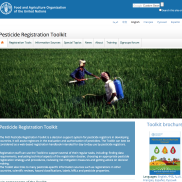
The FAO Pesticide Registration Toolkit is a decision support system for pesticide registrars in developing countries. It will assist registrars in the evaluation and authorization of pesticides. The Toolkit can best be considered as a web-based registration handbook intended for day-to-day use by pesticide registrars.Registration staff can use the Toolkit to support several of their regular tasks, including: finding data requirements, evaluating technical aspects of the registration dossier, choosing an appropriate pesticide registration strategy and procedures, reviewing risk mitigation measures
Emerging Policy Issues: Highly Hazardous Pesticides
Project document

Market Analysis of the Coating Industry in China

China is a major producer of paints which supplies a considerable share of paints in the world. Key paint production hot spots were identified as Guangdong, Shanghai, Jiangsu, Hunan and Shandong provinces and cities. The cost of removing existing decorative lead paint from surfaces in homes, schools, and other buildings is significant. By comparison, the cost for eliminating the use of lead compounds in new decorative paints is low and alternatives to lead additives are available for all types of
Emerging Policy Issues: Lead in paint
Topics: Policymaking
Project document

Baseline paint market study in Ecuador (English / Spanish)

The World Health Organization (WHO) with the United Nations Environment Program (UNEP) has launched the initiative called "Global Alliance to Eliminate Lead Paint" whose goal is to phase-out the manufacture and sale of paintings that contain lead thereby reducing the exposition to this metal and eliminating its risks and effects on the population.In Ecuador, CEER is the technical executor of the project “Lead-free paints”, carried out with the technical support of the Cleaner Production Centre of Serbia, experts from the
Emerging Policy Issues: Lead in paint
Topics: Policymaking
Website

UNITAR Nanotechnology webpage

by
UNITAR
|
April 2020
copied to clipboard
UNITAR Website webpage indicates activities and resources to learn more about nanotechnology and manufactured nanomaterials (nano). The third International Conference on Chemicals Management (ICCM3) emphasized: “the need for UNITAR and the Organization for Economic Cooperation and Development to continue development of international guidance and training materials for the sound management of manufactured nanomaterials, drawing on existing initiatives, needs assessment and best practices, within their respective mandates and subject to available resources in cooperation with the regions and other relevant stakeholders"
Emerging Policy Issues: Nanotechnology
Project document

Baseline Information for the Lead Paint Country Situation in Nigeria

Lead in Nigerian paints is another route of lead into the environment and exposure can be caused as a result of inhalation or ingestion especially in children. In 2008, SRADeV Nigeria under the auspices of International Pollutants Elimination Network (IPEN) collected and analyzed decorative paints produced and/or marketed in Nigeria. All the sampled paint brands were found to contain lead higher than 90ppm, in fact up to an alarming level of 129,837ppm in one case. At that time, there were
Emerging Policy Issues: Lead in paint
Topics: Policymaking
Website

Health information about Lead

A range of documents provide information about the health impacts of lead, sources of lead exposure and methods for evaluating exposure. Key WHO risk assessment documents concerning lead are also provided. These resources can be used by governments and international and national organizations as the basis for taking preventive actions against adverse health and environmental impacts.
Emerging Policy Issues: Lead in paint
Website

Building Circularity Platform

The Building Circularity Platform provides an understanding of the circularity concept, its scope and how it contributes to promoting sustainable consumption and production patterns. It also offers a wide range of resources and features stories illustrating how various stakeholders have successfully adopted circular approaches.
Emerging Policy Issues: Chemicals in products
Avatar