66 resources found

oehha
Database

The Proposition 65 List

December 2022
copied to clipboard

List to identify hazardous substances restricted by the state of California. 

The list contains a wide range of naturally occurring and synthetic chemicals that are known to cause cancer or birth defects or other reproductive harm. These chemicals include additives or ingredients in pesticides, common household products, food, drugs, dyes, or solvents. Listed chemicals may also be used in manufacturing and construction, or they may be byproducts of chemical processes, such as motor vehicle exhaust. Learn how chemicals are added to the list.

Emerging Policy Issues: Chemicals in products
buidingcleandlogo
Database

Building Clean

December 2022
copied to clipboard

Resource providing information on chemical hazards of building products and supporting practitioners in the US market to identify products with minimized chemical impacts

Emerging Policy Issues: Chemicals in products
pharos-hbn
Database

Pharos

December 2022
copied to clipboard

Pharos provides resources to assess human and environmental health hazards of chemicals and building materials, plus tools to collaborate to find safer alternatives. The goal of this effort is to reduce the use of hazardous chemicals and improve the inherent safety of materials and products.

Pharos provides hazard, use, and exposure information on 178,411 chemicals and 220 different kinds of building products.

Hazard Assessments

Certified GreenScreen assessments in the public domain or for sale.

Hazard Lists

Authoritative scientific lists for health and environmental hazards and restricted substance lists.

Common Products

Common contents and hazards of 220 different kinds of building products.

Data Services

Pharos data in bulk and expert analysis from HBN researchers.

Emerging Policy Issues: Chemicals in products

Logo_Chemsec_SIN_List
Database

SIN List

December 2022
copied to clipboard

The SIN List is a comprehesive list of hazardous chemicals that are used in a wide variety of products and manufacturing processes around the globe. The SIN abbreviation – Substitute It Now – implies that these chemicals should be removed as soon as possible as they pose a threat to human health and the environment.

The SIN List is developed by the non-profit ChemSec in close collaboration with scientists and technical experts, as well as an advisory committee of leading environmental, health, consumer organisations. The list is based on credible, publicly available information from existing databases and scientific studies.

Emerging Policy Issues: Chemicals in products

Factsheets and brochures

Suggested Steps for Establishing a Lead Paint Law

December 2019
copied to clipboard
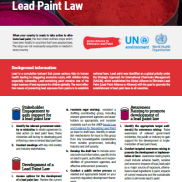
This fact sheet outlines steps that have been helpful in countries that have adopted lead paint laws. The steps are not necessarily sequential or needed in every country.
Emerging Policy Issues: Lead in paint
Topics: Policymaking
Factsheets and brochures

Lead Paint Factsheet

by |
November 2019
copied to clipboard
This factsheet presents the work of UNEP and the Lead Paint Alliance. The document also highlights its impacts and the SAICM GEF project Lead in paint component.
Emerging Policy Issues: Lead in paint
Avatar