128 resources found

sustainable-chemicals-strategy
Report

A chemicals strategy for a sustainable chemicals revolution

December 2022
copied to clipboard

Chemicals production and consumption is set to double by 2030, from a $5 trillion industry globally in 2017, with production set to increase, mainly in emerging economies. If chemicals production is doubled, chemical pollution must not double as a consequence – rather we should aim to significantly reduce it from current levels.

Current international attempts at the massive undertaking of addressing chemical pollution are not working. For the world to solve the major environmental and health challenges we face, there must be a sustainable chemicals revolution. We can only achieve this through senior-level engagement with the chemical sciences community through an authoritative, intergovernmental science-policy interface.

The Royal Society of Chemistry engaged with scientists in their community to develop the vision for a chemicals strategy, relevant to any nation in principle.  Four pillars were identified on which any chemicals strategy has to be based: education, innovation, circular economy and regulation. National governments must invest in these areas and create a responsible framework of action for chemicals management.

Emerging Policy Issues: Chemicals in products
Country: United Kingdom
Circular_Economy_Electronics_Central_Eastern_Europe
Report

Toward a Circular Economy for the Electronics Sector in Central and Eastern Europe: Overview, Actions and Recommendations

by |
December 2022
copied to clipboard

This report provides an overview of the current status and conditions of the Circular Economy in the electronics value chain in the Central and Eastern Europe (CEE) region, identifies key areas of concern, provides appropriate recommendations, and proposes priority actions to improve circularity of the sector. The recommendations and roadmap focus on the individual life cycle stages of the electronics value chain, as well as on aspects that cut across the value chain. The transition towards a more circular electronics sector in Central and Easter Europe (CEE) would require a holistic and coordinated approach to progress toward a more circular electronics value chain in the CEE region.

This publication was prepared under the framework of the Global Environment Facility (GEF) full-sized project 9771: Global best practices on emerging chemical policy issues of concern under the Strategic Approach to International Chemicals Management (SAICM). This project is funded by the GEF, implemented by UNEP and executed by the SAICM Secretariat.

SAICM_UCT HHP CoP Discussion 4 Digest
Community of practice summary of discussions

The importance of farmer and farmer organisations’ perspectives on Highly Hazardous Pesticides

by |
December 2022
copied to clipboard

The SAICM Secretariat, in partnership with the University of Cape Town, established a community of practice on Highly Hazardous Pesticides (HHPs) to foster discussions, exchange of best practices, and recommendations to address HHPs amongst relevant stakeholders. This is a summary of the discussion on The importance of farmer and farmer organisations' perspectives on Highly Hazardous Pesticides, which took place on 12 December 2022.

Presenters: Prof. Hanna-Andrea Rother (UCT), Andrew Ardington (RegenAg SA)

Emerging Policy Issues: Highly Hazardous Pesticides
SAICMUCT CDSG CoP Discussion 4 2022 digest
Community of practice summary of discussions

Environmental Injustice Issues to Consider for Chemical Risk

by |
November 2022
copied to clipboard

The Secretariat of the Strategic Approach to Chemicals Management (SAICM) and the University of Cape Town (UCT) have launched a Community of Practice (CoP) on Chemicals and SDGs to bring representatives from different sectors together and to create a learning network around issues related to addressing Chemicals and the Sustainable Development Goals (SDGs). This is a summary of the discussion on Environmental Injustice Issues to Consider for Chemical Risk, which took place on 23 November 2022.

Presenters: Rico Euripidou (groundWork)

SAICM UCT LiP CoP Discussion 4 digest_16.11.2022
Community of practice summary of discussions

Compliance with Lead Paint Laws

by |
November 2022
copied to clipboard

The Secretariat of the Strategic Approach to Chemicals Management (SAICM) and the University of Cape Town (UCT) have established a Community of Practice (CoP) on Lead in Paint to bring representatives from different sectors together and to create a learning network around issues related to the elimination of Lead Paint. This is a summary of the discussion on Compliance with Lead Paint Laws, which took place on 16 November 2022.

Presenters: Steve Wolfson (US EPA), Dr Faridah Hussein Were (University of Nairobi), University of Nairobi (Department of Environment and Natural Resources in the Philippines), Isabel Artagaveytia (Uruguayan Ministry of Environment)

Emerging Policy Issues: Lead in paint
SAICMUCT CDSG CoP Discussion 3 2022 digest
Community of practice summary of discussions

Plastic pollution: ideas for addressing chemicals in plastics
by |
October 2022
copied to clipboard

The Secretariat of the Strategic Approach to Chemicals Management (SAICM) and the University of Cape Town (UCT) have launched a Community of Practice (CoP) on Chemicals and SDGs to bring representatives from different sectors together and to create a learning network around issues related to addressing Chemicals and the Sustainable Development Goals (SDGs). This is a summary of the discussion on Plastic pollution: ideas for addressing chemicals in plastics, which took place on 19 October 2022.

Presenters: Brenda Koekkoek (UNEP), Jost Dittkrist (UNEP), Dr. Eeva Leinala (OECD), Mochamad Adi Septiono (Nexus3 Foundation)

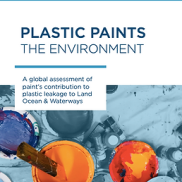
Plastic paints the Environment
Report

Plastic Paints the Environment

February 2022
copied to clipboard

This report provides a global assessment of the level of plastic paint leakage worldwide.

It is based on the baseline year 2019 with a global paint demand of 52 Mt, that included 19.5 Mt of plastics and distributed across different sectors: Architectural, Marine, Road Marking, General Industrial, Automotive and Industrial Wood and Others.

Emerging Policy Issues: Chemicals in products
Report

Chemicals of concern in electronics: Review of legislative and regulatory approach

by |
February 2021
copied to clipboard
This UNEP report provides a comprehensive but not necessarily exhaustive overview of the various regulatory approaches for CoC in EEE. Further inputs from the international community are welcomed to complement the research, especially with regards to relevant regulations that are not yet captured in the report.Chemicals in products and hazardous substances within the life cycle of electrical and electronic products have been longstanding emerging policy issues under the Strategic Approach to International Chemicals Management (SAICM). To further advance these issues
Emerging Policy Issues: Chemicals in products
Avatar
