106 resources found

pharos-hbn
Database

Pharos

December 2022
copied to clipboard

Pharos provides resources to assess human and environmental health hazards of chemicals and building materials, plus tools to collaborate to find safer alternatives. The goal of this effort is to reduce the use of hazardous chemicals and improve the inherent safety of materials and products.

Pharos provides hazard, use, and exposure information on 178,411 chemicals and 220 different kinds of building products.

Hazard Assessments

Certified GreenScreen assessments in the public domain or for sale.

Hazard Lists

Authoritative scientific lists for health and environmental hazards and restricted substance lists.

Common Products

Common contents and hazards of 220 different kinds of building products.

Data Services

Pharos data in bulk and expert analysis from HBN researchers.

Emerging Policy Issues: Chemicals in products

Logo_Chemsec_SIN_List
Database

SIN List

December 2022
copied to clipboard

The SIN List is a comprehesive list of hazardous chemicals that are used in a wide variety of products and manufacturing processes around the globe. The SIN abbreviation – Substitute It Now – implies that these chemicals should be removed as soon as possible as they pose a threat to human health and the environment.

The SIN List is developed by the non-profit ChemSec in close collaboration with scientists and technical experts, as well as an advisory committee of leading environmental, health, consumer organisations. The list is based on credible, publicly available information from existing databases and scientific studies.

Emerging Policy Issues: Chemicals in products
Circular_Economy_Electronics_Central_Eastern_Europe
Report

Toward a Circular Economy for the Electronics Sector in Central and Eastern Europe: Overview, Actions and Recommendations

by |
December 2022
copied to clipboard

This report provides an overview of the current status and conditions of the Circular Economy in the electronics value chain in the Central and Eastern Europe (CEE) region, identifies key areas of concern, provides appropriate recommendations, and proposes priority actions to improve circularity of the sector. The recommendations and roadmap focus on the individual life cycle stages of the electronics value chain, as well as on aspects that cut across the value chain. The transition towards a more circular electronics sector in Central and Easter Europe (CEE) would require a holistic and coordinated approach to progress toward a more circular electronics value chain in the CEE region.

This publication was prepared under the framework of the Global Environment Facility (GEF) full-sized project 9771: Global best practices on emerging chemical policy issues of concern under the Strategic Approach to International Chemicals Management (SAICM). This project is funded by the GEF, implemented by UNEP and executed by the SAICM Secretariat.

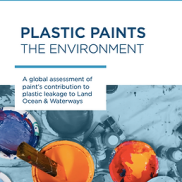
Plastic paints the Environment
Report

Plastic Paints the Environment

February 2022
copied to clipboard

This report provides a global assessment of the level of plastic paint leakage worldwide.

It is based on the baseline year 2019 with a global paint demand of 52 Mt, that included 19.5 Mt of plastics and distributed across different sectors: Architectural, Marine, Road Marking, General Industrial, Automotive and Industrial Wood and Others.

Emerging Policy Issues: Chemicals in products
Report

Chemicals of concern in electronics: Review of legislative and regulatory approach

by |
February 2021
copied to clipboard
This UNEP report provides a comprehensive but not necessarily exhaustive overview of the various regulatory approaches for CoC in EEE. Further inputs from the international community are welcomed to complement the research, especially with regards to relevant regulations that are not yet captured in the report.Chemicals in products and hazardous substances within the life cycle of electrical and electronic products have been longstanding emerging policy issues under the Strategic Approach to International Chemicals Management (SAICM). To further advance these issues
Emerging Policy Issues: Chemicals in products
Report

Update on the Global Status of Legal Limits on Lead in Paint

by |
February 2021
copied to clipboard

The new 2020 Update on the Global Status of Legal Limits on Lead in Paint reports new laws, new tools, and new momentum on progress toward laws to eliminate lead paint in 2020. Available in English and Spanish, the Update also describes activity and results by region. As of 31 December 2020, 79 countries have confirmed that they have legally binding controls on lead in paint, which is 41% of all countries. Since October 2019, Colombia, Lebanon and Vietnam established

Emerging Policy Issues: Lead in paint
Topics: Policymaking
Report

Summary report on Chemicals in Toys Policy in China

by |
March 2020
copied to clipboard
China is one of the largest producers, exporters and consumers of toy products in the world. In order to ensure the quality and safety of toys, and to promote the development of toys industry, China implements a series of related laws, regulations and standards, with many authorities participate in the supervision and management of toys industry.However, there are still gaps between China and the European Union in terms of the limits of chemicals in toys and the management of new
Emerging Policy Issues: Chemicals in products
Avatar