48 resources found

Policy document

Model Law and Guidance for Regulating Lead Paint

UN Environment, in cooperation with World Health Organization, United States Environment Protection Agency and other partners, has developed a model law and guidance in order to assist countries in establishing and implementing regulation on lead paint.The purpose of this guidance is to assist countries to enact new laws (or to modify their existing laws) to establish a single regulatory limit on the total lead content in paints. The guidance describes the key elements of effective and enforceable legal requirements. It

Emerging Policy Issues: Lead in paint
Topics: Policymaking
Policy document

International Code of Conduct on Pesticide Management

The International Code of Conduct on Pesticide Management is the framework on pesticide management for all public and private entities engaged in, or associated with, production, regulation and management of pesticides.The new Code of Conduct on Pesticide Management was approved by the FAO Conference in June 2013. The Code provides standards of conduct serves as a point of reference in relation to sound pesticide life cycle management practices, in particular for government authorities and the pesticide industry.The document is available
Emerging Policy Issues: Highly Hazardous Pesticides
E-learning

Ecosystem Restoration 2022

September 2022
copied to clipboard

In this Massive Open Online Course, you will learn to develop a step-by-step ecosystem restoration plan and apply effective restoration solutions in your national and subnational context.Start date: 19 September 2022End date: 20 November 2022Languages: English, French, SpanishEstimated effort: 3-5 hours per weekDuration: 8 weeks (Part 1 and Part 2)Partners: United Nations Development Programme, Convention on Biological Diversity, Korea Forest Service, The European Union, UN Decade on Ecosystem RestorationAbout the courseThe course serves as an introduction to the Short-Term Action

Policy document

Compendium of WHO and other UN guidance on health and environment

This compendium provides a systematic compilation of published guidance from WHO and other UN organizations on health and environment. Guidance on policies and actions as well as awareness raising and capacity building interventions is presented for all major areas of health and environment. Guidance referring to priority settings for action such as cities and other urban settlements, housing, workplaces and health care facilities is also listed.For greater practical relevance, each guidance is classified according to principally involved sectors, level of
Policy document

Engaging the textiles industry as a key sector in SAICM: a review of PFAS as a chemical class in the textile sector

by
Natural Resources Defense Council (NRDC)
|
May 2021
copied to clipboard
The report examines the class approach for PFAS as it applies to the textile sector, which covers a wide variety of consumer products and connects two important issues covered in the SAICM context. The textile sector is an appropriate choice given the environmental significance of the sector and the scope of PFAS used within it. Both the quantity of PFAS in use and the variety of uses make this sector a priority for action. Furthermore, the nature of the sector—with
Emerging Policy Issues: Chemicals in products
Policy document

Guidance on key considerations for the identification and selection of safer chemical alternatives

by |
March 2021
copied to clipboard
The aim of the guidance is to advance broader agreement on a general approach and criteria for the selection of safer alternatives, with a focus on chemical substitution. It is intended to advance a consistent understanding of the minimum requirements needed to determine whether a chemical alternative is safer than the priority chemical, product, or technology for substitution, independent of the entity performing the assessment or the alternatives assessment framework being used.The guidance focuses on minimum assessment criteria and recommended
Emerging Policy Issues: Chemicals in products
Policy document

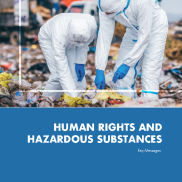
Key Messages on Human Rights and Hazardous Substances

Pollution is the largest source of premature death in the developing world, causing approximately three times more deaths than HIV/AIDS, tuberculosis and malaria combined (2018 Report of the Lancet Commission on pollution and health). It disproportionately affects persons, groups and peoples in vulnerable situations reflecting both historical and ongoing discrimination, racism, and power imbalances that have given rise to powerful social movements for environmental justice. Those responsible for the harmful impacts of hazardous substances must be held legally accountable for
Emerging Policy Issues: Chemicals in products
E-learning

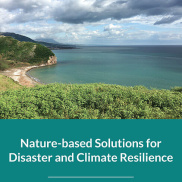
Massive Open Online Course on Nature-based Solutions for Disaster and Climate Resilience

by |
January 2021
copied to clipboard
Who is the course aimed at?Nature offers many solutions to reduce the impacts of disasters and climate change, such as protecting forests on steep slopes, maintaining sand dunes along coastline and wetlands to buffer excess rainwater. In this course, find out how people around the world are building resilience to disasters and climate change impacts through Nature-based Solutions.This course will help you understand how to apply these Nature-based Solutions that restore or protect natural or modified ecosystems and biodiversity and
Avatar