9 resources found

DG Environment
Report

The use of PFAS and fluorine-free alternatives in textiles, upholstry, carpets, leather and apparel

This study, commissioned by DG Environment for the European Commission and produced by Wood and Ramboll.  The objective was to assess the use of PFASs and fluorine-free alternatives in textiles, upholstry, carpets, leather and apparel, including specific focus on volumes of use, technical function, and emissions.

Non-fluorine alternatives considered were hydrocarbons, silicones, dendrimers, polyurethane, nanomaterials, and alternative technologies.  The study makes recommendations for policy, including a REACH restriction on the placing on the market and use of these products that contain any PFAS, and a listing under the Stockholm Convention.  It is also recommended in the report that a restriction could be combined with voluntary industry measures and provisions in public procurement to encourage substitution of PFAS before mandatory legislation is introduced.

healthy_hospitals
Website

Healthy Hospitals

Full set of resources from the Healthy Hospitals program which includes:

  • Step-by-step resources that will make it simpler for any hospital or health care organization to design, implement, and measure the success of their chemical reduction efforts;
  • Guidance on healthier flooring, carpet and interiors products;
  • Links to criteria documents and lists of products that meet the HH goals.
Emerging Policy Issues: Chemicals in products
greenny
Website

GreenNY Specification: Adhesives

Green public procurement specification for general construction and flooring adhesives. The goal of the specification is to set a hierarchy of preferences for connecting materials together and to encourage the use of adhesives that have fewer health and environmental hazards in order to create a healthier indoor environment during both construction and building occupancy.

Emerging Policy Issues: Chemicals in products
Plastic paints the Environment
Report

Plastic Paints the Environment

February 2022
copied to clipboard

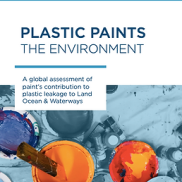
This report provides a global assessment of the level of plastic paint leakage worldwide.

It is based on the baseline year 2019 with a global paint demand of 52 Mt, that included 19.5 Mt of plastics and distributed across different sectors: Architectural, Marine, Road Marking, General Industrial, Automotive and Industrial Wood and Others.

Emerging Policy Issues: Chemicals in products
EIT_RM_PARADE_Hazardous_substances_in_construction_Final_2019
Report

Hazardous Substances in Construction Products and Materials

December 2019
copied to clipboard

This guidance document aims to give an overview of potential hazardous substances that might occur in construction products and when appearing as waste need attention during renovation and demolition activities. Focus in this guideline is on hazardous substances regulated by EU or international agreements or national legislation.

Although the present legislation restricts the use of many hazardous substances in new building products, there is a considerable concern for compounds present in old construction products, since their presence in construction and demolition waste may limit the recyclability of the material and potentially cause waste management problems. One group of substances that has recently received attention are persistent organic pollutants (POP substances) such as e.g. some brominated flame retardants.

Important characteristic of the construction and building products is the relatively long life span. Because of long lifespan the restricted substances will enter the waste stream many decades after a ban has been placed on their use and they can therefore be found in renovation or demolition waste for a long time. Many of these substances provide important functionality in a wide range of products, e.g. flame retardants.

Besides hazardous substances also degradation in composition and quality aspects (e.g. mould) of construction products needs to be considered.

This document is part of the pre-demolition overall guidance document developed in the PARADE project.

Emerging Policy Issues: Chemicals in products
Report

Sustainable Building Finance: Supporting green mortgage development in Sri Lanka

by |
December 2021
copied to clipboard
A GEF-funded (Global Environment Facility) project on “Global best practices on emerging chemical policy issues of concern under SAICM” was launched in 2019, targeting Sri Lanka amongst other countries. The activities under the project include a focus on tracking and controlling chemicals along the value chains of the building and construction sector. To that end, a team from the UN Environment Programme (UNEP) have been working with stakeholders in Sri Lanka on identifying chemicals of concern in the construction material
Report

Chemicals of Concern in the Building and Construction Sector

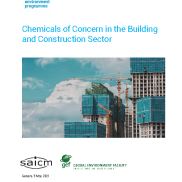
This UNEP report aims at providing an overview of the challenge that chemicals of concern pose in the context of products relevant for the building and construction sector. It outlines the relevance and linkages of chemicals of concern with regards to a building life cycle and highlights existing gaps, challenges and opportunities regarding the imperative of increasing circularity in the building and construction sector.

Emerging Policy Issues: Chemicals in products
Avatar