67 resources found

Cover
Manuals and toolkits

Eco-innovation (Eco-i) manual – Building Materials Supplement

UNEP's new Eco-innovation Building Materials Supplement was created to respond to the building material sector's need for more guidance in building resilient, competitive, and sustainable business models for SMEs. Designed together with Bioregional, pilot implementation support of the National Cleaner Production Centre (NCPC) Sri Lanka and to be read alongside UNEP's Eco-innovation Manual, the supplement provides specific examples, learning case studies, and advice on applying the eco-innovation methodology within the building materials value chain.

ECHA
Article

Per- and polyfluoroalkyl substances (PFAS)

Per- and polyfluoroalkyl substances (PFAS) are a large class of thousands of synthetic chemicals that are used throughout society. However, they are increasingly detected as environmental pollutants and some are linked to negative effects on human health.

This page from the European Chemicals Agency provides background on PFAS chemicals and their use in a number of products, including construction materials, paints and chrome plating.

DG Environment
Report

The use of PFAS and fluorine-free alternatives in textiles, upholstry, carpets, leather and apparel

This study, commissioned by DG Environment for the European Commission and produced by Wood and Ramboll.  The objective was to assess the use of PFASs and fluorine-free alternatives in textiles, upholstry, carpets, leather and apparel, including specific focus on volumes of use, technical function, and emissions.

Non-fluorine alternatives considered were hydrocarbons, silicones, dendrimers, polyurethane, nanomaterials, and alternative technologies.  The study makes recommendations for policy, including a REACH restriction on the placing on the market and use of these products that contain any PFAS, and a listing under the Stockholm Convention.  It is also recommended in the report that a restriction could be combined with voluntary industry measures and provisions in public procurement to encourage substitution of PFAS before mandatory legislation is introduced.

Case Study 3
Case studies

Piloting the Extended Producer Responsibility scheme in Nigeria

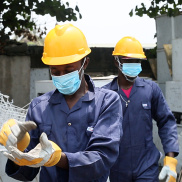
This case study highlights three main achievements resulting from the EPR pilot that tested potential collection channels, determined local e-waste treatment costs, and promoted environmentally sound e-waste management and gender equality in Nigeria's electronics sector.

  1. Setting an EPR financial mechanism by understanding local collection and recycling costs and estimating the EPR fee based on local costs.
  2. Reducing the health and environmental risks associated with e-waste management practices by ensuring hazardous materials like mercury and Persistent Organic Pollutants in e-waste are recycled in an environmentally sound manner.
  3. Improving the health, security, and safety of waste management workers, including women who face various risks in the sector.

The study concludes with a summary of the next steps and key learnings that emphasize the importance of environ-mentally and socially responsible e-waste management with a focus on gender equality in the sector.

Report

Transitioning To A Circular Economy Through Chemical and Waste Management

The presence of hazardous chemicals in products makes the transformation to circularity more challenging. This report describes UNDP's interventions on Chemicals and Waste Management which aim to achieve circularity across different industries, inluding construction.

Emerging Policy Issues: Chemicals in products
Topics: Circularity
OECD
Policy document

Compare your country - Chemical legislation

Legislation is not in place in every country to manage chemicals of concern.  The OECD Compare your Country Interactive mapping tool shows where legislation is in place and in development to manage industrial and consumer chemicals. 

The tool also includes a series of country profiles, providing details of legislation, the year of adoption and the approximate number of industrial chemicals assessed per year.


Safer States
Policy document

Safer States

Safer States is an alliance of diverse environmental health organizations and coalitions from across the United States committed to building a healthier world.  The website features an interactive map showing chemical-related policies, including those related to building materials.  A Bill Tracker provides further detail of the action taken by individual states to regulate chemicals, covering PFAS, toxic flame retardants, heavy metals, BPA and phthalates.

Avatar