50 resources found

Infographic

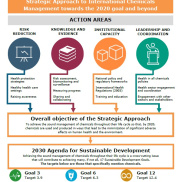
biodiversity in danger from poor management of chemicals and waste

World Environment Day took place on 5 June 2020 and the theme this year was biodiversity. SAICM celebrated by creating an infographic on how chemicals and waste can impact biodiversity and releasing an article on how we can do more to protect and help our planet's biodiversity flourish.
E-learning

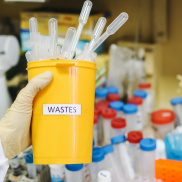
The E-Waste Challenge

This course will help the participants to understand why and how to manage e-waste in an environmentally sound manner and how action on e-waste could be taken in their own life, business, or organization.The aims of the course are to:Show how sound management of e-waste can help reduce GHG emissions, mitigate climate change and prevent hazards to health and the environment in accordance with the Basel, Rotterdam, and Stockholm conventions;Share best practices, technological innovations, and sustainable e-waste recovery and inclusive

Factsheets and brochures

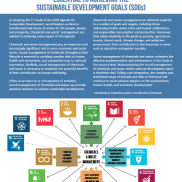
Chemicals and waste management: essential to achieving the Sustainable Development Goals (SDGs)

by |
October 2019
copied to clipboard
In adopting the 17 Goals of the 2030 Agenda for Sustainable Development, world leaders outlined a transformational course of action for the people, planet, and prosperity. Chemicals and waste management are related to achieving every aspect of this Agenda.Chemicals and waste management play an important and increasingly significant role in every economic and social sector. Sound management of chemicals throughout their lifecycle is essential to avoiding complex risks to human health and ecosystems, and substantial costs to national economies. Similarly
Report

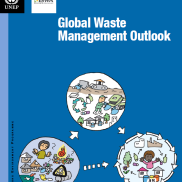
Global Waste Management Outlook

Better waste management offers great potential to help us meet the sustainability challenges ahead. Targeting decision-makers and many other inter-connected sectors, the Global Waste Management Outlook (GWMO) was launched at the World Congress of The International Solid Waste Association (ISWA) in Belgium on 7 September, 2015 . The publication also contains two summary documents, making the information concise and accessible.Developed by UNEP in collaboration with ISWA in response to the UNEP Governing Council request of February 2013, its goal was
Report

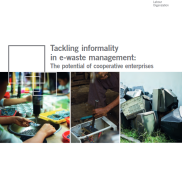
Tackling informalityin e-waste management: The potential of cooperative enterprises

December 2014
copied to clipboard
The present paper is the product of a joint effort by the Sectoral Activities Depart-ment and the Cooperatives Unit of the International Labour Organization (ILO).This initiative supports the ILO’s commitment to promote forms of employment that safeguard the environment, eradicate poverty and promote social justice through sustainable enterprises and decent work, as reinforced by the International Labour Con-ference (ILC), at its 102nd session in June 2013. Electrical and electronic waste (e-waste) is currently the fastest growing waste stream, and it
Avatar