- Knowledge Management
- Chemicals in building products
- Policymaking
- Sustainable Development Goals
- Chemicals in electronics
- Circularity
- Awareness-raising
- E-waste
- Gender mainstreaming
- Chemicals in toys
- Life Cycle
- Eco-innovation
- Persistent organic pollutants (POPs)
- Chemicals in textiles
- Sustainable Public Procurement
- Artificial Intelligence
77 resources found

Addressing Chemicals of Concern: Key messages and lessons learned
This document summarises lessons learned from the various project activities in three sectors: electrical and electronic equipment (EEE); building and construction; and toys. It also formulates key messages addressed to different stakeholder groups and provides links to guidance and tools developed under the GEF project
Why chemicals matter
The video covers the crucial issues surrounding chemical policies in today's world, the unseen effects of chemicals in everyday life and the global push for policies that foster sustainable practices. The video highlights the challenges and innovative solutions that aim to to protect our environment and health, setting the stage for a greener, safer and sustainable future.


Wicked Games: How Playing with Toys Can Expose Children to Harmful Chemicals

When it comes to exposure to chemicals of concern (CoC), children are one of the most vulnerable populations due to their rapid metabolic rate, high surface-area-to-body-weight ratio, and rapid growth of organs and tissues. Despite this, some CoC have been used in the manufacturing and production of toys. Young children put toys in their mouths and chew on them. They can also be exposed through inhalation and contact with the skin. Parents should not have to worry whether the toys their children play with pose a risk to their health.
Like many consumer products, toys are composed of a range of materials, such as plastics, textiles, and metals. The chemical composition of toys is often not known, and some of the chemicals that are present in toys, may have hazardous properties. Increased circularity and recycling rates of materials, for example, can lead to the introduction of hazardous chemicals as unintentional contaminants to the toys value chain. CoC in toys often enter the lifecycle during plastic production, painting, and coating, or through recycled plastic materials.
While CoC provide toys with certain functions such as fragrance, color, and plasticity, exposure can result in long-term health effects for children, interfering with the hormone system or cognitive development. Such chemicals include mercury, lead, arsenic, and cadmium. Lead affects brain development. Cadmium (found, for example, in batteries) is an endocrine disruptor that affects reproductive development. Persistent organic pollutants (POPs), like phthalates, are associated with higher rates of childhood cancer and endocrine disruption.
Since children are more vulnerable to the health impacts of such CoC, their use in toys is regulated, although that does not mean that, in practice, such chemicals are not present. For this reason, the Strategic Alliance for International Chemicals Management (SAICM) considers toys a priority sector under its Chemicals in Products (CiP) Programme, which aims to accelerate the adoption of measures by value chain stakeholders, including governments, to track and control chemicals in the toy supply chain.
This policy brief explores efforts and initiatives to advance the issue of CoC in toys, particularly under the Global Environment Facility (GEF)-funded project on Global Best Practices on Emerging Chemical Policy Issues of Concern under SAICM, launched in 2019. The project focuses on: lead in paint; chemicals in products, including toys, electronics, textiles, and building and construction; and knowledge and stakeholder engagement. Implemented in over 40 countries, the project also seeks to contribute to the 2030 Agenda for Sustainable Development and the achievement of the SDGs. The brief highlights relevant tools and reports, as well as recommendations and opportunities the newly agreed Global Framework on Chemicals, the successor to SAICM, provides.
Impacts of CoC in toys
In 2006, one of every three toys in a study of 1,500 had potentially harmful lead, arsenic, and mercury. A four-year old boy in Minnesota, US, accidentally swallowed a heart-shaped locket that had broken off from a bracelet. Instead of passing harmlessly through the boy’s system, the locket contained a high concentration of lead. The boy died.
In 2021, US Customs and Border Protection seized a shipment of children’s toys from China, determining the items were “excessively” coated in unsafe levels of heavy metals, including lead and cadmium. The shipment included nearly 300 packages of Lagori 7 Stones, a popular children’s game in India where a ball is thrown at seven stacked square “stones.”
In 2022, a report published by the Campaign for Healthier Solutions found that harmful chemicals in toys were prevalent in US discount stores. Of the more than 200 tested products, more than half had at least one CoC, such as lead and/or phthalates, present in colorful baby toys and Disney-themed headphones, for example. Costume products like fake teeth made of polyvinyl chloride (PVC) can contain endocrine-disrupting chemicals, potentially harming reproductive and cognitive development.
More recently, the EU announced its aim of banning harmful chemicals, especially those that disrupt growth hormones, in imported toys under new rules proposed by the European Commission in July 2023. The Commission’s proposed Toy Safety Regulation aims to address loopholes in existing legislation that dictates safety standards in toys sold in the EU. For some chemicals, regulations in different countries are aligned, but differences remain in many areas between chemical requirements of toy safety policies. For example, the EU Toy Safety Directive severely restricts chemicals known, presumed, or suspected to have carcinogenic, mutagenic, or reprotoxic effects for use in toys. This differs from a chemical-by-chemical approach applied in many other toy safety regulations.
SAICM efforts to address CoC in toys
Although highly regulated in the EU, the US, and other developed countries, CoC in low- and middle-income countries (LMICs) are another matter. A 2021 SAICM/GEF project report reviews chemicals-related toy safety policies and regulations in selected LMICs, providing an overview of safety policies addressing CoC in toys and detailing activities SAICM should prioritize in those countries. The report focuses on those LMICs with the highest total import value of toys from China. The middle-income countries (MICs) reviewed (Brazil, India, Indonesia, Kazakhstan, Malaysia, Mexico, Philippines, the Russian Federation, Thailand, and Viet Nam) have toy safety policies with provisions for the content of certain chemicals in toys, namely on material-specific migration limits for antimony, arsenic, barium, cadmium, chromium, lead, and selenium. In the low-income countries (LICs) reviewed, Tajikistan and Tanzania have some existing regulations. However, no information was found regarding toy safety policies in the other LICs, including Benin, the Democratic Republic of Congo (DRC), Guinea, the Democratic People’s Republic of Korea, Madagascar, Mozambique, Syria, and Yemen.
Other project outputs include a report on regulations for chemicals in toys in China, which provides an overview of related regulations that dictate the use of chemicals in toys produced in China, and a USEtox toys module, developed to help producers assess chemicals used in toy components and potential risks for children. USEtox is a scientific consensus model for characterizing human and ecotoxicological impacts of chemicals.
In addition, a 2021 UN Environment Programme (UNEP)-commissioned report, undertaken by the Technical University of Denmark (DTU), found that 25% of children’s toys contain harmful chemicals. According to the report, chemical additives used in plastic toys that provide certain properties, such as hardness or elasticity, include plasticizers or softeners, flame retardants, surface-active substances (to create foam), stabilizers, colorants, and fragrances. While softer plastic toys lead to higher exposure to harmful chemicals than hard toys, exposure from inhalation is more prevalent than touching since children inhale chemicals diffusing out of all toys in the room. The report recommends ensuring children’s rooms are ventilated to avoid the inhalation of dangerous chemicals. Acknowledging that avoiding all plastic toy use would be difficult, it recommends prioritizing substances for phase out in toys and replacing them with safer alternatives.
The study explains that:
- since most plastic toys are not labelled, parents do not know whether an item is harmful;
- currently, no international agreement exists regarding which substances should be banned from use in toys;
- regulations and labeling schemes differ across regions and countries; and
- existing priority substance lists lack information on levels at which use of a CoC is safe and sustainable in product and material applications.
Researchers combined reported chemical content in toy materials with material characteristics and toy use patterns, such as how long a child plays with a toy, whether he/she puts it in the mouth, and the number of toys per household per child. Based on this, the study introduces a new metric to benchmark chemical content in toys, based on exposure and risk.
A SAICM policy brief aims to enhance understanding of CoC in products, and efforts to reduce them in toys, textiles, buildings and construction, and electronics. It notes that transparency of information about chemicals in global supply chains has been an emerging policy issue under SAICM since 2009. This led to UNEP’s CiP programme in 2015, under which SAICM proposed cooperative actions to address information gaps regarding the presence of hazardous chemicals in the four sectors.
The policy brief details measures to reduce CoC through:
- legislation and information system tools, such as regulations, standards, and certification mechanisms;
- holistic tools that consider the entire value chain, such as life cycle assessment tools and eco-innovation;
- production tools that seek to minimize exposure and focus on cleaner and responsible production; and
- consumption tools that focus on consumer behavior, including sustainable public procurement and ecolabels.
UNEP, in collaboration with the Baltic Environment Forum and within the framework of the SAICM/GEF project, developed an International Chemicals Management Toolkit for the Toys Supply Chain to facilitate regulatory compliance in the toy sector. Providing useful information, guidance, and tools, the toolkit aims to support stakeholders in the toys industry at multiple stages of the value chain, including:
- manufacturers of toys or toy parts from plastic pellets;
- assemblers of toys from individual parts;
- importers and retailers of toy products; and
- policymakers in the field of chemicals management, toy or product safety, and/or the toy value chain.
The toolkit aims to help stakeholders track and manage chemicals in toys, fulfil chemicals-related legal obligations, and ultimately protecting children from CoC in toys. With a focus on raising awareness on occurrences and risks related to CoC in toy materials at the early stages of the value chain, the toolkit: informs users on how to employ substitute and alternatives; presents guidance on how to convey information to consumers; and provides information, tips, and guiding questions for stakeholders interested in going further than regulatory compliance.
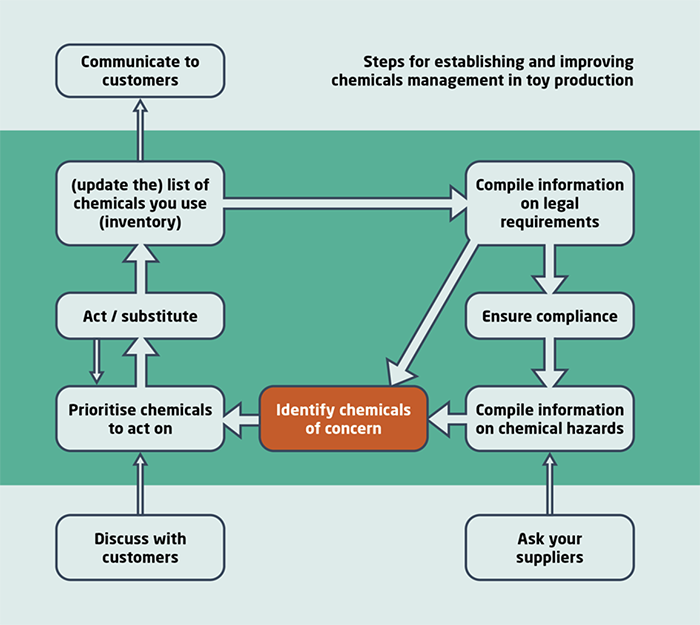
Figure 1: Steps for establishing and improving chemicals management in toy production
Source: SAICM
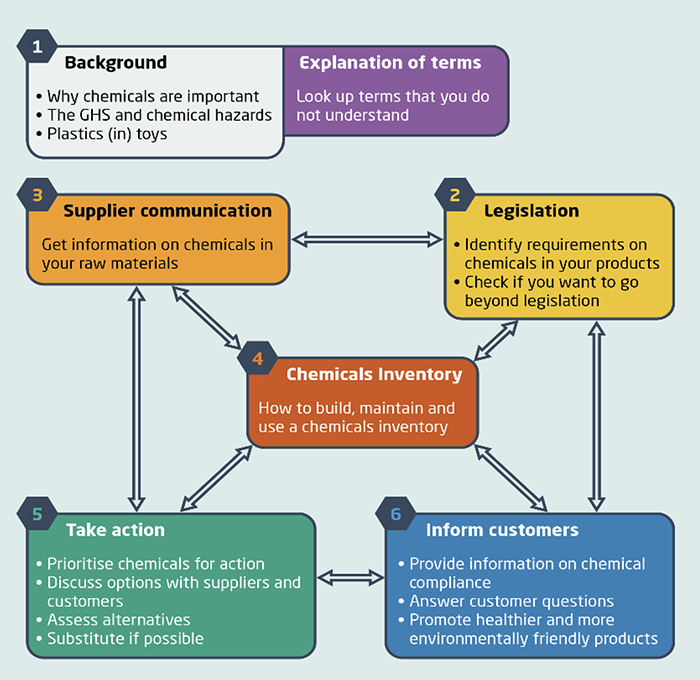
Based on the steps described in Figure 1 above, the toolkit’s sections (see Figure 2 below) elaborate on the steps:
- Compile background information, including on the challenges of CoC in toys, plastics and the Globally Harmonized System of Classification and Labelling of Chemicals (GHS), and information on the risks and effects of CoC in the toys supply chain;
- Compile information on legislation and identify regulatory requirements for chemicals in toy products, depending on where the toy is placed on the market;
- Establish good, clear, and efficient communication with suppliers, for example, to get information on chemicals or to discuss potential quality problems with them;
- Build or review an inventory of chemicals in raw materials and in products, explain why such a chemical inventory should be used, and make the best use of it;
- Take action, including using guidance and tools for replacing a CoC with alternative chemicals, another technology, or a different material; and
- Inform customers by providing guidance on how to communicate on chemicals-related issues with downstream supply chains and end-use consumers.
Figure 2: Toolkit sections
Source: SAICM
As mentioned above, when children are young, they mouth toys, teethers, and pacifiers, all of which contain different chemical additives such as plasticizers, flame retardants, and antimicrobials that help optimize specific properties. However, many of these additives migrate from products into saliva since they are not covalently bound to the polymer chains. While assessing exposure pathways in children is crucial, pathways such as mouthing are often poorly quantified or neglected. In light of this, a study on Estimating mouthing exposure to chemicals in children’s products, supported by the SAICM/GEF project, developed a model to predict migration into saliva, mouthing exposure, and related health risks of different chemical-material combinations in children’s products. The study adapted an earlier migration model for chemicals in food packaging materials, as well as a regression model based on identified chemical and material properties. The model represents a green and sustainable chemistry tool that industries can apply to assess whether the chemicals in their products could pose a risk to children, as well as to evaluate safer alternatives during the design process.
In June 2023, SAICM convened a multi-stakeholder virtual Workshop on Tools and Guidance to Manage Chemicals in Toys to present the tools and guidance developed throughout the SAICM/GEF project’s duration, share key lessons from the project, and facilitate the exchange of knowledge and best practices among stakeholders. It was targeted at stakeholders working to enhance toy safety, including: industries in the toy value chain, such as raw material suppliers and manufacturers; retailers; regulators and government representatives; international standardization organizations; and civil society representatives.
Continuing to reduce CoC in toys going forward
According to the UNEP-commissioned DTU report, international standards are a key entry point for countries establishing chemical-related toy safety policies. To ensure success, standards and trade policies must be ambitious and flexible. They must facilitate the establishment of stricter safety requirements. Compliance and enforcement are also key to protecting children from chemicals-related risks in toys. Toy manufacturers must understand the regulatory requirements of the markets they are selling to. In addition, countries manufacturing or importing toys should establish enforcement mechanisms to ensure compliance with local regulatory requirements. However, small and medium-sized companies or companies not integrated into highly controlled supply chains of original equipment manufacturers or large retailers will face challenges that must be overcome.
It is also important to enhance collaboration among stakeholders in the toy value chain and improve synergies among regulatory requirements, industry capacity for compliance, transparency along the supply chain, and coordinated enforcement.
For example, in the EU, consumers have the right to know about the inclusion of harmful chemicals in products sold in Europe and the right to ask for information about them. Consumers can contact producers directly or do so through platforms like the Scan4Chem app if they suspect a product may contain chemicals above a certain limit that could be harmful to health and the environment. Substances of very high concern (SVHCs) are included in the EU’s REACH Candidate List of SVHCs. By law, suppliers must provide this information, free of charge, within 45 days from the date of request. The right to know applies to toys, as well as textiles, furniture, shoes, sports equipment, toys, and electronic equipment.
Other recommendations from the DTU report policymakers and other stakeholders could take onboard include the following:
- Countries should align policies targeting circularity and CoC, for example banning the use of recycled plastics in the manufacturing of toys or strictly controlling the source. Children’s toys made from recycled plastic contain toxic flame-retardant chemicals OctaBDE, DecaBDE, and HBCD. High concentrations of the toxic chemicals have been found in, for example, the Rubik’s cube toy, with 90% of examined cubes containing OctaBDE and/or DecaBDE. Toxic chemicals end up in toys when electronic equipment casings are used in recycling processes. Although the use of toxic flame retardants is prohibited in the EU, plastic recycling often happens in African or Asian countries where regulations are less strict, with chemicals ending up back in the supply chain. Thus, products made from recycled plastic should not be allowed to contain high concentrations of flame retardants, electronics casings should be removed before recycling, and stronger international limits on hazardous chemicals are needed.
- When adopting regulatory action, policymakers must ensure coherency across different regulatory domains, for example on products, chemicals, and waste, as well as across countries and regions, given the global flows of materials, products, and waste. Regulations and policies should be ambitious, as well as flexible enough to facilitate, rather than hamper, the establishment of stricter safety requirements where needed.
- Policymakers could establish platforms for training, dissemination, and information exchange related to CoC and for raising awareness about the risks from CoC for all stakeholders. Upstream small and medium-sized enterprises (SMEs) and e-commerce could benefit from training on relevant regulations, laboratory testing, and customs rules, while policymakers would benefit from the dissemination of good practice policies.
The new Global Framework on Chemicals presents further opportunities to address CoC in toys. For example, participating governments have pledged to create a regulatory environment to reduce chemical pollution and promote safer alternatives by 2030, while industry has committed to responsible chemical management to reduce pollution and its adverse effects by 2030.
* * *
This document has been developed within the framework of the Global Environment Facility (GEF) project ID: 9771 on Global Best Practices on Emerging Chemical Policy Issues of Concern under the Strategic Approach to International Chemicals Management (SAICM). This project is funded by the GEF, implemented by UNEP, and executed by the SAICM Secretariat. The International Institute for Sustainable Development (IISD) acknowledges the financial contribution of the GEF to the development of this policy brief.
This Policy Brief is the ninth in a series featuring cross-cutting topics relating to the sound management of chemicals and waste. It was written by Leila Mead, Earth Negotiations Bulletin (ENB) team leader, editor, and writer. The series editor is Elena Kosolapova, Senior Policy Advisor, Tracking Progress Program, IISD.

From Feedstocks to Feedback Loops: Linking Chemicals and Climate Change
We are in the midst of a triple planetary crisis. Climate change, biodiversity loss, and pollution endanger the environment and all Earth’s inhabitants – including us. Five of the nine planetary boundaries have been crossed, creating an environment beyond the safe operating space for humanity. Each of the problems, from rising rates of extinction to carbon emissions and plastic pollution, is drastic and frightening on its own. They also interact.
Given the rates of environmental decline, the interactions between climate change and chemical pollution are especially pernicious. The chemical sector is part of the climate problem because of its own greenhouse gas (GHG) emissions and the global warming potential (GWP) of some of the chemicals it produces. Yet, through green chemistry, it could be part of the solution. The need for such solutions is urgent. A warmer world, with less predictable weather patterns and more intense storms, alters how chemicals behave in the environment and how we are exposed to them.
There are dangerous feedback loops. Climate change can lead to shifts in chemical production and use, which, in turn, could fuel further climate change. Some of these links are relatively direct. A warmer world increases the demand for air conditioning. This requires chemical refrigerants. More demand boosts production and, consequently, emissions from the sector. Other feedback loops could be less obvious. There will be more droughts and flooding, which could increase pest and disease outbreaks. This could lead to further use of pesticides and fertilizers. Again, there is an increase in demand and emissions, which adds to the climate crisis.
There is growing evidence of the many varied interconnections between climate change and chemical production and use. Yet, governance of these issues is largely working in silos. Climate change actors deal with reducing emissions and adapting to a warmer world but largely ignore chemicals. Chemicals actors are slowly drawing links to climate change (with the exception of the ozone regime that holds global warming as a central issue). This Policy Brief considers the interactions between climate change and chemicals in more detail, maps the governance connections – or lack thereof, and considers options for the future.
Chemicals are a climate problem
The chemicals sector both produces GHGs on its own and contributes significantly to the global demand for fossil fuels. The chemical sector is the third largest industrial emitter of carbon dioxide (CO2). According to the Intergovernmental Panel on Climate Change (IPCC), the chemicals sector was responsible for 14% of industrial GHG emissions in 2019 (see Figure 1). It is also the single biggest industrial user of fossil fuels for both energy and feedstock purposes. Natural gas, followed by coal, are widely used energy feedstocks.
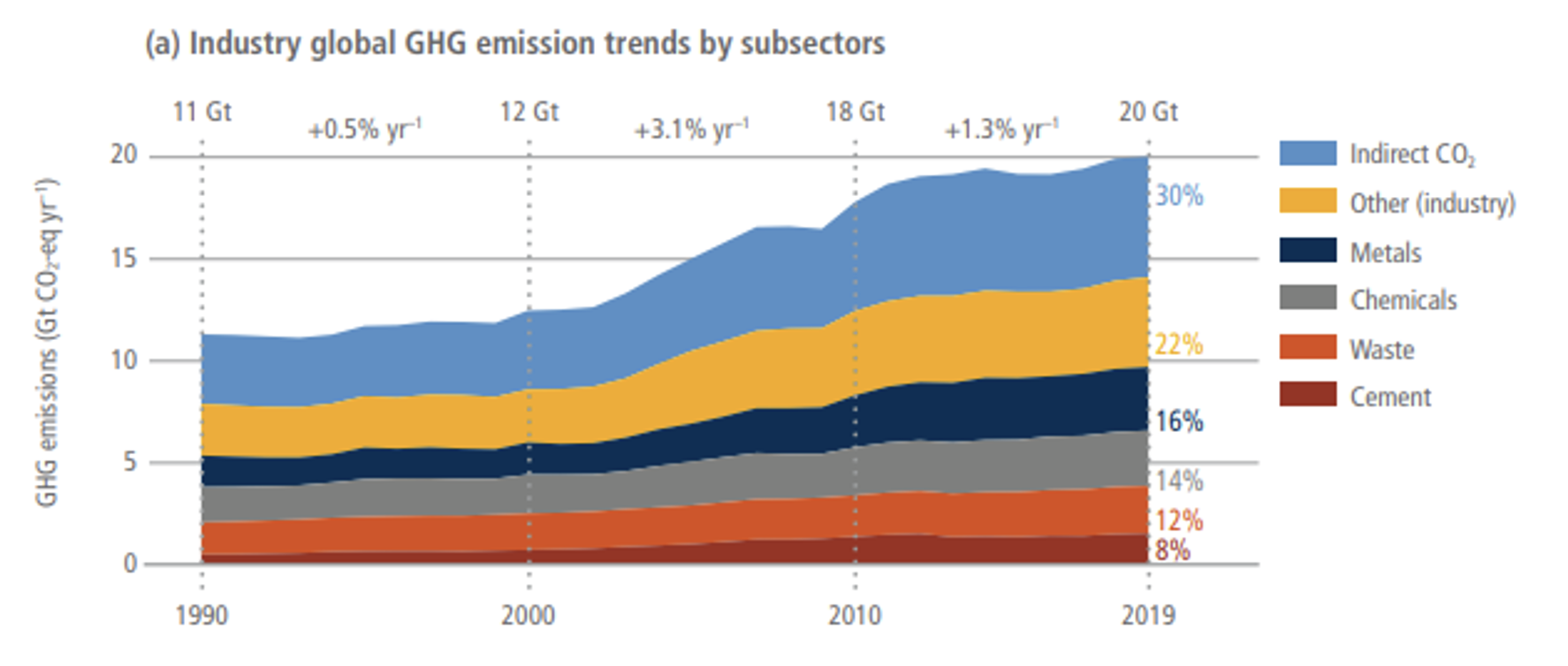
Figure 1. Global GHG emission trends by industry subsectors
Source: IPCC Working Group III Summary for Policymakers
During chemicals manufacture, GHG emissions come from fossil fuel combustion, electricity use, and fossil fuels used as chemical feedstocks. GHG emissions are also by-products of chemical reactions. About quarter of emissions are industrial process emissions, and the rest are from fuel combustion. The highest share of emissions is from ammonia production, followed by high-value chemicals (e.g., ethylene, propylene, benzene, toluene, and mixed xylenes) and methanol. A recent study found that the production of “forever chemicals” (formally per- and poly-fluoroalkyl substances, or PFAS) is associated with substantial hydrochlorofluorocarbons (specifically, HCFC-22) emissions. HCFCs are potent GHGs, far more damaging to the climate than CO2. It is also used as an intermediary in PFAS production.
In addition, some chemicals themselves contribute directly to climate change. Chemicals with high GWP trap heat in the atmosphere. Several fluorinated chemicals, often used as refrigerants, have a high GWP value. These include chlorofluorocarbons (CFCs), hydrofluorocarbons (HFCs), HCFCs, and perfluorocarbons (PFCs), each of which are magnitudes more potent than CO2. The Kigali Amendment to the Montreal Protocol sought to address HFCs, in part because they were increasingly being used to replace CFCs after they were banned under the Protocol.
Climate scientists are closely considering the chemical sector’s emissions. The International Energy Agency (IEA) finds that the chemicals sector is not on track to meet net zero. The IPCC reports that, on average, the sector’s emissions grew by over 1.5% per year between 2010 and 2019. According to the IEA, the carbon intensity of the sector, that is, how much CO2 is produced per tonne of primary chemicals, has remained stable.
There are key regional differences. Chemicals production has shifted to the Global South, bringing with it the emissions from the sector. In 2020, China was responsible for roughly 57% of global GHG emissions associated with petrochemicals, while the US and Europe accounted for 6% and 5%, respectively. In part, this variation is down to where the industry gets its energy. The more coal, for example, in the energy mix, the higher the emissions from the sector.
The chemicals sector has yet to find or implement efficiencies to decrease its CO2 intensity. As a result, increased production necessarily leads to increased emissions. Reducing carbon intensity can be a step toward addressing the sector’s emissions while still meeting demand. While efficiency can be a key solution, the issue of raw materials and feedstocks remains. Overall, we still have an complete picture. Emissions reporting is improving, but as a report from Lund University makes clear, disclosure is partial and inconsistent, and complicated by long, complex value changes.
Potential solutions
Addressing climate change emissions may become a pressing concern for the industry. Pressure from governments, coupled with changes to the global energy system, may require companies to act to reduce emissions and to find alternatives to using fossil fuels as inputs. Climate action could build long-term value. There are also economic opportunities for the industry to help itself, and others, reduce GHGs, including in the transportation and aviation sectors.
There are analyses of potential solutions that the industry can implement to reduce GHG emissions in the sector, many of which point to the opportunities for reaching net zero. Net zero, as a concept, recognizes that some sectors may be difficult to fully decarbonize. Therefore, a mix of emissions reductions and offsetting or carbon capture and storage (CCS) could realize a “balance” between emissions and removals. Some research has advocated for the use of carbon capture technologies to reduce emissions in the sector, and for using carbon from sequestered CO2, called carbon capture and utilization. Biomass could potentially replace fossil fuels as raw materials, although there would be implications for land use.
There are other solutions at hand, drawing from ideas in the chemicals community, particularly green chemistry and circular economy. Green chemistry minimizes the need for hazardous substances when designing products and production processes. It mimics nature, by using renewable and biodegradable materials. The UN Environment Programme (UNEP) has outlined ten objectives for green chemistry, including using chemistry to minimize hazards, avoiding regrettable substitutions, and green sourcing feedstocks and production processes.
Similarly, circular economy thinking can help with identifying potential impacts from a product’s design to its end of life. Tools such as lifecycle assessment can include GHGs. For example, making products more reusable and repairable will decrease demand for new products and chemicals, which will reduce emissions from the sector. Renewable inputs could be a cost effective and sustainable solution for the industry.
Climate change is a chemicals problem
The impacts of climate change complicate chemicals management in several ways. There is a growing need for the sector and governments to think about climate adaptation (that is, building resilience to a warmer, less predictable world) in the context of chemicals management. It can increase the toxicity of some chemicals and amplify their releases into the environment. At the same time, climate change raises risks for chemicals and waste management facilities to keep hazardous products away from the surrounding environment and populations.
Already, the world is more than 1.1°C warmer than the pre-industrial era. Higher temperatures can lead to an increase in the toxicity of persistent organic pollutants (POPs), air pollutants, and pesticides, including organophosphate insecticides such as chlorpyrifos. Increased temperature can influence the fate and behavior of POPs, affecting how humans are exposed to these chemicals. Ecosystems are at risk as well. Ocean acidification may influence the behavior of metals in marine sediments, as well as their toxicity, impacting ecosystems and their inhabitants on the ocean floor. For animals already at the edge of their ability to survive in a warmer world, increased chemical toxicity could be particularly harmful.
Other effects of climate change are likely to amplify the releases of chemicals, either from the environment directly, or by damaging infrastructure. Melting ice is particularly worrying. Melting glaciers on the Tibetan Plateau release PFAS. Mercury may emerge from thawing permafrost. Melting Arctic ice could lead to four-fold increase in banned POPs in Arctic waters.
Flooding, “super-storms,” and other climate-fueled events can challenge chemicals management. These events can exacerbate the risks by increasing the likelihood of spills, contamination, infrastructure damage, and altered environmental conditions. For example, the Krasny Bor hazardous waste site in Russia has previously flooded. Assessment projects have tried to identify the risks of releases into the surrounding environment. The World Health Organization (WHO) has prepared guidance for public health authorities on the types of risks associated with chemicals after cyclones and flooding. For both, it highlights an increased risk of burns, poisoning, respiratory tract injuries, and injuries to workers.
Other tools of chemical management may need to be updated. Risk assessments often involve models or data on human and animal exposure. Altering the toxicity, behavior, and movement of chemicals could require updates to models and methodologies. It may also mean governments and researchers may have to enlarge their sample populations.
There will be regional differences in how climate change affects chemicals management and human exposure. The Arctic is of particular concern. It is highly vulnerable to both climate change and chemical pollution. Melting ice, coupled with changes to precipitation, water salinity, and sea ice quality, could unlock POPs and other chemicals deposited in the region, leading to unintentional releases and movement. These climate factors are associated with POPs concentrations in multiple Arctic biota. Other regions will face their own challenges. Small island States are already experiencing the effects of sea level rise, which could increase chemical releases from waste disposal sites. Solutions to chemical management in the context of a warmer, more turbulent world will have to be tailored to regional, and perhaps local, differences.
The potential impacts of climate change on the sector are wide ranging, from operations to risk assessments. There are equally a wide range of measures that could be implemented, as outlined in a 2015 UK Climate Change Adaptation Guidance.
Governance silos
Despite all the interconnections, climate governance rarely touches on chemicals specifically, and vice versa. The Vienna Convention and Montreal Protocol on ozone depleting chemicals are an exception. These treaties, working together, regulate chemicals that damage the ozone layer, and also consider the GWP of chemicals. The Kigali Amendment to the Montreal Protocol regulates HFCs, potent GHGs.
The Paris Agreement on climate change requires countries to submit or update nationally determined contributions (NDCs) every five years. The content of these pledges is almost entirely up to countries. Developed countries are required to have an economy-wide numerical target. Developing countries are encouraged to do so. In the current set of NDCs, 115 countries’ pledges include a target for industry, of which chemicals is a part. Waste is its own sector in climate planning and reporting, widely included in NDCs.
There is a role in global climate governance for the private sector and other actors to also make pledges under the UN Framework Convention on Climate Change (UNFCCC). The Global Climate Action portal encourages and tracks the pledges of a wide range of non-state actors. The portal allows for searching for chemicals companies specifically. In total, 289 chemicals companies logged an action, 263 of which made a commitment. So far, 207 of these companies have reported on their progress toward that commitment. Many of these seem to be small and medium-sized enterprises (SMEs). Of the top 20 chemical companies in the world, 11 registered on the portal, nine have at least one commitment, and five had reported back. Less than 40% of US-based Independent Commodity Intelligence Services (ICIS) Top 100 companies have net-zero goals or align with the Science Based Targets initiative (SBTi).
In chemicals governance, there have been a growing number of reports to raise awareness of the interconnections between chemicals and climate change, but little in the way of rule making to draw firmer links. The Stockholm Convention has repeatedly explored the connections between POPs and climate change. In conjunction with the Arctic Monitoring and Assessment Programme, the Secretariat produced a report as early as 2011. Another report, co-authored with the Minamata Convention Secretariat, was published in 2022. The Persistent Organic Pollutants Review Committee (POPRC) published a report on POPs and climate change in 2013 It noted that climate change could affect some criteria that the Committee’s considers when assessing chemicals, such as toxicity and long-range environmental transport (LRET).
As yet, climate change has not been incorporated in the Committee’s work. In part, this may be due to its mandate to consider the persistence, toxicity, bioaccumulation, and LRET of a chemical based on existing information and data. Models predicting future values are not considered as part of the Committee’s reviews.
In the current negotiations for the post-2020 strategic approach to chemicals and waste, there is a target related to synergies and linkages with other policies (currently, target E6). At present, the text mentions climate change, biodiversity, and other areas such as health. There is also a target related to implementing policies to encourage production with sustainable and safer alternatives. This could include policies to facilitate the use of cleaner production technologies, or product re-use and recycling, which could indirectly help reduce GHG emissions. Realizing these targets, in whatever final, adopted form they will take, will require further drawing the links between these two governance arenas.
Bridging the gaps
The biodiversity-climate link could be instructive. It took years of work, largely on the part of the Convention on Biological Diversity (CBD) Secretariat, to forge the connections and conduct outreach to the climate community. Recently, there have been decisions in the UNFCCC and CBD that recognize these connections. Most revolve around the idea of nature-based solutions (NbS). The concept has proved useful to articulate nature-climate connections in a way that facilitates actions on both sides.
At present, the chemicals-climate link lacks such a unifying concept. Climate actors may ask, “why should we do more on chemicals, specifically? What’s the value added?” Chemicals actors could ask the same questions. A concept bridging and articulating the solutions could help provide a common frame of reference and action.
Building this bridge may require collaboration. Some Secretariats, namely the UNFCCC and the Basel, Rotterdam, and Stockholm Conventions (BRS) Secretariats, are already talking about commonalities. Wider engagement among scientific communities, activists, and states could further improve knowledge of how intertwined the climate and pollution crises are, and the implications for the future.
* * *
This document has been developed within the framework of the Global Environment Facility (GEF) project ID: 9771 on Global Best Practices on Emerging Chemical Policy Issues of Concern under the Strategic Approach to International Chemicals Management (SAICM). This project is funded by the GEF, implemented by UNEP, and executed by the SAICM Secretariat. The International Institute for Sustainable Development acknowledges the financial contribution of the GEF to the development of this policy brief.
This Policy Brief is the seventh in a series featuring cross-cutting topics relating to the sound management of chemicals and waste. It was written by Jen Allan, Earth Negotiations Bulletin (ENB) Strategic Advisor. The series editor is Elena Kosolapova, Senior Policy Advisor, Tracking Progress Program, IISD.

Eco-innovation (Eco-i) manual – Building Materials Supplement
UNEP's new Eco-innovation Building Materials Supplement was created to respond to the building material sector's need for more guidance in building resilient, competitive, and sustainable business models for SMEs. Designed together with Bioregional, pilot implementation support of the National Cleaner Production Centre (NCPC) Sri Lanka and to be read alongside UNEP's Eco-innovation Manual, the supplement provides specific examples, learning case studies, and advice on applying the eco-innovation methodology within the building materials value chain.

The use of PFAS and fluorine-free alternatives in textiles, upholstry, carpets, leather and apparel
This study, commissioned by DG Environment for the European Commission and produced by Wood and Ramboll. The objective was to assess the use of PFASs and fluorine-free alternatives in textiles, upholstry, carpets, leather and apparel, including specific focus on volumes of use, technical function, and emissions.
Non-fluorine alternatives considered were hydrocarbons, silicones, dendrimers, polyurethane, nanomaterials, and alternative technologies. The study makes recommendations for policy, including a REACH restriction on the placing on the market and use of these products that contain any PFAS, and a listing under the Stockholm Convention. It is also recommended in the report that a restriction could be combined with voluntary industry measures and provisions in public procurement to encourage substitution of PFAS before mandatory legislation is introduced.

Safer States
Safer States is an alliance of diverse environmental health organizations and coalitions from across the United States committed to building a healthier world. The website features an interactive map showing chemical-related policies, including those related to building materials. A Bill Tracker provides further detail of the action taken by individual states to regulate chemicals, covering PFAS, toxic flame retardants, heavy metals, BPA and phthalates.

Toward a Circular Economy for the Electronics Sector in Latin America and the Caribbean (LAC): Overview, Actions and Recommendations
This report provides an overview of the current status and conditions of the Circular Economy in the electronics value chain in the Latin America and the Caribbean (LAC) region, identifies key areas of concern, provides appropriate recommendations, and proposes priority actions to improve circularity of the sector. The recommendations and roadmap focus on the individual life cycle stages of the electronics value chain, as well as on aspects that cut across the value chain. The transition towards a more circular electronics sector in Latin America and the Caribbean (LAC) would require a holistic and coordinated approach to progress toward a more circular electronics value chain in the CEE region.
This publication was prepared under the framework of the Global Environment Facility (GEF) full-sized project 9771: Global best practices on emerging chemical policy issues of concern under the Strategic Approach to International Chemicals Management (SAICM). This project is funded by the GEF, implemented by UNEP and executed by the SAICM Secretariat.
