52 resources found

Policy document

Gender and the sound management of chemicals and waste

by |
September 2018
copied to clipboard
“Gender mainstreaming” is defined as a strategy for making both men and women’s concerns and experiences an integral part of policies and programmes in all political, economic and societal spheres.In practice, gender mainstreaming supports the contribution of men and women to society equally, through policies and programmes that address their specific needs. The Sustainable Development Goals (SDGs) of the 2030 Agenda aim to address inequalities among all population groups, especially women, children, and the impoverished. Directly addressing the links between
Emerging Policy Issues: Chemicals in products
Policy document

Gender and the sound management of chemicals and waste: Prepared for the SAICM intersessional process beyond 2020
A request was made at the first intersessional meeting for information on the relationship between women and chemical safety as it relates to emerging policy issues and issues of concern, covering in particular the period beyond 2020. The Bureau agreed at its May 2017 meeting for the secretariat to prepare a paper, for the second intersessional meeting, that reviews the broader concept of gender and the sound management of chemicals and waste, in line with the 2030 Agenda for Sustainable
Report

Gender and Chemicals: Questions, Issues and Possible Entry Points

The present paper was produced as part of the project: "Gender and Chemicals: Issues, Stakeholders, Strategies", conducted by the MSP Institute in 2017. We reviewed relevant literature and international policy making processes, and conducted 20 expert interviews between May and October 2017.
Website

Economic Costs of Childhood Lead Exposure in Low- & Middle-Income Countries

by
New-York University - Division of Environmental Pediatrics
|
September 2014
copied to clipboard
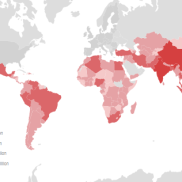
This interactive map reflects the results of research by New-York University that estimates the economic costs linked to childhood lead exposure in low- and middle-income countries. Information as average lead level, cost for countries and population at risk under the age of five are available for selected countries.Exposure to lead has a permanent negative impact on children's developing brains. One impact is a reduction in intelligence quotient (IQ), which can be correlated with decreases in lifetime earning potential. Lead exposure
Emerging Policy Issues: Lead in paint
Topics: Policymaking

Avatar