6 resources found

DG Environment
Report

The use of PFAS and fluorine-free alternatives in textiles, upholstry, carpets, leather and apparel

This study, commissioned by DG Environment for the European Commission and produced by Wood and Ramboll.  The objective was to assess the use of PFASs and fluorine-free alternatives in textiles, upholstry, carpets, leather and apparel, including specific focus on volumes of use, technical function, and emissions.

Non-fluorine alternatives considered were hydrocarbons, silicones, dendrimers, polyurethane, nanomaterials, and alternative technologies.  The study makes recommendations for policy, including a REACH restriction on the placing on the market and use of these products that contain any PFAS, and a listing under the Stockholm Convention.  It is also recommended in the report that a restriction could be combined with voluntary industry measures and provisions in public procurement to encourage substitution of PFAS before mandatory legislation is introduced.

Report

Women, Chemicals and the SDGs

by
IPEN , SAICM ,
|
December 2020
copied to clipboard
Gender Review Mapping with a Focus on Women and Chemicals: Impact of Emerging Policy Issues and the Relevance for the Sustainable Development GoalsThe aim of this report is to show the impact chemicals have on women as a vulnerable group highly exposed to hazardous chemicals and gender inequalities re­lated to decision-making around the management of chemicals and waste. The report also means to provide concrete steps that can be taken to safeguard the health of women and empower women in
Report

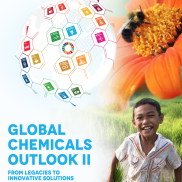
Global Chemicals Outlook II: From Legacies to Innovative Solutions

by |
April 2019
copied to clipboard
The Global Chemicals Outlook II – From Legacies to Innovative Solutions: Implementing the 2030 Agenda for Sustainable Development, mandated by the UN Environment Assembly in 2016, seeks to alert policymakers and other stakeholders to the critical role of the sound management of chemicals and waste in sustainable development. It takes stock of global trends as well as progress made and gaps in achieving the global goal to minimize the adverse impacts from chemicals and waste by 2020.Part I of the
Emerging Policy Issues: Chemicals in products
Report

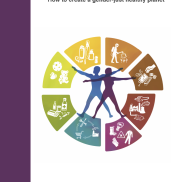
Gender & SAICM Beyond 2020: How to create a gender-just healthy planet

The present publication was produced as part of the project: "Gender and Chemicals - Together for a gender-just healthy planet", conducted by the MSP Institute in 2019.There is a number of gender aspects relevant to chemicals and chemicals and waste management. However, many of them are not receiving the attention they should in order to ensure the best possible decisions in policy-making and effective implementation.The goal of this report is to increase the integration of gender in international chemicals and
Report

Gender and Chemicals: Questions, Issues and Possible Entry Points

The present paper was produced as part of the project: "Gender and Chemicals: Issues, Stakeholders, Strategies", conducted by the MSP Institute in 2017. We reviewed relevant literature and international policy making processes, and conducted 20 expert interviews between May and October 2017.
Report

A journey into the tanning industry

by
Centro Nuovo Modello di Sviluppo
|
November 2016
copied to clipboard
A Tough Story of Leather analyses the situation for workers in the Italian tanning industry.This report has been produced by Centro Nuovo Modello di Sviluppo (CNMS) and the Campagna Abiti Puliti in 2016. This research, which forms part of the Change your Shoes project, focuses on the so called Leather Republic: the Santa Croce District. This report has been produced by Centro Nuovo Modello di Sviluppo (CNMS) and the Campagna Abiti Puliti in 2016. A Tough Story of Leather analyses
Avatar