641 resources found

Guidance to Provide Footprint Information on Sustainable Alternatives
COVID-19 Impacts on the Global Environmental Agenda: SAICM and ICCM5
 ICCM5 was scheduled to take place in October 2020. Due to the COVID-19 pandemic, the session has been rescheduled to take place from 5-9 July 2021, in Bonn, Germany.
Speakers for the 19 May online dialogue will include:
- Nalini SHARMA, Head, SAICM Secretariat
- Manal AZZI, Senior Specialist on Occupational Safety and Health. International Labour Organization
- Carolyn VICKERS Head, Chemical Safety and Health Unit World Health Organization
- Valentina SIERRA, Permanent Mission of Uruguay to the UN in Geneva (ICCM5 Bureau)
- Giulia CARLINI, Staff Attorney, Environmental Health Program, Center for International Environmental Law
- Monika GAIL MACDEVETTE, Chief, Chemicals and Health Branch, UNEP
date: 19 May 2020
location: virtual
www: https://genevaenvironmentnetwork.org/19may2020.html
Global Forum on Environment: Towards Cost-effective Management Systems for Industrial and Consumer Chemicals
The Global Forum on Environment will discuss the challenges posed by chemicals and provide knowledge on

Crops that drive world trade in hazardous pesticides

Baseline paint market study in Ecuador (English / Spanish)
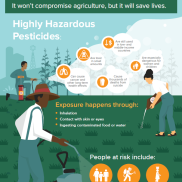
Infographics on Highly Hazardous Pesticides

Interactive visualisation of the Quick Start Programme implementation
How Nanosilver Gets Into Our Freshwater, and What We Need To Do About It
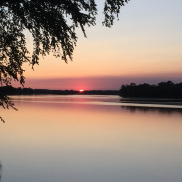
IISD Experimental Lakes Area (IISD-ELA) in northwestern Ontario, Canada. There, in a small Shield lake (coordinates: 49°41'46.6"N, 93°43'22.2"W), we conducted some unique research on the impact of nanosilver additions on freshwater and fish. Here, we explain what nanosilver is, how it enters aquatic ecosystems, what our research found, and what we think needs to happen to protect our lakes in the future.
What is nanosilver?
There are no bandage solutions to freshwater issues. There are, however, nano-sized particles of silver on bandages, which have inadvertently created a complicated environmental issue. “Nanosilver” describes particles of silver between 1 and 100 nanometres in size that are inherently toxic to bacteria and microbes and thus a great antibacterial. As a result, nanosilver is widely applied to over 440 consumer products and used in medical and agricultural industries.
We contribute nanosilver into wastewater every day through wearing and washing underwear, socks, athletic gear, towels and bedding, and by using personal care products (i.e., shampoos, conditioners, body wash, facial cleansers, toothpastes, deodorants, etc.). You can find nanosilver in everything from bandages to washing machines.
What impact does nanosilver have on freshwater?
Despite its widespread use, and results of laboratory studies, we still do not fully understand the impact that nanosilver can have on the environment once it enters lakes.
While silver is regulated in Canada, the increasing and widespread application of nanosilver, and its subsequent release into aquatic ecosystems, is currently unregulated and is largely unknown, unrecognized, and unheard of by consumers.
How did we determine ecosystem effects?
Researchers wanted to discover what effects bacteria-killing nanosilver could have on the health and dynamics of an aquatic ecosystem, so they continuously added environmentally relevant additions of nanosilver (62.5 grams/day) suspended in freshwater to a lake during the ice-free season. These additions to a whole-lake occurred over the course of two years (2014 and 2015), with researchers studying the lake before, during, and after nanosilver additions, to study the fate and effects of this emerging contaminant.
Researchers found that nanosilver spread across the lake and throughout the water column immediately after the first addition. Approximately half of the nanosilver added to the lake settled to the sediments each day. Despite this sinking and settling, nanosilver was not tightly bound to the sediments and was re-introduced into the water column after the ice melted each spring.
Results of these nanosilver additions were mixed across levels of the food chain. While lower trophic level organisms, such as bacteria, algae, zooplankton, and benthic invertebrates experienced few short-term impacts and were largely unaffected by the nanosilver additions, significant long-term results were observed in species of fish across cellular, individual, and population scales.
What impact does nanosilver have on fish?
We found that silver bioaccumulated in fish tissues, particularly their liver and gills, suggesting both dietary and respiratory modes of toxicity. Yellow Perch consumption rates and total metabolism declined during the nanosilver additions and remained low into whole-lake recovery. At the ecosystem-scale, consumption of prey by perch decreased during additions and remained suppressed into recovery, and perch populations declined. Both perch and their Northern Pike predators shifted their feeding sources from nearshore to offshore prey, and pike experienced stunted growth. Four years after researchers stopped adding nanosilver to the lake, in 2015, pike continue to have silver in their tissues.
What does this mean for nanosilver use around the world?
We have evidence of short-term impacts on fish after only two months of environmentally relevant nanosilver additions, and long-term impacts even after nanosilver additions ceased.
It is important to remember that we stopped adding nanosilver to the lake after two years, which is not the case in the natural environment where nanosilver continues to enter aquatic ecosystems at more locations in greater-than-ever quantities.
The research that was conducted over there (IISD-ELA), is summarized here (online), as we work to transform whole-ecosystem science into policy to address freshwater issues that range near and far. Our research has implications for the use of nanosilver in consumer products and the health of freshwater ecosystems across the globe.
How should governments around the world take action?
The onus now firmly rests on national governments to monitor and control the release of nanosilver into the environment. As it currently stands, the European Union tends towards a precautionary principle when it comes releasing products containing substances with unknown health effects, whereas the United States tends to allow products with unknown impacts to enter markets.
When it comes to the regulation of nanosilver, we would recommend taking the more precautionary route.
For example, in Canada (the country in which IISD-ELA is situated), the federal government needs to revise their Canadian Water Quality Guidelines for the Protection of Aquatic Life to regulate nanosilver as it regulates silver, with continued and improved monitoring of nanosilver in aquatic ecosystems and consistent registration and reporting requirements for nanoproducts.
While there is no bandage solution to nanosilver in the environment, the mandatory labelling of bandages and other consumer products that contain nanosilver would be a good place to start. Having an accessible and comprehensive list of manufacturers that use nanosilver, and labelling standards for products containing nanosilver, would assist consumers in making informed choices about their use and release of nanosilver in the environment.
And what about consumers?
While we wait for the governments to take action on nanosilver in consumer products (over there), the vast and growing extent of nanosilver in clothing and materials can be addressed by consumers embracing to the eco/sustainable/slow fashion movement here.
By reducing the quantity of new clothing (capped with nanosilver) that we purchase, researching sustainable and ethical brands, and recycling clothing, we can make a sustainable change that will benefit not only the fish in a lake but also improve social and environmental standards on a global scale. Any informed and preventative efforts can reduce the size of the bandage (sans nanosilver) required to repair the issue of this emerging contaminant on a global scale.
This article was authored by Lauren Hayhurst, Fisheries Research Biologist, IISD Experimental Lakes Area.
Researchers in this whole-ecosystem nanosilver study included graduate students and principal investigators from Trent University, Lakehead University, and Institut national de la recherche scientifique. Research internships were provided through support from an NSERC CREATE program (CREATE H2O), coordinated by the University of Manitoba. Funding for the whole-lake addition project was provided by the Natural Sciences and Engineering Research Council of Canada through the Strategic Grants Program, and matching grants from Environment and Climate Change Canada. IISD-ELA provided in-kind support for the project, Support for biomarker analyses was provided by the National Contaminants Advisory Group of Fisheries and Oceans Canada. Mercury, energy density analyses, and bioenergetics modelling was supported by infrastructure funded by the Canadian Foundation for Innovation, NSERC Discovery, and support from IISD-ELA and the Mitacs Accelerate Program.
IISD Experimental Lakes Area is the world’s freshwater laboratory. A series of 58 lakes and their watersheds right here in northwestern Ontario, Canada, IISD-ELA is the only place in the world where scientists can research on and manipulate real lakes to build a more accurate and complete picture of what human activity is doing to freshwater lakes. The findings from its more than 50 years of ground-breaking research have rewritten environmental policy around the world—from mitigating algal blooms to reducing how much mercury gets into our waterways—and aim to keep freshwater clean around the world for generations to come. You can learn more at https://www.iisd.org/ela.