5 resources found

gender-case-studies-cover
Case studies

Women Leaders: Addressing Chemicals and Waste Issues

People of all gender identities must have the same rights and opportunities to participate fully in their communities, free from the health threats posed by toxic chemicals. It is especially important to understand the factors that put women at risk from chemical health threats.

The IPEN report “Women Leaders: Addressing Chemicals and Waste Issues” highlights women’s leadership through ten organizations from around the world working to address chemical health threats. The report was developed within the framework of the United Nations Environment Program and its Global Environment Facility (GEF), under the Strategic Approach to International Chemicals Management (SAICM), executed by the SAICM Secretariat. It was produced with support from the Swedish Government.

Women face greater risks from chemical exposures and experience higher rates of adverse health outcomes because of their physiology, different types of occupational exposures, and differential exposures to chemicals, including from personal care and household products. Women are also exposed to chemicals — such as endocrine disrupting chemicals, lead in paint, and chemicals in toys — that pose health threats during pregnancy and to their developing children.

These toxic exposures can lead to serious health problems that impact women’s lives and their opportunities to participate in their communities fully and equally. This is especially so for women in low-income communities who are often managing multiple pathways for toxic exposures and multiple obstacles to gender equality.

Women cannot be empowered nor gender equality achieved while exposures to hazardous chemicals put them at risk for cancer, chronic illnesses, infertility, and damage to their nervous systems.

In 2015, the United Nations Member States adopted the 2030 Agenda for Sustainable Development, which includes 17 Sustainable Development Goals (SDGs). “Gender Equality” is one of the goals (Goal 5) and the SDGs also recognize that gender equality is a prerequisite for reaching most of the other goals. Reducing and eliminating chemical exposures will also be essential for achieving all of the 17 goals.

The stories that follow highlight women across the globe who are leading work in their communities, nations, and internationally for stronger protections from harmful chemicals. Supporting their work and the work of countless other women who are leading similar efforts will be critical for achieving the SDGs.

Policy document

Model Law and Guidance for Regulating Lead Paint

UN Environment, in cooperation with World Health Organization, United States Environment Protection Agency and other partners, has developed a model law and guidance in order to assist countries in establishing and implementing regulation on lead paint.The purpose of this guidance is to assist countries to enact new laws (or to modify their existing laws) to establish a single regulatory limit on the total lead content in paints. The guidance describes the key elements of effective and enforceable legal requirements. It

Emerging Policy Issues: Lead in paint
Topics: Policymaking
Policy document

Global elimination of lead paint: why and how countries should take action - Policy brief

Lead has toxic effects on almost all body systems and is especially harmful for children and pregnant women. Lead paint is an avoidable source of exposure to lead. “Lead paint” or “lead-based paint” is paint to which one or more lead compounds have been intentionally added by the manufacturer to obtain specific characteristics. One important way to prevent exposure is for countries to establish legally binding regulatory measures prohibiting the addition of lead to paint.This policy brief summarizes key information
Emerging Policy Issues: Lead in paint
Policy document

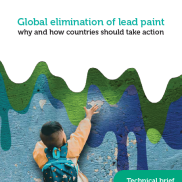
Global elimination of lead paint: why and how countries should take action - Technical brief

This document has been developed for officials in government who have a role in regulating lead paint, to provide them with concise technical information on the rationale and steps required to phase out lead paint. “Lead paint” or “lead-based paint” is paint to which one or more lead compounds have been intentionally added by the manufacturer to obtain specific characteristics. This document explains the health and economic importance of preventing lead exposure by establishing legally binding controls to stop the
Emerging Policy Issues: Lead in paint
Policy document

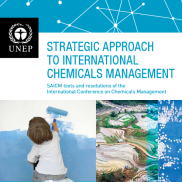
SAICM texts and resolutions of the International Conference on Chemicals Management

September 2015
copied to clipboard
The new version of SAICM texts exists in English only and includes the resolutions adopted by ICCM at its first, second and third sessions. The older other language versions include only resolutions adopted by ICCM at its first session.New activities included in the Global Plan of ActionAt ICCM3 (17-21 September 2012), SAICM stakeholders agreed to the inclusion of new activities relating to the environmentally sound management of nanotechnologies and manufactured nanomaterials and hazardous substances within the life-cycle of electrical and
Avatar