750 resources found

Community of practice summary of discussions

Alternatives in Phasing Out HHPs: Industry innovations and the Substitution process

September 2021
copied to clipboard
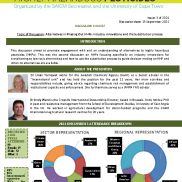
The SAICM Secretariat, in partnership with the University of Cape Town, established a community of practice on Highly Hazardous Pesticides (HHPs) to foster discussions, exchange of best practices, and recommendations to address HHPs amongst relevant stakeholders. This is a summary of the discussion on Alternatives in Phasing Out HHPs: Industry innovations and the Substitution process, which took place on 15 September 2020.Presenters: Dr Lilian Tornqvist (Keml), Dr Andy Ward (CropLife International)This discussion aimed to promote engagement with and an understanding
Emerging Policy Issues: Highly Hazardous Pesticides
Case studies

Future Policy Award 2021: Colombia - Environmentally Persistent Pharmaceutical Pollutants

Despite the fact that pharmaceuticals are indispensable for human and animal health, they may cause undesired adverse effects. Specifically, environmentally persistent pharmaceutical pollutants (EPPPs) are slowly degradable or nondegradable, presenting a special risk when they enter, persist or disseminate in the environment. Colombia’s Resolution 371, addressing EPPPs, was awarded for regulating waste management from hazardous products.The World Future Council focuses on identifying, developing, highlighting and spreading effective, future-just solutions for current challenges humanity is facing and promote their implementation worldwide

Community of practice summary of discussions

Making the case: raising awareness about importance of lead paint laws

September 2021
copied to clipboard
The Secretariat of the Strategic Approach to Chemicals Management (SAICM) and the University of Cape Town (UCT) have established a Community of Practice (CoP) on Lead in Paint to bring representatives from different sectors together and to create a learning network around issues related to the elimination of Lead Paint. This is a summary of the discussion on Making the case: raising awareness about importance of lead paint laws, which took place on 14 September 2021.Presenters: Lesley Onyon (WHO), Siddika
Emerging Policy Issues: Lead in paint
Report

Report of the 2020 International Lead poisoning Prevention Week

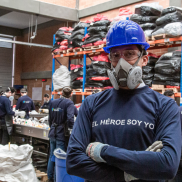
The eighth International Lead Poisoning Prevention Week (ILPPW) was held on 25–31 October 2020, with more than 90 events in 60 countries organized by governments, civil society organizations, health partners, industry and other institutions.ILPPW is an ongoing initiative of the Global Alliance to Eliminate Lead Paint (the Lead Paint Alliance), led jointly by the United Nations Environment Programme (UNEP) and WHO. The aim of the Week is to raise awareness about the health effects of lead exposure, highlight the efforts
Emerging Policy Issues: Lead in paint
Policy document

Compendium of WHO and other UN guidance on health and environment

This compendium provides a systematic compilation of published guidance from WHO and other UN organizations on health and environment. Guidance on policies and actions as well as awareness raising and capacity building interventions is presented for all major areas of health and environment. Guidance referring to priority settings for action such as cities and other urban settlements, housing, workplaces and health care facilities is also listed.For greater practical relevance, each guidance is classified according to principally involved sectors, level of
Newsletter

Era of leaded petrol over, eliminating a major threat to human and planetary health

by |
September 2021
copied to clipboard
Official end of use of leaded petrol will prevent more than 1.2 million premature deaths and save USD 2.45 trillion a yearThe end of leaded petrol follows a 19-year campaign led by the UN Environment Programme (UNEP) and partnersUNEP urges countries to work towards zero emissions vehicles to further address air pollution and climate changeNairobi, 30 August 2021 – When service stations in Algeria stopped providing leaded petrol in July, the use of leaded petrol ended globally. This development follows
Emerging Policy Issues: Chemicals in products

Avatar