39 resources found

Infographic

biodiversity in danger from poor management of chemicals and waste

World Environment Day took place on 5 June 2020 and the theme this year was biodiversity. SAICM celebrated by creating an infographic on how chemicals and waste can impact biodiversity and releasing an article on how we can do more to protect and help our planet's biodiversity flourish.
Factsheets and brochures

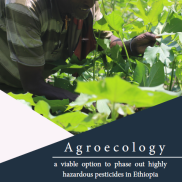
Agroecology – a viable option to phase out highly hazardous pesticides in Ethiopia

Agriculture in Ethiopia is the foundation of the country's economy. In an effort to increase production and productivity, the agriculture sector puts the use of inputs like pesticides and fertilizers as driving forces.The use of agricultural inputs, including pesticides, was introduced to smallholder farmers from the 1960s through agricultural extension systems. Since then, pesticide use by smallholder farmers showed a steady growth. This increasing trend in the use of pesticides as part of a development plan poses threats to human
Emerging Policy Issues: Highly Hazardous Pesticides
Infographic

Crops that drive world trade in hazardous pesticides

Unearthed and Public Eye analysed more than USD 23bn of agrochemical sales data for 2018 - about 40% of the global market - to identify sales of highly hazardous pesticides (HHPs). Across 12 groups analysed, those shown here accounted for more than four out of every five dollars spent on HHPs.
Emerging Policy Issues: Highly Hazardous Pesticides
Infographic

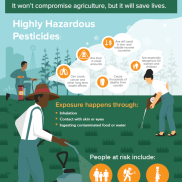
Infographics on Highly Hazardous Pesticides

It's time to regulate Highly Hazardous Pesticides!It won’t compromise agriculture, but it will save lives.This document was prepared by WHO under the Global Environment Facility (GEF) full sized project 9771: Global best practices on emerging chemical policy issues of concern under the Strategic Approach to International Chemicals Management (SAICM). This project is funded by the GEF, implemented by UNEP and executed by the SAICM Secretariat. WHO acknowledges the financial contribution of the Global Environment Facility for the development, editing and
Emerging Policy Issues: Highly Hazardous Pesticides
Infographic

Interactive visualisation of the Quick Start Programme implementation

Interactive visualisation of the Quick Start Programme implementation in 108 developing countries through 184 projects to produce and use chemicals in ways that minimise adverse impacts on the environment and human health.
Infographic

Interactive country profiles

February 2020
copied to clipboard
ContextTo address the recognized deficiencies mentioned above, it’s essential to have a ‘chemicals ecosystem (SAICM ecosystem)’ in which relevant information can be shared transparently and easy to obtain. In this ‘chemicals ecosystem’, a holistic chemicals-information-sharing hub, serving as ‘database’ and ‘scanner’ on chemicals management, should be developed to provide connection on knowledge and information from a wide variety of sources and allow stakeholders to identify their gaps on the way towards the sound management of chemicals and waste. Last but
Factsheets and brochures

Factsheet of The Quick Start Programme: 13 years of advancing sound chemicals management

by |
January 2020
copied to clipboard
The Quick Start Programme: 13 years of advancing sound chemicals management. Established in 2006 by the first International Conference on Chemicals Management – the Quick Start Programme (QSP) concluded in December 2019. The factsheet shares impact through successful projects and activities across the globe.
Avatar